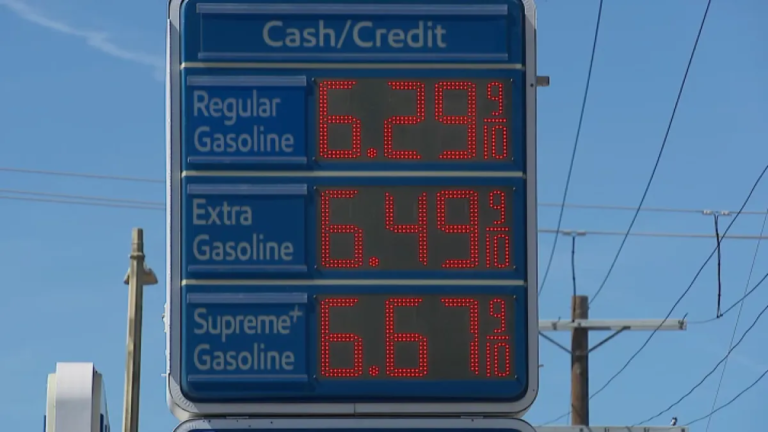
Gas Prices in L.A. Hit $6 per Gallon, While National Average Surpasses $4 — The Highest Since 2022
Gas Prices Surge as Global Conflict Disrupts Supply Chains
Gas prices in the U.S. have surpassed an average of $4 per gallon for the first time since 2022, reflecting heightened fuel costs worldwide amidst ongoing geopolitical tensions, particularly the conflict involving Iran. In Los Angeles County, self-serve regular gasoline reached $6 per gallon on Tuesday, while the statewide average was noted at $5.88.
According to the American Automobile Association (AAA), the national average now stands at $4.02 per gallon, an increase of over a dollar compared to pre-war prices. This marks the highest level seen at the pump for U.S. drivers since early 2020, following the onset of the conflict in Ukraine.
The average price at the national level conceals regional variations, with states like California, Illinois, Nevada, and Arizona consistently experiencing prices above $4 per gallon. Factors influencing these discrepancies include local supply conditions and differing tax rates.
Since the U.S. and Israel commenced military actions against Iran on February 28, crude oil prices have been volatile. The conflict has triggered significant supply chain disruptions and led to production cuts from major oil producers in the Middle East.
Effects on the Economy and Consumer Behavior
The rising gas prices are exerting additional financial pressure on consumers and businesses during a time of broader cost-of-living challenges. Many households struggling to manage expenditures are likely to cut back on other essentials as they allocate more of their budgets to fuel.
The ramifications of high fuel prices extend beyond the gas tanks. Increased transportation costs are likely to influence the price of everyday goods, including groceries and utilities.
Consumer costs have emerged as a critical issue in the current election cycle, with Democrats criticizing Republicans for the economic strains. A recent AP-NORC poll indicates that 45% of U.S. adults are "extremely" or "very" concerned about their ability to afford gas in the coming months—a rise from 30% shortly after the election of Donald Trump in 2024, when he pledged to lower costs.
Looking ahead, analysts anticipate that grocery prices could rise as businesses grapple with heightened transportation expenses.
The impact on freight services is also significant, with the United States Postal Service seeking a temporary 8% surcharge on popular offerings such as Priority Mail. Currently, U.S. diesel prices stand at an average of $5.45 per gallon—up from approximately $3.76 before the conflict escalated.
If the geopolitical situation persists, prices may continue to rise. Tanker operations in the crucial Strait of Hormuz, through which roughly one-fifth of the world’s oil passes, remain disrupted. This has compounded supply worries, as major oil producers in the region are unable to bring their crude to market.
International Responses and Future Outlook
In efforts to mitigate price increases, the International Energy Agency has committed to releasing 400 million barrels of oil from the emergency stockpiles of member nations, including the U.S., despite previous reluctance from the Trump administration regarding reserve oil usage.
The Trump administration has also eased sanctions to enable the release of some oil from Venezuela and temporarily from Russia, and the White House plans to waive certain maritime shipping requirements under the Jones Act for 60 days.
However, it remains uncertain if these measures will significantly alleviate consumer prices, as gas costs are influenced by a host of factors. Refineries often purchase crude oil in advance, which means they may still be processing more expensive oil for a time. Adding to the complexities, U.S. gas prices typically rise during this season due to increased driving activity and a shift to costlier summer blend fuels.
U.S. Status as an Oil Exporter Amid Global Fluctuations
While the U.S. is a net oil exporter, it has not been spared from the global price hikes that have affected regions relying more heavily on imports from the Middle East, especially across Asia. The U.S. oil market is influenced by international dynamics, and even though American production primarily consists of light, sweet crude, refineries on the East and West coasts are largely set up to process heavier, sour grades, necessitating imports.
Historically, escalating geopolitical tensions have disrupted oil supplies and contributed to surging gas prices. The U.S. average for regular gasoline reached its peak of over $5 per gallon in June 2022—nearly four months after the Ukraine war began and global sanctions against Russia were imposed.
While gas prices dipped following that peak, the national average had remained below $4 since mid-August 2022, until recent surges marked a new chapter in the ongoing energy crisis.
Associated Press journalists Angela Charlton in Paris and Bill Barrow in Washington contributed to this report.