

Filmmaker Meyer Levinson-Blount Discusses Bringing Respectful Dialogue to Israeli and Palestinian Discrimination in Oscar-Nominated Short Film
Meyer Levinson-Blount Shines in Film Industry with ‘Butcher’s Stain’
Meyer Levinson-Blount is launching into 2023 with notable accomplishments. The 24-year-old New York native, who has been a resident of Israel for a decade, recently graduated from film school at Tel Aviv University. He not only completed his first short film but also earned a silver medal for narrative film at the competitive Student Academy Awards. Additionally, his short film has secured a position on the Oscars shortlist for 2026.
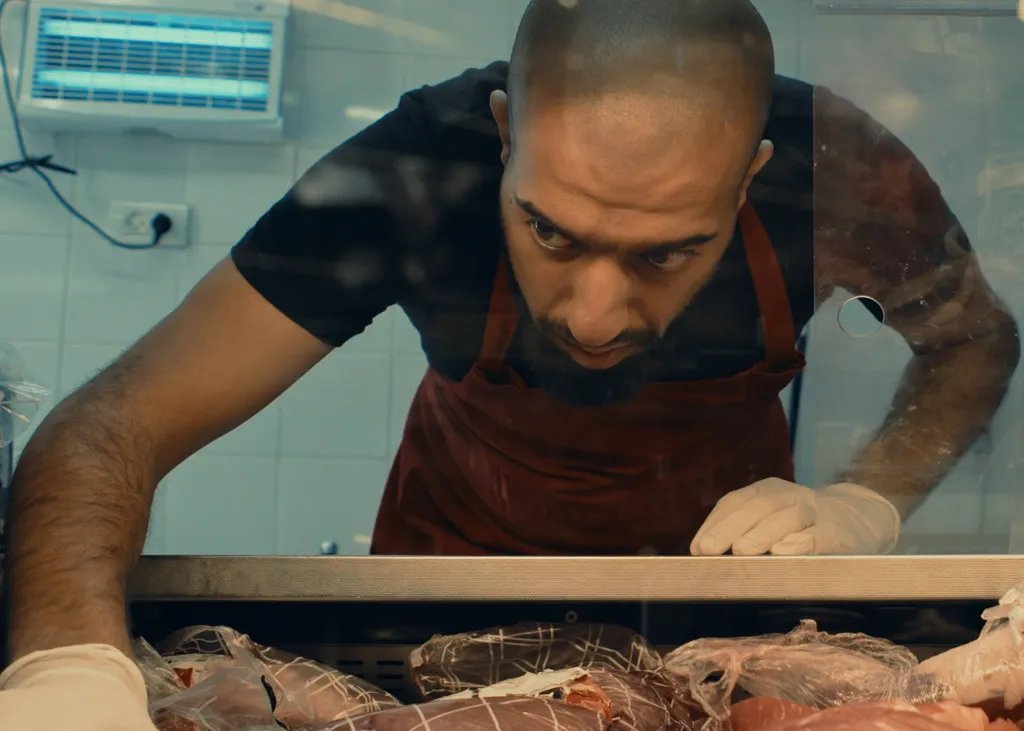
The film, titled Butcher’s Stain, is a 14-minute narrative produced by Oron Caspi and the Steve Tisch School of Film and Television at Tel Aviv University. Set against the backdrop of the October 7, 2023, terror attacks in Israel and Palestine, the story follows Samir (portrayed by Omar Sameer Mahamid), an Arab butcher who faces wrongful accusations of vandalism. Struggling under scrutiny and discrimination, Samir fights to clear his name and retain his job to support himself and his child.
Levinson-Blount detailed the inspiration for Butcher’s Stain, saying, “I went to work at a supermarket after the 7th of October. During that time, I basically witnessed all of the effects of the war within the supermarket itself, which is a microcosm of Israeli society.” He noted the pervasive racism directed at Palestinians during this period, expressing a desire to address both the traumatic events of October 7 and the discrimination faced by innocent individuals.
The choice to center the film on a butcher emerged from a deliberate contrast between profession and personality. Levinson-Blount explained, “I think that the important thing… is to show that the stereotype is absolutely false and has nothing to do with the person.” He aimed to challenge preconceived notions about various communities, illustrating that “a lot of the time, there really is no basis for all these racist stereotypes.”
His casting process for Samir was significantly influenced by collaboration with Palestinian actors. Levinson-Blount contacted a lecturer who connected him to an agent for Palestinian talent. “I sent the agent the script, and he showed me Omar,” he recalled, praising Mahamid’s performance and noting the adjustments he made to accommodate the actor’s schedule.
Logistical challenges, including the ongoing conflict during production, occasionally disrupted filming. Levinson-Blount shared his commitment to authenticity in telling Palestinian stories, stating, “I had to listen to what the Palestinian actors had to say to direct in a way that authentically respects their story and narrative.”
While the film confronts sensitive issues stemming from the Gaza conflict, Levinson-Blount expressed concern about discussing these topics publicly, particularly on social media. He emphasized the importance of respectful dialogue, stating, “I wanted to create… a way to connect with Palestinian Israeli actors.”
Reflecting on the accolades his film received, Levinson-Blount responded, “This is a very surreal experience for me.” He attributed its success to the emotional and humane approach to storytelling, differentiating it from politically charged narratives. He concluded, “I think what I wanted to do was really connect the audience on a human level… and have the viewer experience that in a humane way.”
This interview has been edited for length and clarity.


