

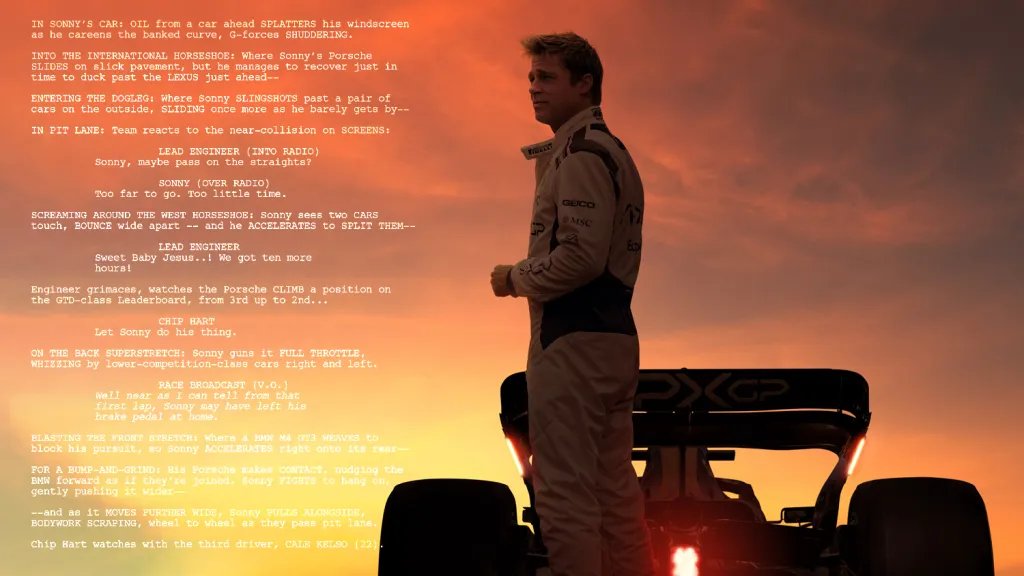
F1: Explore the Screenplay by Joseph Kosinski and Ehren Kruger That Put Brad Pitt Behind the Wheel
Film Breaks Records, Delivers Heartfelt Story of Redemption
Since its premiere on June 27 in U.S. theaters, the film has achieved remarkable success, grossing $631.1 million globally. This makes it the highest-grossing sports movie of all time and the most lucrative of Brad Pitt’s career. The film has also received significant praise, being named a Top 10 film by the National Board of Review and securing seven nominations for the Critics Choice Awards.
The narrative unfolds as a tale of redemption set against the thrilling backdrop of Formula 1 racing. It transcends the confines of a traditional sports drama to explore deeper themes of rivalry, partnership, and reclaiming lost legacies.
At the center of the story is Sonny Hayes, played by Pitt—a once-promising star of the 1990s who earned the somber title of "the greatest that never was" after an accident abruptly ended his career. Thirty years later, Sonny finds himself a wandering racer. His former teammate, Ruben Cervantes (Javier Bardem), who now manages a struggling F1 team, persuades him to undertake one last comeback. The tension builds as Sonny seeks not only to save the team but also to reclaim his status as a top driver.
Sonny’s unexpected return brings him into a close partnership with the team’s current standout, rookie Joshua Pearce (Idris Elba). Their dynamic forms the emotional core of the film, played out during real Grand Prix weekends. However, as the competition ramps up, Sonny’s past resurfaces, posing formidable challenges on his road to redemption.
The principal theme is one of second chances. Sonny’s journey reflects the struggle to overcome years of failure and injury, emphasizing the timeless message that it is never too late to face past traumas and pursue longstanding dreams.
This quest for redemption is further complicated by a generational divide and the theme of mentorship. The collaboration between Sonny and Joshua illustrates a compelling contrast between seasoned experience and youthful ambition. Their relationship prompts a deeper exploration of legacy, questioning whether it is forged through mentoring future talent or through competing alongside them.
The film also highlights the duality of competition and partnership. As teammates, Sonny and Joshua must unite for the success of their team, yet they grapple with their individual aspirations. This internal conflict amplifies the stakes, compelling Sonny to balance the necessity of teamwork with his drive for personal glory.
Ultimately, the film is a high-octane drama that intertwines the urgency of professional triumph with a poignant personal journey, illustrating one man’s quest to overcome his past for one final chance at greatness.