Darren Aronofsky Shares Insights on ‘On This Day… 1776’, His Primordial Soup Projects, and Concerns in the Film Industry at Cannes AI Summit
Director Darren Aronofsky, known for acclaimed films like Black Swan and Requiem for a Dream, is moving forward with his American Revolution-themed AI project, On This Day… 1776. The initial release of the project in January received significant criticism, but Aronofsky remains optimistic about its potential.
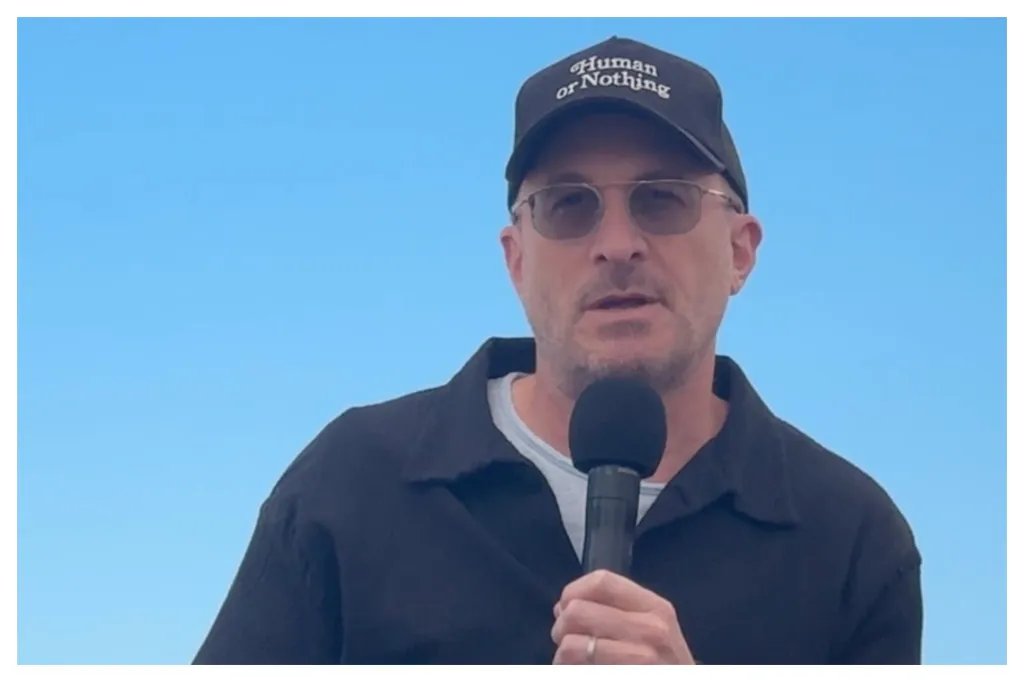
Speaking at the AI for Talent Summit in Cannes, Aronofsky emphasized that the work, created under his AI-based studio Primordial Soup, is intended as an experiment. He conceived the project in November 2025, inspired by the upcoming 250th anniversary of the Declaration of Independence on July 4, 1776. “I was like, could we make 30, 35 five-minute-long films about what happened on this day 250 years ago? It was always seen as an experiment,” he explained.
Aronofsky noted that the quality of AI-generated content has improved significantly since the first episode’s release. “If you look at the first release we did in January, and then you compare it to the project we just released on April 29, it’s mind-blowing,” he said. He expressed confidence that as the year progresses, the capabilities of AI will continue to evolve. “By December 24, when George Washington is crossing the Delaware, it’s going to be a whole other level of what is possible.”
During the summit, Aronofsky conversed with James Manyika, President of Research, Labs, Technology & Society at Google, highlighting the debut of Primordial Soup’s film Goodnight Lamby at Cannes this year. This short film, created in collaboration with Google DeepMind, reflects a merger of live action and AI-powered animation.
Aronofsky’s interest in AI was sparked in 2023 by the generative capabilities of the AI app Midjourney. “I was just blown away because I instantly realized that it was going to change everything that we do as filmmakers,” he explained. He stressed that these new technologies are not here to replace traditional filmmaking but rather to enhance it. “None of these movies would exist without this technology. They’re purely additive,” he stated.
Aronofsky addressed misconceptions surrounding AI’s role in filmmaking, asserting that it requires extensive human creativity and effort. He cited the use of AI in generating images for Ancestra, inspired by director Eliza McNitt’s own birth experience, illustrating the ethical complexities of working with newborns in a filming context.
While acknowledging concerns about AI’s impact on job security in the creative industries, Aronofsky suggested that the technology could ultimately liberate artists. He pointed to Goodnight Lamby, featuring voice talents like Chris Rock and Paul Rudd, as an example of how AI can facilitate ambitious projects that otherwise might not come to fruition.
Reflecting on the evolution of filmmaking, he argued that AI represents another tool in the filmmaker’s toolkit, similar to the introduction of sound and visual effects. “It’s going to change a lot. It’s not necessarily replacing, and there will be many additive elements to it,” he asserted.
Aronofsky emphasized that traditional cinematic experiences will continue to thrive, arguing that films featuring prominent directors and actors will always attract audiences. “It’s not one or the other,” he said, challenging the notion that AI can replace human storytellers. He stated, “It’s not anywhere in our lifetimes… It may actually be even easier to tell stories,” suggesting that technology may free storytellers from logistical constraints.
As the conversation around AI in filmmaking continues, Aronofsky’s insights underscore a complex landscape where technology and creativity intersect, paving the way for future innovations in storytelling.