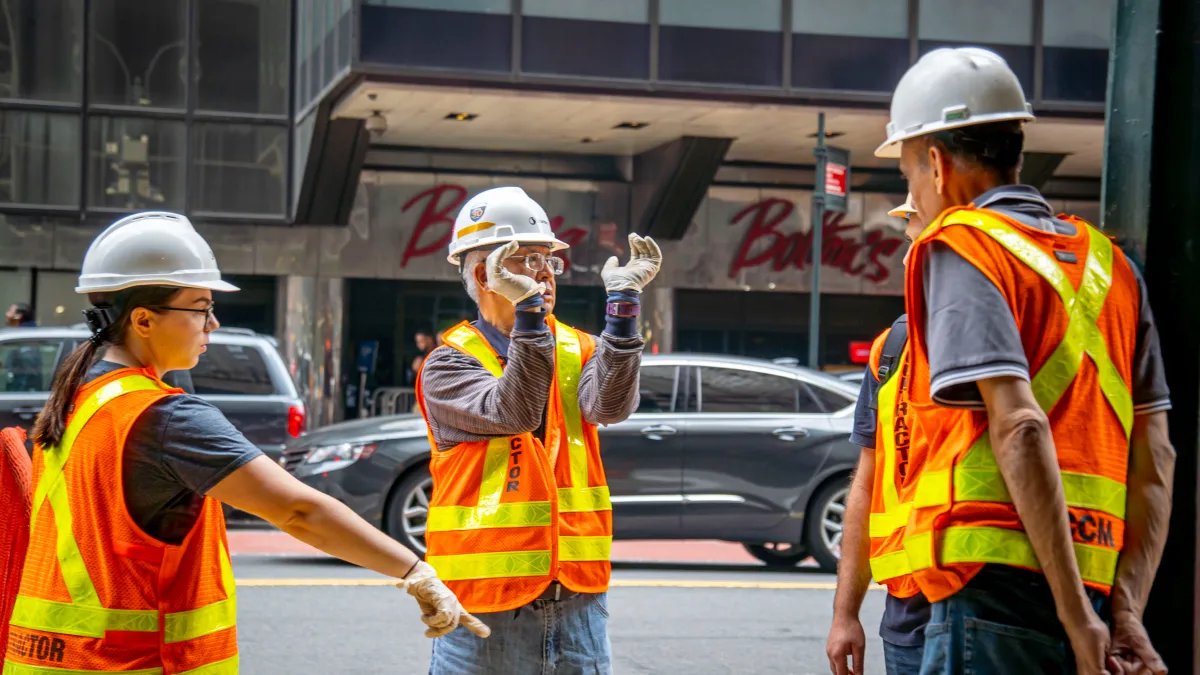
Community Colleges Step Up to Train 100,000 Construction Workers for LA’s Growing Needs
Community College Training Addresses Critical Workforce Shortage in Construction
In the wake of devastating fires in Los Angeles, some community college certificates in construction are poised to lead students to lucrative careers, with potential earnings exceeding $40 an hour. This shift comes as local educational institutions aim to combat a dire shortage of qualified workers in the industry.
Hudson Idov’s journey into the construction field began with personal tragedy; during his senior year of high school, his home was destroyed in the Palisades Fire. Shortly after graduating, he and a classmate enrolled in the carpentry program at Los Angeles Trade-Technical College to pave the way for their goal of starting a construction company aimed at rebuilding their community. "We have big, big 10-year plans," Idov shared during a recent class break.
The urgency of rebuilding has never been more pronounced. Prior to the Palisades and Eaton fires last year, Los Angeles experienced a shortage of approximately 70,000 qualified construction workers. The recent disasters exacerbated this problem, leading to a current need for over 100,000 workers in construction and related fields. A state analysis estimates median hourly wages in the industry to be just under $30, though this varies based on position and experience.
To address this growing demand, California has allocated $5 million to five community colleges in Los Angeles to enhance workforce training programs. Recently, Los Angeles Trade-Technical College received its share of this funding, which will support new curricula and supply purchases for students entering the construction field. Additionally, Pasadena City College plans to utilize part of these funds to construct a new 55,000-square-foot training center.
Despite the essential role of community colleges in preparing students for careers, historical recovery from such disasters is slow. Cities impacted by fires in 2017 and 2018 still struggle with incomplete rebuilding, highlighting the long-term challenges ahead.
"We can’t put out enough people," remarked Jaime Alvarez, one of Idov’s carpentry instructors, as the sounds of hammering and drilling filled the air. Currently, Alvarez teaches about 30 students in what is likely the largest carpentry program in California, enrolling over 1,800 individuals each year.
Idov continues to navigate the personal repercussions of the fire while dedicating himself to his education. Living in an Airbnb with only a few belongings salvaged during evacuation, he balances his studies with part-time work for a general contractor. The carpentry program at Los Angeles Trade-Technical College spans two years and involves approximately 25 hours of study per week. This semester, students are learning critical skills, including building concrete foundations—an especially relevant area given the impact of fire damage on such structures.
Alvarez noted that high heat from fires can compromise concrete, making it difficult to work with. The course must carefully manage concrete usage, as costs can be prohibitive. Although the college’s construction programs have an annual budget exceeding $10 million, a significant portion is allocated to salaries, leaving just over $575,000 for supplies. The recent state grant is expected to ease supply costs, particularly for concrete materials needed in students’ coursework.
While new funding provides some relief, financial challenges remain. Los Angeles Trade-Tech was poised to receive $2 million from a $20 million federal grant from the Environmental Protection Agency, aimed at supporting construction programs. However, the grant faced cancellation under the Trump administration, leading to legal challenges from environmental justice groups about the decision.
Student retention in the construction programs presents an ongoing challenge. According to data from students who began their studies in 2021, only about 33% secured a certificate, degree, or transferred to a university within four years. Many students, particularly those from low-income backgrounds, juggle educational demands with family responsibilities and full- or part-time jobs.
Nicole Jordan, an instructor for first-semester carpentry students, highlighted the realities of the program, saying, “We do a lot of math and a lot of book work,” emphasizing that comprehensive understanding is essential before students can begin hands-on building. Despite the difficulties, a sense of camaraderie and community thrives among the students, who celebrate their achievements with a spirited cheer: "We the best," one shouts, with the class responding in unison, "Carpentry."
Jordan’s students are preparing to bring a blueprint of a home to life within four semesters—an ambitious goal that reflects their commitment to revamping the landscape of Los Angeles through education and community revitalization.