

Cargo Ship Monitored at Long Beach Port After Containers Sustain Storm Damage
Cargo Ship at Port of Long Beach Under Scrutiny After Container Damage
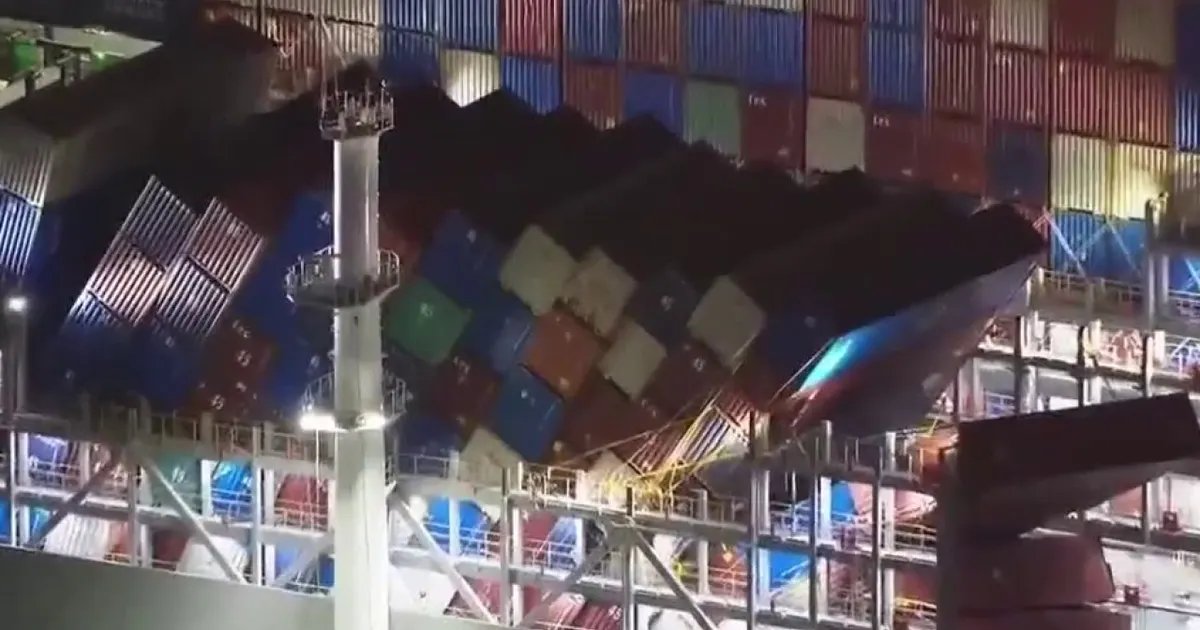
LOS ANGELES COUNTY, Calif. – A cargo ship docked at the Port of Long Beach is currently under scrutiny following damage to dozens of its containers during a turbulent journey across the Pacific Ocean. The vessel, known as the OOCL Sunflower, has been closely monitored since its arrival last week, as officials assess the extent of the damage sustained during its voyage.
Preliminary inspections revealed that while the ship itself appears structurally sound, the cargo has suffered significant degradation. The ship was kept offshore for several days as crews worked to evaluate its load, implementing additional lashings to secure unstable containers before allowing the vessel to enter port.
In response to the situation, the U.S. Coast Guard has set up a 100-yard safety zone around the OOCL Sunflower to facilitate efforts to stabilize and remove the compromised containers. Authorities expressed concerns about the potential for further containers falling into the water.
Maritime expert Sal Mercogliano noted that extreme sea conditions can lead to the destabilization of stacked containers. "The way you stack containers is kind of like Lego blocks. Once one goes, the others start to go," he stated, drawing an analogy to the precariousness of a Jenga tower.
Tracking data indicates that the ship traveled from Taiwan to Southern California, encountering waves reaching 20 feet near the Aleutian Islands. Preliminary reports indicate that at least 32 containers were lost overboard, with many more showing signs of damage. Mercogliano explained that harsh winds and waves can cause a vessel to yaw, potentially leading to containers collapsing or the rigging failing.
This incident follows a similar occurrence six months ago, when over 70 containers fell from another ship near the same port, resulting in significant cleanup efforts. Officials emphasize that the removal of damaged containers must be conducted carefully to mitigate environmental risks. "It’s a laborious chore to get all those containers off, and you want to avoid further spills," Mercogliano remarked, highlighting the complexities involved in the cleanup.
As of now, details regarding the contents of the damaged containers remain unclear, but a comprehensive cleanup operation is anticipated to commence as soon as Thursday.


