
Agoura Road Closure for Wildlife Crossing Work on the 101 Freeway
Construction Underway for Wallis Annenberg Wildlife Crossing
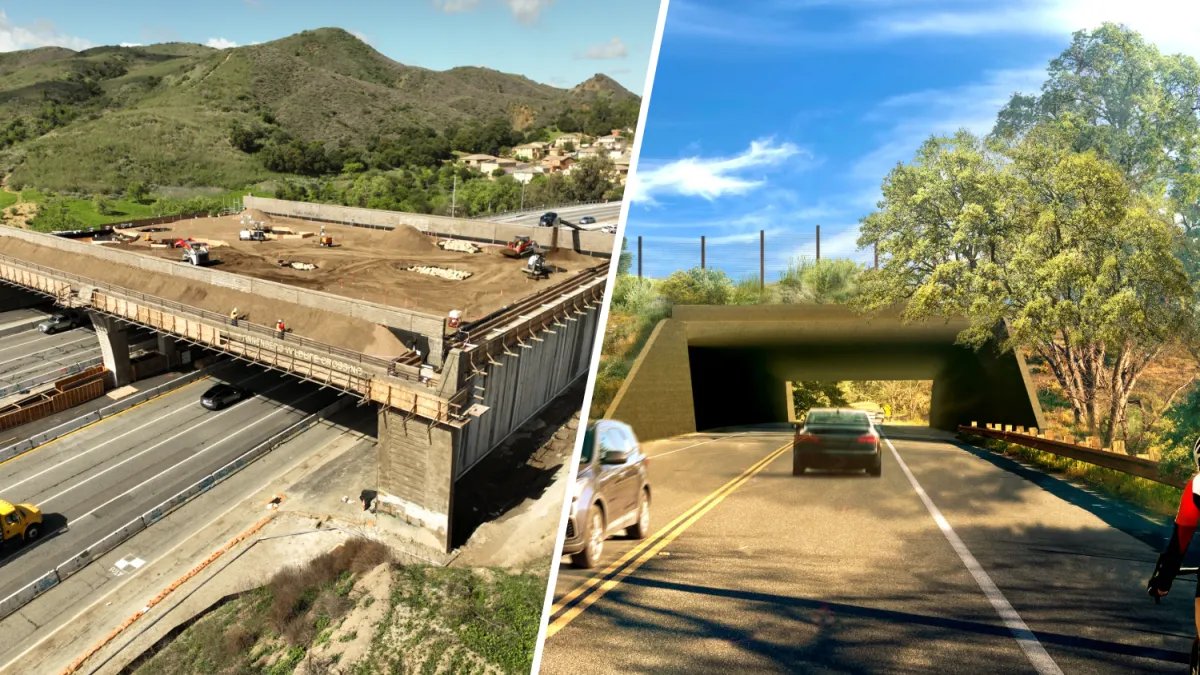
The Wallis Annenberg Wildlife Crossing project, aimed at creating a safe passage for mountain lions and other wildlife to cross the 101 Freeway northwest of Los Angeles, is set to disrupt traffic patterns this week.
Starting Wednesday, Agoura Road will be closed from 7 a.m. to 5 p.m. between Rondell Street and Hydepark Drive to allow construction crews to place concrete, as confirmed by Caltrans. During this time, through traffic, including drivers, cyclists, and pedestrians, will not be permitted. A free shuttle service will operate every 30 minutes to assist in navigating the closure.
Once completed, the crossing will feature a landscaped path over the busy freeway, facilitating animal movement in an increasingly developed landscape. Though smaller than the primary bridge, the structure poses significant engineering challenges due to the necessary earthwork for its foundation and surrounding habitat. It is designed to include a nearly 1-acre native wildlife habitat, utilizing approximately 6,000 cubic yards of soil.
Construction began on Earth Day 2022, with an expected completion in 2026. The project incorporates coastal sage scrub plant species native to the Santa Monica Mountains and is part of a broader ecological restoration plan, revitalizing an additional 12 acres of open space. This effort will require the planting of 50,000 native plants, trees, shrubs, and perennials.
Over the years, the project’s native plant nursery has collected more than 1.1 million seeds from over 50 distinct native plant species in the region. The nursery staff is cultivating various trees and plants, including coast live oak, valley oak, and California buckwheat, which will also contribute to reducing fire risk and enhancing wildlife support.
The need for this crossing has become increasingly urgent as the mountain lion population in the Santa Monica Mountains faces the risk of extinction within the next 50 years due to genetic isolation caused by highways. Conservationists foresee the $85 million crossing as a crucial measure to ensure the longevity of these animals.
A key figure in raising awareness for the project has been mountain lion P-22, who famously traversed two freeways to establish residency in Griffith Park. This big cat has symbolized the pressing issue of genetic diversity among local wildlife, which is severely compromised by urban development.
The construction of this wildlife crossing, spanning 200 feet above one of the world’s busiest freeways, represents a significant step towards improved wildlife mobility. The $90 million budget will be funded primarily through private donations, with around 60% coming from individual contributions, while public funds account for the rest. The structure will bear the name of Wallis Annenberg, thanks to a generous $25 million donation from her foundation.
Such wildlife crossings are common in parts of Europe and Canada; for instance, a notable one in Banff National Park allows safe passage for bears and moose. The Los Angeles-area’s project has garnered wide support, with nearly 9,000 comments on its draft environmental impact report resulting in only 15 opposed.
Current estimates suggest between 4,000 and 6,000 mountain lions inhabit California, but wildlife officials caution that this figure lacks precision due to a lack of comprehensive statewide studies. While mountain lion sightings are reported regularly, the California Department of Fish and Wildlife indicates that attacks on humans are rare, as these animals typically avoid human contact.