
A Thoughtful Look at Ryusuke Hamaguchi’s Epic Review of French Health Care at Cannes
Japanese director Ryusuke Hamaguchi continues to make waves in the film industry with his latest work, All of a Sudden, which premiered at the Cannes Film Festival this year. Hamaguchi, who gained international acclaim with Drive My Car, returns to the festival spotlight with a film that has already garnered attention for its lengthy runtime of 3 hours and 16 minutes, making it the longest entry in this year’s competition.
In previous years, Hamaguchi’s films have been celebrated for their storytelling depth. Drive My Car was recognized at Cannes in 2021 with three awards, including Best International Film, further solidifying Hamaguchi’s reputation in global cinema. All of a Sudden, co-written with Lea Le Dimna, draws inspiration from the book When Life Suddenly Takes a Turn: Twenty Letters Between a Philosopher with Terminal Cancer and a Medical Anthropologist. The film centers on the poignant correspondence between two women—Mikako Miyano, a philosopher diagnosed with cancer, and Maho Osona, a medical anthropologist.
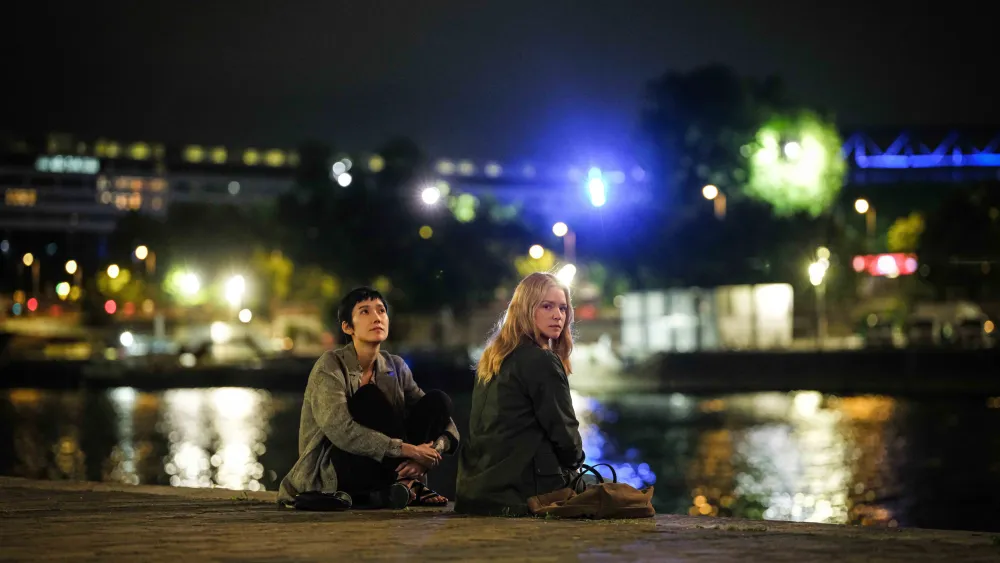
Hamaguchi aims to explore themes relevant to both cultures by setting the film in France, where he believes audiences may be more receptive to the story’s nuances. The narrative introduces Marie-Lou (played by Virginie Efira), a healthcare director at a French nursing home, and Mari (Tao Okamoto), a Japanese director whose production touches on psychiatric issues. The film delves into discussions about France’s healthcare system and capitalism’s impact on it, underscoring Marie-Lou’s efforts to advocate for a more humane approach through the philosophy of Humanitude.
Critics note that while the film presents rich thematic material, its length often hampers its emotional impact. Lengthy sequences risk overshadowing the narrative’s resonance, with some portions feeling more like academic discourse rather than cinematic storytelling. This approach may challenge viewers to remain engaged as the film often pauses for extensive dialogues about systemic issues.
As the plot unfolds, the connection between Marie-Lou and Mari deepens, particularly after a dramatic moment in which Mari reveals her terminal diagnosis. Their relationship grows as they navigate health care’s complexities, highlighted by discussions that at times veer into the realm of overt lectures. The film does feature moments of tenderness and beauty, especially when Mari invites Marie-Lou to Kyoto, offering a glimpse into their personal connection.
The performances of Efira and Okamoto stand out, resonating well with the film’s emotional beats. Both actresses portray a genuine bond that reflects the film’s core themes of compassion and understanding amidst adversity. However, the pacing may challenge audiences, as the leisurely development can feel drawn out, leaving viewers yearning for more substantial plot progression.
Despite its challenges, All of a Sudden successfully sheds light on pressing issues within health care and societal attitudes toward aging. Neon, the film’s distributor, faces an uphill battle in attracting audiences given its runtime and thematic weight. Nevertheless, the film’s insights and the beautifully crafted moments offer a glimpse of hope amid its somber subject matter.
Title: All of a Sudden
Festival: Cannes (Competition)
Distributor: Neon
Director: Ryusuke Hamaguchi
Screenwriters: Ryusuke Hamaguchi and Lea Le Dimna
Cast: Virginie Efira, Tao Okamoto, Kyoza Nagatsuka, Jean-Charles Clichet, Maria Bunel, Romain Cottard
Running Time: 3 hr 16 mins