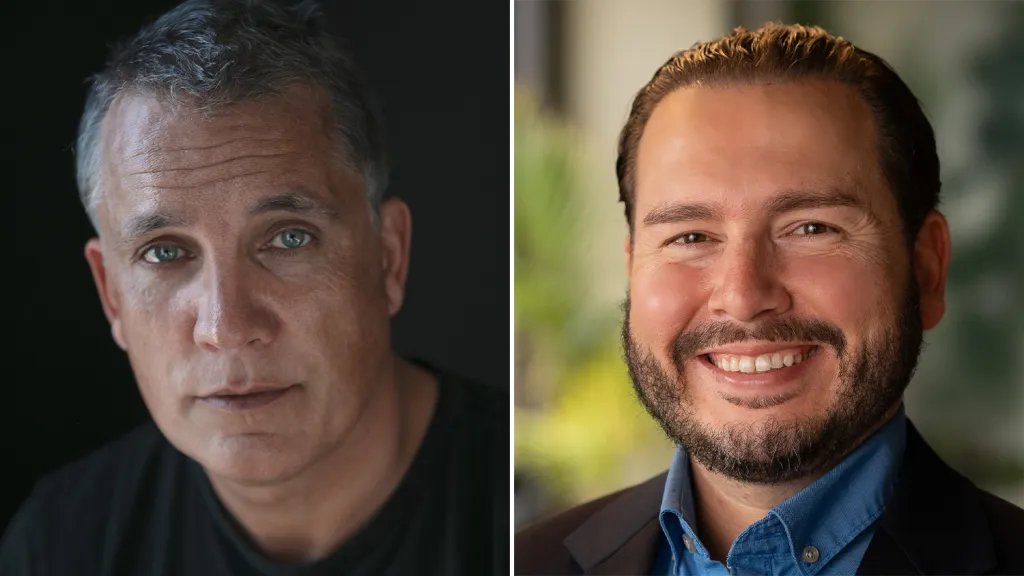
Insights from Stuart Ford and Miguel Palos on TV Trends, AI Impact, Film Sales Hurdles, and Saudi Arabia’s Future in Entertainment
EXCLUSIVE: Ahead of the Cannes market, industry veterans Stuart Ford, CEO, and Miguel Palos, COO, of AGC Studios, have renewed their agreements with the company, gearing up for what they describe as their “most prolific and profitable year to date.” With nearly two decades of collaboration, Ford and Palos have successfully navigated significant industry challenges, including financial crises, shifting streaming landscapes, and widespread consolidation. Ford remains the largest shareholder at AGC Studios, alongside founding investors from ImageNation in Abu Dhabi, Latin American investment fund Media Net, and Silicon Valley investor Greg Clark.
AGC Television is currently in production on the geopolitical action thriller series Embassy, featuring Anna Kendrick, Sam Heughan, and J.K. Simmons, and a Beatles biopic titled Hamburg Days. The company also recently produced the MGM+ mystery thriller series Vanished, starring Kaley Cuoco and Sam Claflin. In film, Lauren Miller Rogen’s Babies, featuring Anna Kendrick and Seth Rogen, is in post-production, along with Ellie Foumbi’s erotic thriller Fleur, starring Halle Berry. Pre-production is underway for J Blakeson’s Sweat, starring Ana de Armas.
In a recent interview, Ford and Palos discussed their strategic focus on television, challenges in film sales, the impact of AI, and the keys to their enduring partnership.
DEADLINE: You recently re-upped at AGC, but it’s your company. How does a re-up work in that context?
STUART FORD: It’s a collective board decision. As with any well-run business, senior management needs to be accountable to shareholders. I may be the largest shareholder, but Miguel and I regularly assess our suitability for our roles alongside our partners. We’re excited to lead AGC through the industry’s ongoing changes.
DEADLINE: What has been the secret to your long business partnership?
MIGUEL PALOS: We have complementary skill sets and compatible personalities. We both find humor in the absurdities of Hollywood and share a similar rhythm in our work. We are both passionate deal makers, adept at navigating both simple and complex situations with speed and decisiveness.
DEADLINE: You’ve mentioned that 2026 will be AGC’s most profitable year yet. How so?
FORD: In the last 18 months, we’ve experienced more activity than at any previous stage, with numerous films and shows in production and post-production. Building a diverse content studio has been a challenging endeavor, but we are now active across film, TV, documentaries, and factual content. Our first big-budget competition format show with Netflix is set to begin production in a few months. We’re finding new avenues for financing scripted TV, akin to traditional independent film models.
PALOS: At the start of the year, we realized that by 2026, we could have over 20 active film and TV projects. This represents a significant output for a company that has never employed more than 40 people in eight years.
DEADLINE: Is this optimistic projection based on your continued focus on TV?
FORD: The game show we’re producing is a commission that boosts cash flow, although we don’t own it. However, scripted TV has considerable potential, especially in the international market where many great projects and talents are seeking solutions. While traditional broadcasters are keen for premium shows, their financial capacity isn’t keeping pace. As a well-capitalized U.S. partner willing to take risks, we are tapping into a vast pool of opportunities, which can lead to substantial margins in successful projects.
DEADLINE: Who is leading your TV division?
FORD: Lourdes Diaz has played a pivotal role in building that division but has transitioned to a producer role this year for personal reasons. She remains involved in our projects, though we expect to announce a formal successor soon.
DEADLINE: There’s talk about a scripted drama series or movie related to “The Tinder Swindler” documentary. Is that true?
FORD: [Laughs] There’s a possibility of a scripted TV series spin-off, but I can’t disclose more details or the collaborators.
DEADLINE: At the Cannes market, you are launching sales for the AI-produced animated film Critterz. Are you concerned about potential backlash?
FORD: While Critterz uses AI for animation, all key creative roles involve human talent, from direction to voice acting. This $30 million project would have cost $100 million without AI, leading to significant savings in time and production costs. We believe this project sets a precedent for how Hollywood can utilize AI in animation while preserving human artistry, as noted by the Los Angeles Times, which suggested it might represent “AI’s Toy Story moment.”
DEADLINE: The market appears to be leaning away from big-budget projects like the $80 million-$100 million titles you once focused on. What has shifted?
FORD: Given the current economic climate, those large projects are no longer feasible. Companies like Lionsgate may occasionally release such titles, but the financial backing from private investments has dwindled, particularly due to the exit of Chinese and Russian funding.
DEADLINE: What challenges do you face in the Asian market?
FORD: The Asian market has been challenging for the past decade, as audiences have increasingly turned away from American independent films. Buyers in that region, once reliable for foreign pre-sales, are now much harder to reach. China has largely withdrawn from the landscape.
DEADLINE: With the Middle East emerging as a significant source of entertainment finance, do you believe Saudi Arabia is retreating from the entertainment and media sector?
FORD: I don’t believe so. I maintain strong relationships in the Gulf region, and their strategy focuses on developing a creative class while attracting global collaborators. The extent of their future investments in international projects remains to be seen.
DEADLINE: How might the experience of Desert Warrior affect Saudi Arabia’s film interests?

FORD: Desert Warrior was an outlier, reflecting a unique investment strategy by MBC to showcase their production capacity. While the film’s commercial performance did not meet expectations, it accomplished many of its strategic goals, such as building studio infrastructure and training local talent. The focus on learning and development is crucial in the region’s growth strategy.
Although audience reception fell short, it would be misleading to label Desert Warrior a total failure for MBC. The project made sense when initiated, despite numerous unforeseen challenges that ultimately compromised its commercial viability.
DEADLINE: When can we expect Babies and Fleur to debut?
FORD: We anticipate these films will be contenders in the fall festival circuit. Additionally, there is considerable interest in our Beatles series, Hamburg Days, which is currently in production, and Ana de Armas’ film Sweat is set to shoot later this year.
DEADLINE: Will we see another season of Roland Emmerich’s high-budget drama Those About To Die?
FORD: It seems unlikely. While we are incredibly proud of the show and its international success, it did not perform adequately on Peacock to justify a second season, which is disappointing.
DEADLINE: You’ve commented on the challenge streaming poses to the indie film sector. Do you see streamers as allies or adversaries?
FORD: Maintaining longevity in this industry is challenging. Our relationships with streaming platforms are a vital aspect of our strategy.
MIGUEL PALOS: Over two decades, we’ve successfully balanced risk-taking while consistently supporting projects and talents we believe in. We have built a reputation as calculated risk-takers, adhering to disciplined risk management practices.
FORD: Our strong in-house sales capability is an asset. Miguel is adept at leveraging debt financing to mitigate risk, and we have maintained flexibility in sharing equity risk with select capital partners. It may sound straightforward, but remaining at the forefront of this ever-changing industry for nearly two decades suggests a strong commitment to discipline, paired with a genuine passion for creativity.