
Michael B. Jordan’s Oscar Win: A Moment in Film History
Michael B. Jordan Wins Best Actor Oscar in Memorable Ceremony
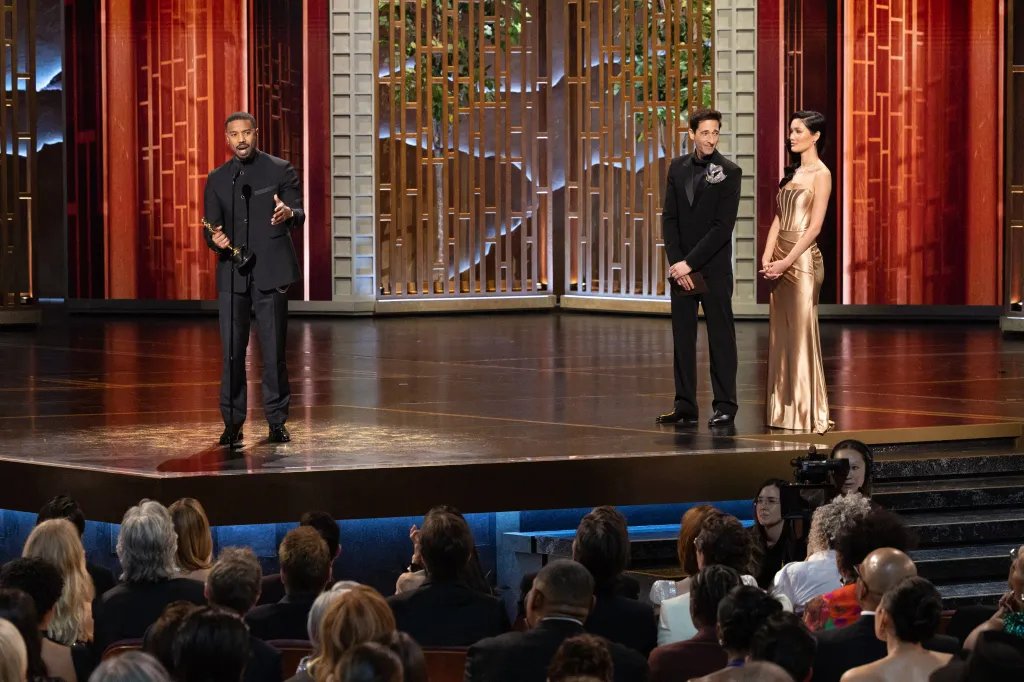
During the recent Academy Awards, Adrien Brody announced Michael B. Jordan as the Best Actor winner for his performances as twins Smoke and Stack in Ryan Coogler’s Sinners. The announcement provoked a surreal moment for fans, particularly one who found themselves experiencing an emotional connection despite being 5,000 miles away in East London.
Sitting with his mother at the Dolby Theatre in Hollywood, Jordan was greeted with roaring applause as he processed the significance of his win. The emotions of the ceremony seemed to transcend distance for the onlooker, who noted feeling "as if inside the Dolby," reflecting the unique phenomenon of mirror-touch synesthesia or narrative transportation.
Meryl Streep famously described a similar thrill upon winning the Best Actress Oscar in 1983 for Sophie’s Choice, recounting how her parents reacted with sheer joy. This sentiment resonated during the evening when personal items, like a delicate bone china mug, were almost toppled from excitement.
The event marked a pivotal moment in Jordan’s career, showcasing him as a leading figure in the film industry. His previous collaborations with Coogler, such as Fruitvale Station and Black Panther, have solidified his status. While some films have resonated more than others, the emotional impact of Oscar night was undeniable for many viewers, as Jordan’s win represented a significant milestone.
For decades, recognition of Black actors at the Oscars has been limited. As noted, out of the 98 Best Actor awards presented, only six have gone to Black men, making Jordan’s win a historical achievement.
Historically, it took 35 years for Sidney Poitier to win Best Actor for his role in Lilies of the Field, while Denzel Washington followed much later with his win for Training Day in 2002. The narrative of Black excellence in cinema continues to evolve, underscored by this groundbreaking acknowledgment of Jordan’s talent.
The ceremony itself had its highlights and low points. While broadcasters faced criticism for their coverage, certain moments stood out: the emotional embrace between Jordan and his mother, and touching speeches from other winners, including Jessie Buckley’s overwhelmed reaction to her win.
The event also featured Autumn Durald Arkapaw’s historic win for cinematography, where her acknowledgment of women in the audience added a meaningful touch to the night.
As the dust settles from the Oscars, it’s evident that while the glitz may fade, the significance of moments like Jordan’s win will leave a lasting impression on both the industry and its viewers.