

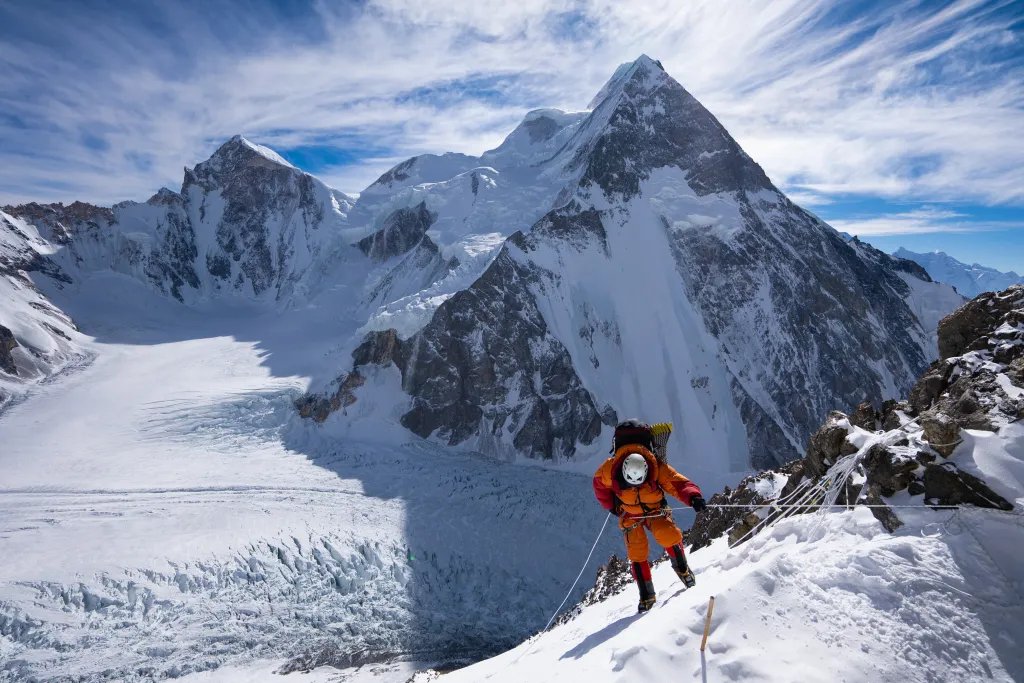
Facing Challenges at 28,000 Feet: Sundance Documentary ‘The Last First’ Shares the Winter Expedition to Conquer K2
K2’s Last Frontier: A Documentary Chronicles Winter Ascent Attempt
By January 2005, all of the world’s tallest mountains—the 14 peaks soaring above 8,000 meters—had been successfully summited during winter, except for one: K2 in Pakistan’s Himalayas. This peak represented the final significant challenge in mountaineering—dubbed “the last first.”
In 2020, Icelander John Snorri embarked on the mission to become the first person to summit K2 in winter, accompanied by Pakistani climber Ali Sadpara. Their expedition unexpectedly attracted other climbers, creating a perilous situation on the mountain.
The harrowing events surrounding the ascent and its dire consequences are captured in the documentary The Last First: Winter K2, which will have its world premiere at the Sundance Film Festival on Thursday.
“What began as a quest for alpine glory rapidly descended into a chaotic free-for-all,” the synopsis states. “By the time the K2 base camp emptied, one team had made history—and five climbers were dead.” The film is directed by Amir Bar-Lev, known for The Tillman Story and Long Strange Trip.
Climbing K2 poses enormous risks. Like the other 13 highest peaks, it breaches the “death zone,” where the thin atmosphere fails to support human life for extended periods. According to Bar-Lev, K2 is even more perilous than Mount Everest due to its technical routes and the treacherous winter conditions. He notes that the mountain is subjected to rapidly changing weather as it lies in the path of a jet stream, leading to hazardous situations, including constant rockfall.
Snorri and Sadpara began their ascension with a small team, which included Sadpara’s 21-year-old son, Sajid, and world-class Chilean climber Juan Pablo Mohr Prieto. The group set up a base camp and prepared roped routes toward the summit. However, their plans were soon disrupted by the arrival of a Nepali team led by climber Nirmal "Nims" Purja, followed by less experienced climbers with a competing agenda.
“The danger was amplified significantly,” Bar-Lev states, highlighting the risks presented by numerous climbers navigating the mountain concurrently, each with varying skills.
Snorri and Sadpara initially aimed to collaborate with the Nepali team for a joint ascent, unaware of Purja’s secret intention to claim the summit for Nepal. Bar-Lev mentions that while some may perceive this behavior as treachery, it raises questions about sportsmanship and the unwritten codes that govern mountaineering.
“I find it interesting,” Bar-Lev says, “to explore gray areas where there are no clear heroes or villains.”
The multifaceted narrative of the climb is enriched by themes of national pride, the involvement of the Pakistani military, the impact of social media, and the filmmakers documenting the expedition. These complexities inevitably influenced the outcomes for climbers who faced both triumphs and tragedies on the mountain.
The Last First: Winter K2 is a collaborative production from Propagate, Ventureland, and Object, presented by West Buttermilk. Bar-Lev is seeking distribution at Sundance, emphasizing that the film is independently financed.
The success of previous adventure documentaries, such as Free Solo and Touching the Void, may inspire confidence in the filmmakers as The Last First: Winter K2 ventures into the competitive cinematic landscape with its compelling tale.