
Could Charlie Brooker’s AI Ideas Help Revive Our Movie Theaters?
Charlie Brooker’s Vision of Deepfaking Moviegoers Sparks Conversation in Cinema
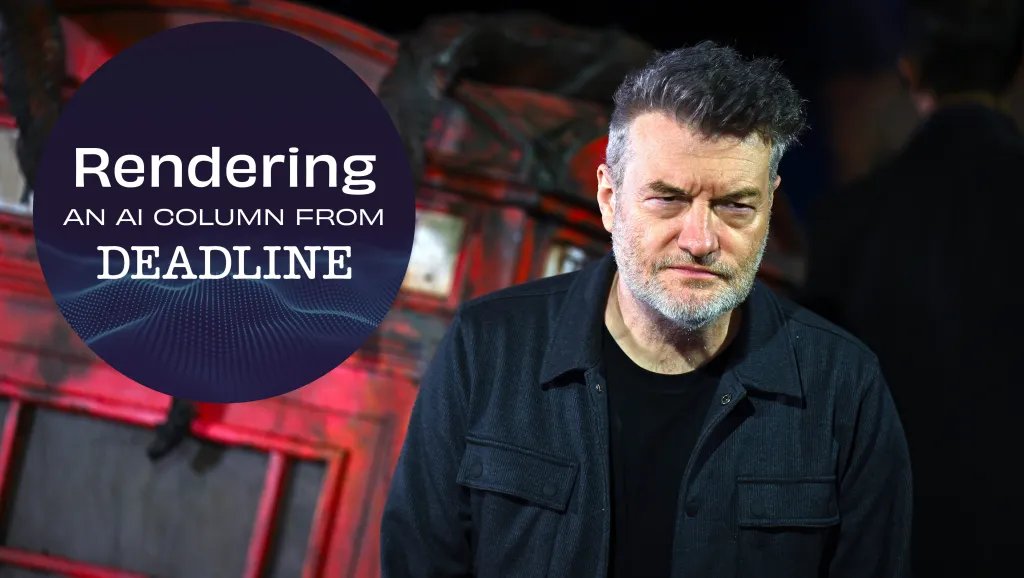
Charlie Brooker, the creator of Black Mirror, is renowned for his uncanny ability to foresee how technology might influence human experiences. With themes ranging from grief chatbots to dystopian social credit systems pervasive in his work, Brooker often mirrors elements of our reality in alarming ways.
During an on-stage interview at the 2025 Edinburgh TV Festival, Brooker proposed an innovative concept aimed at boosting cinema attendance. He suggested using AI to scan moviegoers’ faces as they enter theaters, allowing them to be randomly cast as characters in the films they watch. “So imagine if you went to see Raiders of the Lost Ark and you don’t know if you’re going to be Indiana Jones, or a melting Nazi,” he explained.
Just over a month after this idea surfaced, OpenAI released Sora 2, a platform enabling users to insert themselves into various movie scenarios through its "Cameos" feature, producing viral results. Brooker’s foresight in anticipating the blending of AI with audience engagement seemed confirmed once again.
In discussing the current landscape of AI-generated content, Brooker observed that much of this imagery is, in essence, a remix of existing works. “It’s telling, isn’t it, that a lot of the AI-generated imagery you see is a remix of other things," he noted.
However, questions linger about the practicality of implementing such technology in cinemas. While the technological capabilities are evolving, the storytelling techniques and audience expectations may not readily accommodate this shift.
Past attempts to innovate the cinematic experience, such as choose-your-own-adventure formats and the now-diminished appeal of 3D films, have often faltered. In 2013, the Dutch film APP allowed viewers to synchronize their phones to expand the storyline, yet it failed to gain traction in Hollywood.
"People just don’t go to the cinema for this stuff," said Sarah Atkinson, a professor of screen media at King’s College London. Film studies professor Julian Hanich from the University of Groningen shared a similar skepticism, highlighting that the essence of film enjoyment lies in immersing oneself in a separate world, a notion that could be undermined by AI inclusion.
Interestingly, two exhibition executives contacted for commentary on Brooker’s deepfake proposal declined to discuss the idea, indicating hesitation surrounding its feasibility. Yet, there remains interest within the industry. A substantial signal of this was Disney’s recent partnership with Sora, granting access to characters from beloved franchises like Frozen and Toy Story. The best user-generated content is set to feature on the Disney+ platform.
While it may not align perfectly with Brooker’s full cinematic vision, the ability for Disney superfans to appear in AI-generated videos on a major streaming service could be seen as a reflective twist worthy of Black Mirror.