

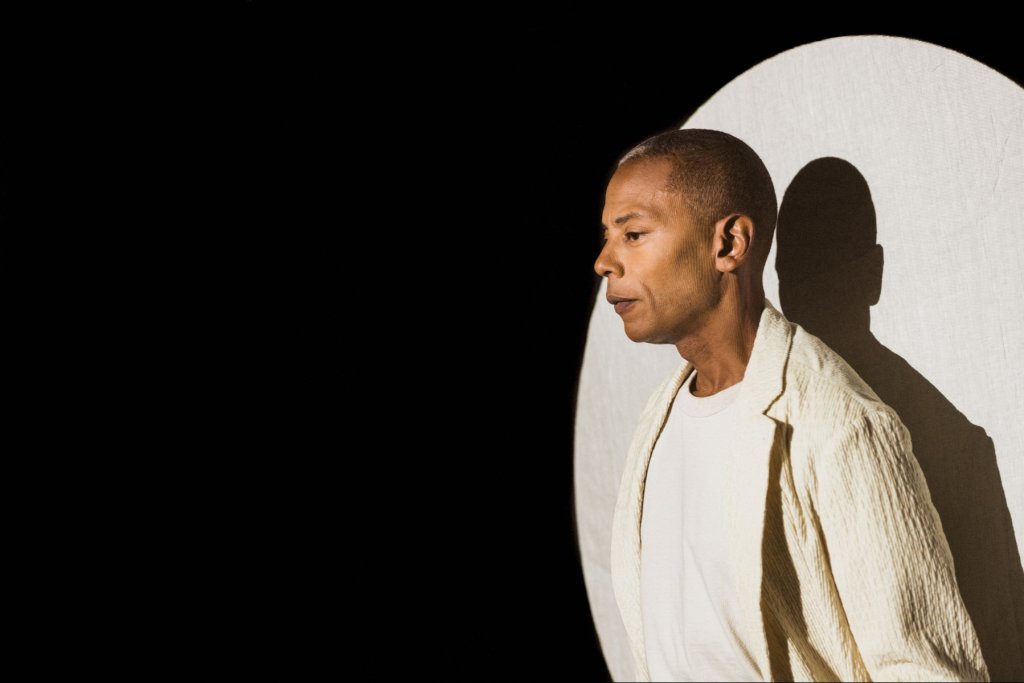
20 Questions with Jeff Mills: Why He Has Doubts About Technology’s Impact on Electronic Music
Trending on Billboard
Originally recorded at Tokyo’s Liquidroom nightclub in 1995 and released as a live album in 1996, Jeff Mills’ Live at the Liquid Room, Tokyo is hailed as a pivotal contribution to the techno genre. The album has become a vital reference point for producers seeking to understand and create within this musical landscape.
Explore
Jeff Mills
See latest videos, charts and news
In 1996, at the age of 23, Mills was already a leading figure in techno. Hailing from Detroit, the birthplace of the genre, he transitioned from performing in industrial and rock bands to electronic music, ultimately becoming a key player in the European techno scene during his time in Berlin.
Three decades later, Mills finds himself in a luxury hotel lobby in downtown Los Angeles on a bright Monday morning. Dressed in understated fashion, his calm demeanor reflects the depth of his experiences across music, film, and conceptual art. His work explores themes of dance, space, nature, and existence.
Regarded as one of the greatest DJs and producers, Mills contends that contemporary rankings have distorted DJ culture. He is in Los Angeles as part of his Live at the Liquid Room anniversary tour.
Recently, a downtown warehouse hosted a documentary screening about his acclaimed live set. The audience, filled with both newcomers and longtime fans, experienced his skills firsthand as he took to the decks following the film. The anniversary tour has attracted sold-out crowds across Europe, Asia, and North America, with upcoming performances in South Africa, China, and Australia.
Mills discussed the significance of Liquidroom and the mental strategies that help him navigate his performances.
1. Where are you in the world right now, and what is the setting like?
I’m in Los Angeles, California, and the weather is, from what I can see, perfect. Sunny, clear, not many clouds in the sky. But that’s expected in Southern California this time of the year.
2. What is the first album or piece of music you bought for yourself, and what was the medium?
I think it was a 45″ single of Elton John‘s “Philadelphia Freedom.”
3. What did your parents do for a living when you were a kid, and what do or did they think of what you do for a living now?
My mother was a housewife and also modeled, while my father was a civil engineer. Growing up in Detroit with its rich musical legacy made it easier to pursue a career in music. Although they would have preferred I attend college, my early gigs, including a radio program in the early ’80s, made them realize I was serious about my path.
4. What’s the first non-gear item you bought for yourself when you started making money as an artist?
I bought myself a watch in ’86 or ’87. I was DJing frequently, juggling multiple residencies in Detroit. Near my birthday, I realized I had nothing to show for my hard work, so I decided to invest in a watch.
[Rolls the sleeve of his sweater up to reveal a gorgeous Rolex.] That’s it. I wear it, although not all the time. It’s the oldest thing that I own.
5. If you had to recommend one album for someone looking to get into electronic music, what album would you give them?
I would give them Steely Dan’s Aja because it showcases exemplary musicianship, storytelling, and sound quality.
6. In the Live at the Liquid Room documentary, you discussed your track “The Bells” as pivotal in shifting the momentum of your set to a “place of no return.” Can you elaborate on how that track achieves this?
It involves conditioning. It’s intended to be played at specific times of the night so that the audience begins to understand its significance. This nonverbal connection triggers specific responses, enabling me to elevate the energy of the night.
7. You also mentioned the importance of “building a chain” with your setlist while thinking several steps ahead. How do you manage this mental multitasking?
DJing at a high level is akin to being an athlete; you must manage multiple aspects simultaneously. Over time, this develops a heightened peripheral awareness, allowing you to notice diverse elements within a club setting, from audience reactions to the acoustics in the room.
DJs develop the ability to multitask effectively, translating into broader life skills. I can work on multiple albums, travel, and manage daily tasks while remaining composed.
8. That sounds like a significant advantage, yes?
While it is beneficial, being a DJ at this level comes with sacrifices. A consistent travel schedule makes it challenging to maintain personal relationships and partake in regular activities.
9. Have you ever faced a pivotal moment where you questioned if your career was worth the sacrifices?
Many artists encounter this crossroads. For me, I have played music throughout my adult life. At this stage, it feels natural and effortless, not something I have to force myself to do.
10. Have you developed tools to help transition from performing to downtime in a hotel room?
A significant aspect is memory management. I purposefully try to forget details from performances. By not fixating on individual audience members, returning to the hotel feels less overwhelming.
11. Do you feel any empathy for young artists fixated on streaming metrics and social media validation?
My perspective is different; the music industry has never had more freedom. The moment you engage with your instruments, you are free to create in any form you desire.
12. Can you expand on that idea?
It’s a conscious choice to share music on social media or to adhere to perceived norms. If you genuinely love music, there’s much to learn from previous generations of DJs.
From observing other DJs, I learned there’s no perfect artistry and that the true goal is creating emotional resonance with the audience.
13. How have you witnessed DJ culture evolve during your career?
DJs initially contributed to the nocturnal experience but have increasingly become recognized figures, altering their role within nightlife.
14. Was there a specific moment when the prominence of DJs became evident?
In the early ’90s, a shift occurred as we embraced the idea of DJs as iconic figures. This mindset, largely influenced by Europe, reshaped the industry and diminished the focus on musicianship.
Unfortunately, this has overshadowed essential elements of creativity and artistry. However, this current tour emphasizes a return to those core values, attracting diverse audiences nationwide.
15. Do you still hold faith in technology as a pathway to a better future?
While it sounds contradictory coming from someone in techno, I believe the optimistic view of technology is overblown. Many younger DJs lack the musical depth that diverse equipment could enhance.
When machines overshadow personal skill, the essence of artistry fades. True talent doesn’t come from gadgets; it’s something inherent within the artist.
16. Having been part of the scene since its inception, do you believe an alternative DJ culture was feasible?
I experienced the evolution firsthand during the 80s and 90s. The trajectory we took was a collective choice, resulting in lost opportunities for the genre. While electronic music has produced stars, it continues facing challenges in recognition and distribution.
17. Is there potential for a course correction in the industry?
Younger generations who have grown up with electronic music may embody the hope for change. Dedicated artists might eventually gain recognition for their significant contributions.
18. Without sounding clichéd, could it be that the emotional connection you mentioned plays a role in sustaining the genre?
Absolutely, techno possesses a unique quality that evokes feelings of a futuristic experience, transcending traditional artistic boundaries. This powerful aspect can transform every performance into something truly special.
Techno’s appeal lies in its ability to resonate on a profound level, reinforcing its relevance and demand within contemporary culture.
19. Can you identify any individuals in this domain?
No, but during the pandemic, I opened our label to select techno artists who demonstrated a profound understanding of the music. In two years, we signed about 60 artists globally, and they thrived by exchanging ideas and concepts.
Each artist submitted detailed proposals for their albums, allowing them to develop conceptual work. The resulting music was thematically consistent, often exploring expansive subjects, positioning it as a core artistic endeavor with lasting significance.
20. Who do you consider your greatest mentor and what is the best advice they offered?
Prince. He not only excelled as a musician but also showcased remarkable management skills within his vast creative cosmos.