

Why Some Stuart Little Fans Are Surprised to Learn the Character Isn’t a Mouse, Even After 80 Years
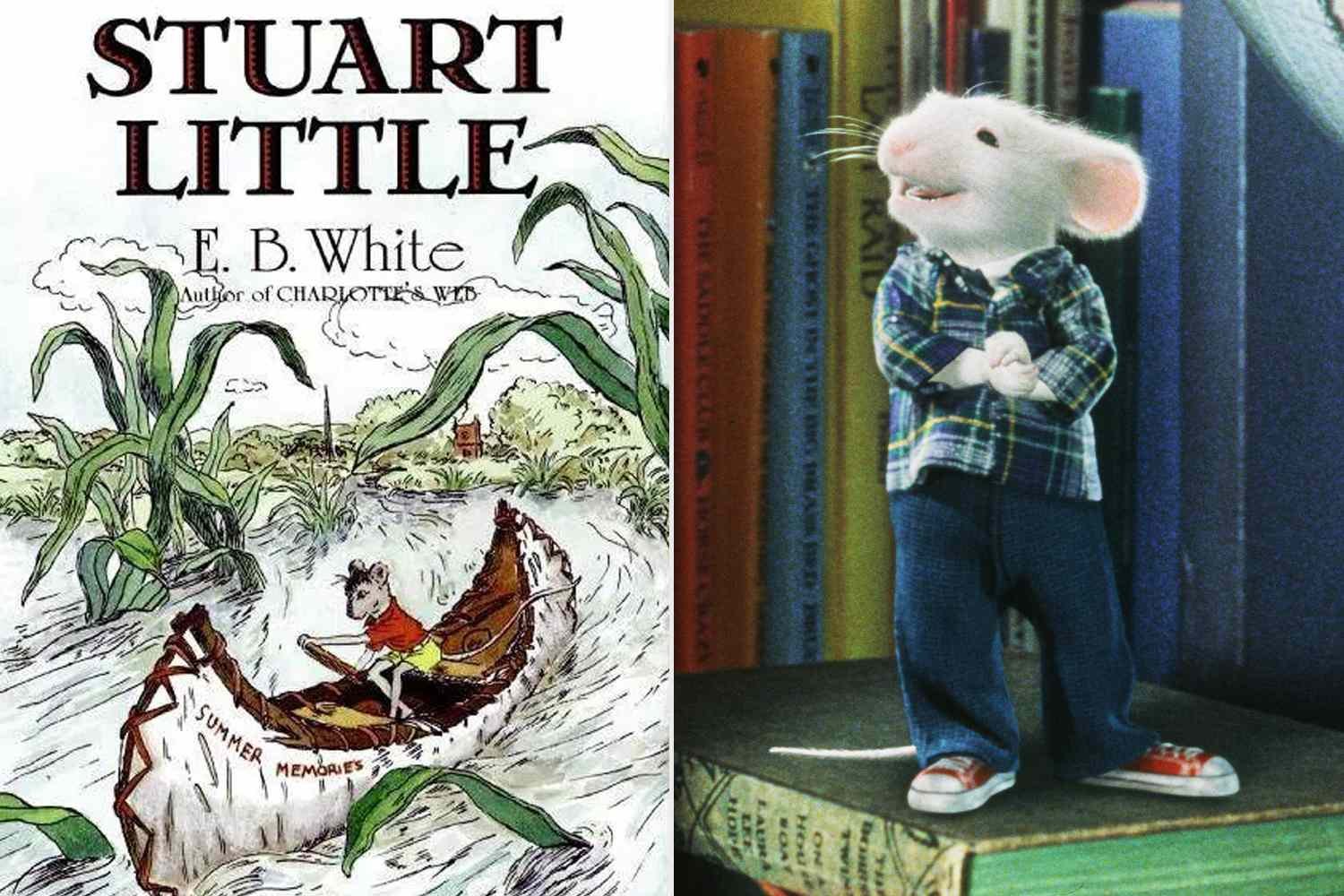
“Stuart Little” by E.B. White (left), Stuart Little character from 1999 film.
Credit :
Harper & Row; Sony Pictures Classics/Kobal/Shutterstock
NEED TO KNOW
- Stuart Little fans have recently discovered that in the novel, he is portrayed as a boy-like mouse, rather than a traditional mouse.
- This revelation has surprised many fans of the film trilogy, which depicts Stuart as an adopted mouse.
- The discussion around this detail dates back to the mid-1940s when E.B. White first prepared to publish Stuart Little.
Recent discussions have unveiled that Stuart Little is not exactly who audiences originally thought. Fans of the film series, which includes 1999’s Stuart Little, 2002’s Stuart Little 2, and 2006’s Stuart Little 3: Call of the Wild, recall the story of a small white mouse who seamlessly integrates into the Little family. However, many may be surprised to learn that Stuart was not conceived as a mouse in the original story.
The character actually originated from the 1945 children’s book written by Elwyn Brooks (E.B.) White. In the book, while Stuart’s appearance bears similarities to a mouse, he is referred to as a boy-like figure. “When Mrs. Frederick C. Little’s second son arrived, everybody noticed that he was not much bigger than a mouse,” White penned in the novel.
The opening passage further details Stuart’s mouse-like features: “He was only about two inches high; and he had a mouse’s sharp nose, a mouse’s tail, a mouse’s whiskers, and the pleasant, shy manner of a mouse.”
This realization gained traction earlier this week when film critic Chris Evangelista took to Twitter, expressing his surprise. “I’ve just now learned that in the STUART LITTLE book, Stuart is not actually a mouse but a human boy who looks like a mouse, and I don’t know how to process this,” he tweeted.
White initially crafted several tales about Stuart Little’s adventures for his 18 nieces and nephews before he brought them together into a book. The character’s inspiration struck in 1926 while White was working at The New Yorker. He recounted dreaming of a small character resembling a mouse: “a nicely dressed, courageous, and questing” figure.
Upon publication, the book met with mixed reviews, with some critics doubting its acceptance in libraries and schools due to its unconventional blurring of fantasy and reality. In original editions, Stuart was described as being “born,” but feedback prompted White’s colleague, Harold Ross, to suggest the character should be adopted instead.

“Stuart Little” by E.B. White.
Harper & Row
Despite the initial hesitance from libraries to stock the book, many educators found ways to introduce it to young readers, recognizing its significance and charm. The film adaptations may have taken creative liberties, but White’s intention for Stuart to be a boy-like mouse remains a vital aspect of the character’s legacy.


