

Uketsu Discusses ‘Strange Maps’ Hitting the First Billboard Japan Book Chart, Musical Influences, and Writing for a Single Reader: An Interview
Billboard Highlights New Literary Release
Strange Maps, the latest novel by acclaimed horror-mystery author Uketsu, has debuted at No. 1 on the inaugural all-genre chart of the newly established Billboard Japan Book Charts, affirming its immediate popularity.
Explore
Billboard
See latest videos, charts and news
Uketsu is renowned for his unique storytelling, which blends narrative with visual elements such as diagrams and illustrations. His works have gained a substantial following not only in Japan but globally, appealing even to those who typically do not engage with literature. His “Strange” series has sold over 8.5 million copies worldwide, with Strange Pictures alone accounting for 2.1 million copies across 37 countries, earning the title of a “global sketch million-seller.”
The fourth entry in his acclaimed series, Strange Maps, intricately weaves text with over 200 maps, set in eerie locales such as abandoned coastal towns and dilapidated tunnels. This installment synthesizes elements from previous “Strange” books, marking a definitive moment in the series.
With a remarkable 700,000 copies already in circulation, Strange Maps has been lauded as a “nationwide map mystery sensation.” Additionally, it debuted at No. 1 on the Billboard Japan all-genre book chart, known as the Japan Book Hot 100, which encompasses print sales, e-books, and library lending. The book has maintained this top position for four consecutive weeks on the Billboard Japan Hot Bungei (Literary) Books chart.
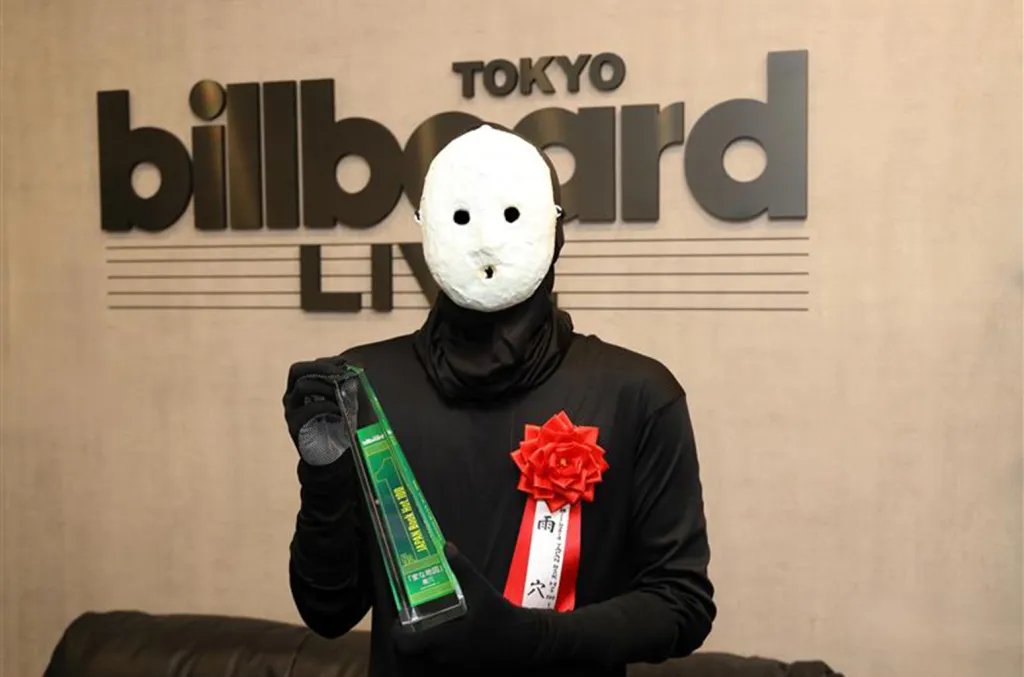
Uketsu attended the Billboard Japan Book Charts awards ceremony on December 16, appearing masked as per his usual practice. In a recent interview held shortly after the event, the enigmatic author revealed insights into the inspiration behind Strange Maps and shared his reflections on the “Strange” series. The discussion also explored, from Billboard Japan’s music perspective, how Uketsu interacts with music in his everyday life and how it influences his creative process.
What kind of music do you usually listen to?
“I lived in the U.K. as a child, and during that time, artists like the Spice Girls, Westlife, and Steps were immensely popular. I was constantly listening to them in the car. Oasis and R. Kelly were also prominent, but I found them a bit challenging to connect with at that age.”
“Upon returning to Japan, the first band I truly fell in love with was Southern All Stars. I remember clearly that their music resonated with me deeply. As I entered junior high and high school, I became increasingly interested in tracing the musical roots of my favorites, leading me to explore rock and pop from the ’60s and ’70s, and eventually working my way through the ’80s and ’90s.”
Out of all the music you’ve heard, is there one song that left the strongest impression on you?
“Sayonara Jinrui” (Goodbye, Humanity) by Tama. I first heard a brief excerpt on TV—it was only about ten seconds long—but it was unlike anything else I had encountered. Compared to Southern All Stars, it made a lasting impression on me.”
“At that time, most of the popular songs were love songs, which I couldn’t relate to as a child. They felt distant, belonging to an adult world. In contrast, Tama’s songs used relatable imagery like the moon and stars, making them more accessible to my younger self. That’s why ‘Sayonara Jinrui’ remains a very special song to me.”
How do you discover new music?
“I often consult Billboard’s global charts. While some songs can be challenging to embrace, I listen with a sense of obligation, thinking, ‘I need to properly understand this.’ I’m an amateur musician and make occasional video releases, so I keep track of the current sound landscape. It’s not necessarily about creating similar music but rather being aware of what exists.”
Your books are read by many international audiences as well. What do you hope international readers will enjoy about your work?
“I aim to write stories that don’t rely heavily on deep knowledge of Japanese grammar or culture. I want readers to approach my books casually, without feeling like they need to be well-versed in Japanese literature. It would be wonderful if they sense some Asian or Japanese qualities naturally through the narrative. Most importantly, I believe my books are easy to read, so I simply hope they will give them a try.”
Regarding your new book, Strange Maps, which is described as a culmination that brings together elements from the entire series, where did you invest the most effort?
“With Strange Houses, I often felt regret about its ending not fully developing as a mystery due to my skills at the time. That sentiment lingered, prompting me to ensure that with this latest work, I would refine motifs like abandoned environments while crafting a cohesive mystery. This time, I integrated insights and techniques I’d developed across my previous three titles, writing it as a book I could confidently offer to those curious about my work.”
Beyond debuting at No. 1 on the Japan Book Hot 100, Strange Maps has also spent four weeks at the top of the Japan Hot Bungei Books list and surpassed 700,000 copies in circulation as of December 2025. What do you think accounts for its broad appeal across diverse age groups, from adults to children in Japan?
“There was a significant gap since my last book, around two years, and I am grateful for the readers who waited. I write what genuinely interests me, and I think the enthusiasm translated into a wide readership. It’s a testament to readers nurturing the work along the way.”
It seems you’re very aware of what readers enjoy. Did you ever consider modifying your writing to attract a larger audience?
“From my experience, I’ve found that if I start focusing on larger audiences, it doesn’t yield good results. Instead, I write as if there’s just one reader in mind, considering their response as if in dialogue with myself. Pleasing that one reader is something I’ve always prioritized.”
What themes or genres are you currently interested in exploring in the future?
“While I’m uncertain if I could execute it well, I find myself intrigued by political dramas and financial narratives. They represent uncharted territory for me, but many compelling works exist in those genres that align with my interests. Should I attempt them, I suspect the outcome would be markedly different from my previous works, and it may take years, but it’s a direction I would like to explore someday.”
—This interview by Takanori Kuroda first appeared on Billboard Japan