
Thierry Frémaux Reflects on the Decline of Studio Films at Cannes and His Nostalgia for a Bygone Era
The 2026 Cannes Film Festival is drawing attention due to the notable absence of major U.S. studio films in its lineup this year.
Instead, American representation comes from a mix of independent features, including Ira Sachs’ The Man I Love, Jane Schoenbrun’s Teenage Sex and Death At Camp Miasma, and Jordan Firstman’s Club Kid. Other notable entries include Andy Garcia’s Diamond Out of Competition, John Travolta’s Propeller One-Way Night Coach in Cannes Premiere, along with Special Screenings for Steven Soderbergh’s John Lennon: The Last Interview and Ron Howard’s Avedon. There are high hopes that James Gray’s Paper Tiger may also join the selection.
Watch on Deadline
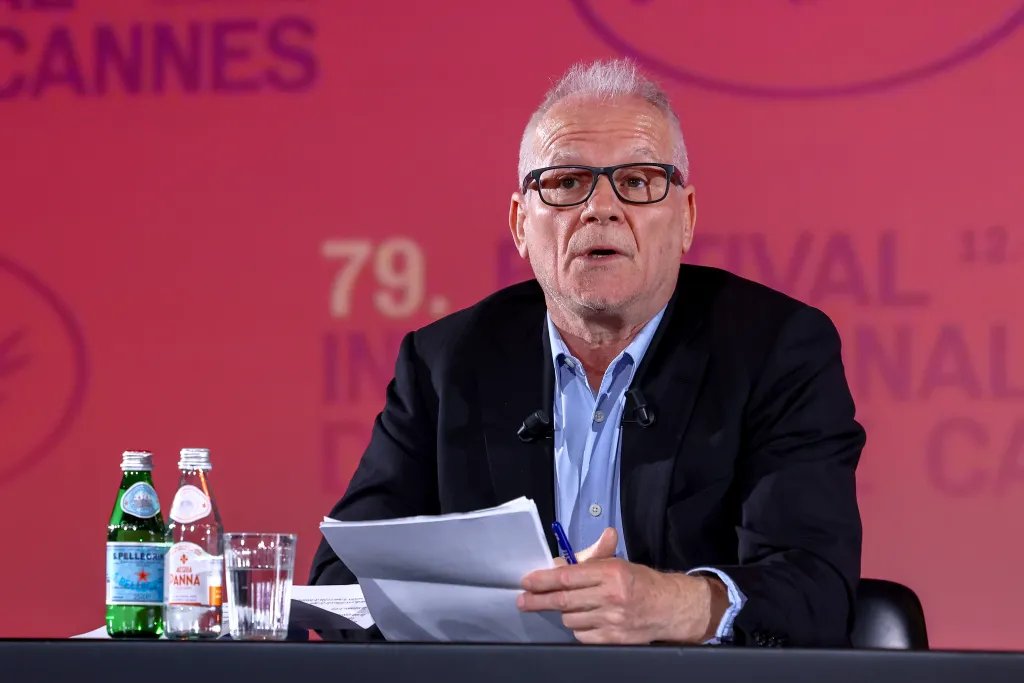
#CannesFilmFestival director Thierry Frémaux discussed the lack of U.S. studio films in this year’s lineup, the current landscape of Hollywood, and the success of indie film ‘Anora’ at the Academy Awards.
“The last five, 10 years were very quiet,” he remarked, referring to the changes in film dynamics. pic.twitter.com/LeFEB4tQro
— Deadline (@DEADLINE) April 9, 2026
Frémaux emphasized that Cannes remains a vital convergence point for world cinema, asserting, “We talk to [the American studios]. There is an American cinema out of the studio system.” He highlighted recent challenges in Los Angeles, including the impacts of the Covid-19 pandemic, writers’ and actors’ strikes, and catastrophic fires.
Reflecting on production struggles, he noted, “It’s complicated to greenlight big films.” He expressed nostalgia for a bygone era when studios frequently produced auteur films. “I missed those moments,” he said, recalling previous years when significant films from studios like Paramount and Warner featured prominently.
Frémaux asserted that Cannes continues to be meaningful for U.S. cinema, pointing to Sean Baker’s Anora winning the Palme d’Or in 2024, followed by an Oscar triumph the following year.
“It’s complicated to separate American cinema into studio and independent sections,” he said. “You need a half-decade to analyze what cinema is today.” This year’s Cannes garnered further acclaim, with last year’s Grand Jury Prize winner, Sentimental Value, taking home the Oscar for Best International Feature Film in March, alongside three other nominations from the previous edition.
#CannesFilmFestival director Thierry Frémaux shared insights on the success of Cannes films at the Oscars, stating, “Who could guess the destiny of ‘Anora?’”
He noted the unpredictable nature of a film’s path from Cannes to the Academy, emphasizing, “That is quite exciting for me.” pic.twitter.com/d5aO8j8mF2
— Deadline (@DEADLINE) April 9, 2026
When asked if he expected a similar Oscar success from this year’s selection, Frémaux replied, “It was impossible to imagine that the film could have such a destiny.” He spoke of the transformative impact of audience and critical reception on films like Anatomy of a Fall and others.
He acknowledged the frequent occurrence of Cannes titles garnering Oscar attention, citing Clint Eastwood’s Mystic River as an earlier example while noting its increase in recent times. He reiterated the significance of Cannes as a premiere venue for Hollywood films, pointing out, “You can have your world premiere in Cannes in May and still be alive almost one year later in March in Hollywood.”
This year’s Official Selection emerged amid the backdrop of the Iran War, with its unveiling occurring shortly after a fragile U.S.-Iran ceasefire was declared.
Cannes President Iris Knobloch referred to the “uncertain times” surrounding this year’s announcements. However, the selection predominantly features films exploring historical conflicts rather than contemporary issues, such as Lukas Dhont’s WW2 drama Coward, Lázsló Nemes’ Moulin, and the first installment of Pathé’s lavish Charles de Gaulle biopic, De Gaulle: Tilting Iron.
#CannesFilmFestival head Thierry Frémaux elaborated on the prevalence of films focused on historical conflicts, asserting the relevance of period films in today’s context.
“The way cinema today is connected with our world goes through period film, because sometimes a period film is more a question about today than a description about the past,” he explained. pic.twitter.com/nEQcQUFfDY
— Deadline (@DEADLINE) April 9, 2026
Frémaux concluded by emphasizing the connection between cinema and the current global landscape, highlighting that even films about love resonate with contemporary themes. “Cinema is still so popular… it’s there, watching the film on the big screen, where we understand who we are and who the others are. And that is still the mission of cinema,” he asserted.