

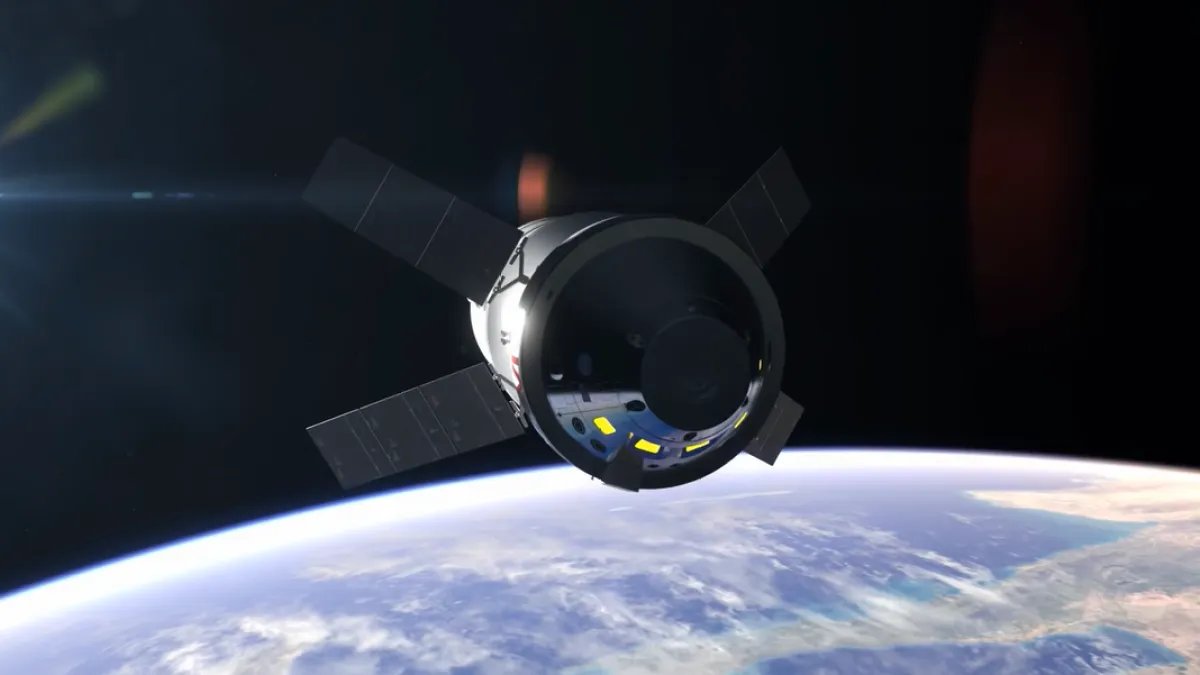
Take a Look at NASA’s Artemis II Mission Animation Around the Moon
Astronauts Set for Historic Artemis II Mission Beyond the Moon
Four astronauts are preparing to embark on an unprecedented journey as part of NASA’s Artemis II mission, advancing thousands of miles beyond the moon before making a U-turn to return to Earth. This 10-day expedition marks a significant step in humanity’s return to lunar exploration.
The launch countdown is currently underway at Kennedy Space Center in Florida. Engineers are meticulously checking communications and initiating flight hardware, preparing the Space Launch System (SLS) for a fueling sequence involving thousands of gallons of super-cooled liquid hydrogen and liquid oxygen. Liftoff is scheduled for 3:24 p.m. PT on Wednesday.
Following launch, the mission will enter a critical post-launch phase. Approximately two minutes after takeoff, the booster rockets will detach, allowing the SLS to ignite its four robust RS-25 engines, developed by L3Harris Technologies in Canoga Park, to propel NASA astronauts Reid Wiseman, Victor Glover, and Christina Koch, along with Jeremy Hansen from the Canadian Space Agency, deeper into space.
Roughly eight minutes post-launch, the core stage of the SLS will separate from the Orion capsule. A 24-hour systems check will commence while the spacecraft remains in close proximity to Earth. After completing this crucial checklist, the crew will practice docking maneuvers using the upper stage as a target, relying on visual cues to maintain a safe distance of about 30 feet.
Once ready, Orion’s main engine will propel the capsule out of Earth’s orbit, initiating a four-day journey to the moon, approximately 244,000 miles away. The spacecraft is set to travel around 4,600 miles beyond the moon, a feat that will allow the crew to observe its far side for the first time in more than 50 years, surpassing the distance record established by Apollo 13.
As Orion reaches its maximum distance from Earth on Day 6, it will mark a historic moment in lunar exploration, with human eyes once again witnessing the moon’s far side. Following this phase, a communications blackout is expected as the spacecraft begins its four-day return, aided by Earth’s gravity.
Prior to reentry, the crew module will separate from the service module. The capsule will then enter Earth’s atmosphere at approximately 25,000 mph, utilizing a series of parachutes to slow and stabilize for a splashdown off the California coast. After completing an impressive round trip of about 595,000 miles, the astronauts will be greeted by a recovery team.