
Sam Pollard Discusses Archbishop Tutu’s Legacy in Ending Apartheid and His Take on Trump’s Claims About South African Issues
Archbishop Desmond Tutu’s Legacy Explored in New Documentary
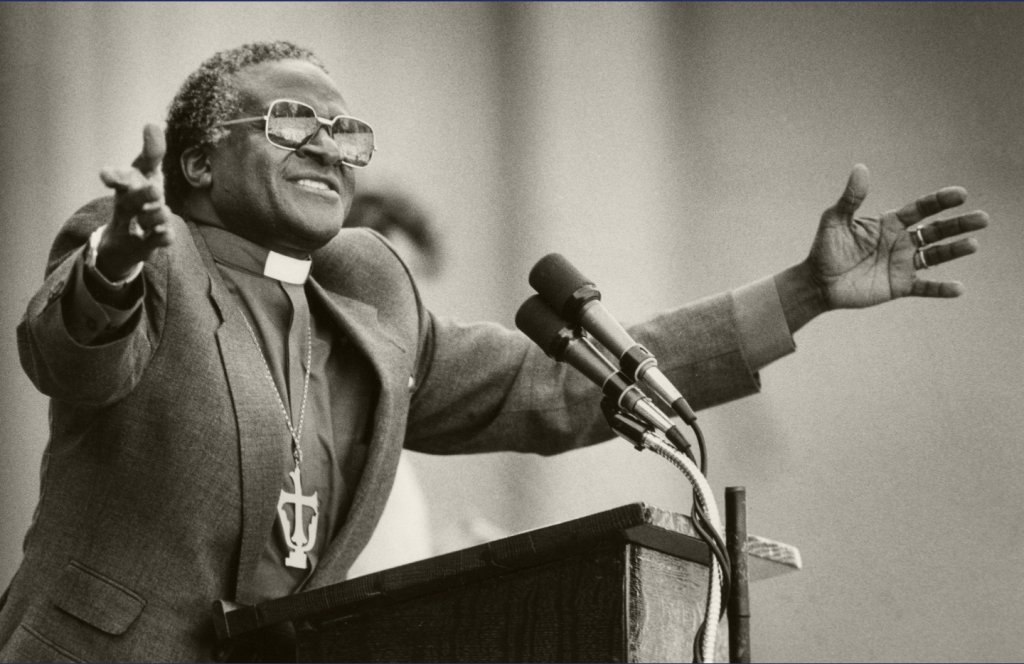
Berlin, Germany – A new documentary titled Tutu, directed by Sam Pollard, made its world premiere today at the Berlin Film Festival, shedding light on the role of Archbishop Desmond Tutu in dismantling South Africa’s Apartheid system. Despite its seemingly insurmountable brutality, Apartheid eventually crumbled thanks to the efforts of notable figures like Tutu.
Tutu was not only a man of faith but also an activist. "I am a man of peace but not a pacifist," he states in the documentary. Pollard emphasizes this duality, explaining that Tutu consistently challenged the status quo, advocating for change in a deeply divided South Africa. "He wasn’t saying that he wanted violence, but he understood the importance of non-violent resistance," Pollard adds, drawing parallels to Martin Luther King Jr.
The documentary delves into pivotal moments in Tutu’s life, including his rise as a key figure in the anti-Apartheid movement following the 1976 Soweto uprising and the police killing of activist Steve Biko in 1977, as well as Mandela’s lengthy imprisonment.
While Tutu’s moral leadership and faith were central to his character, the film reveals that he did not always align with the African National Congress’s more militant approaches. "His faith was the foundation of everything," Pollard says, noting that it grounded Tutu’s beliefs in humanity and hope for change, making him a vital unifier in a fractured world.
Throughout his activism, Tutu faced threats to his life and fierce hostility from supporters of the oppressive regime. As Pollard recounts, "He was looked at as a radical," much like Dr. King, as he advocated against the injustices of Apartheid. Yet, Tutu’s charisma and ability to connect with people played a crucial role in his effectiveness. "He knew how to speak on all levels," Pollard notes. "He could disarm you and bring people to love him."
The documentary also highlights Tutu’s partnership with his wife, Leah Shenxane. Pollard aims to portray Tutu not only as a historical figure but also as a loving husband, emphasizing the intimate bond that supported his revolutionary spirit.
After the fall of Apartheid, Tutu continued to serve as a moral compass, accepting Mandela’s request to chair the Truth and Reconciliation Commission, tasked with not only investigating past crimes but also fostering national unity.
Tutu, who passed away in December 2021 at the age of 90, would likely have had a strong reaction to contemporary political narratives that mischaracterize South Africa’s realities, according to Pollard. He believes Tutu would dismiss claims of a "genocide" against white farmers in South Africa as "outrageous" and indicative of "fake news."
Pollard, who heads to the Berlinale with excitement over his film debut at the festival, is also recognized for his previous Oscar-nominated work, including 4 Little Girls, focused on the tragic Birmingham church bombing of 1963. Tutu is set to screen at the Berlinale multiple times this week, cementing the importance of Tutu’s legacy in ongoing discussions about justice and reconciliation.