
Sam Pinkleton Shares His ‘No A–holes’ Approach for a Positive Experience in ‘The Rocky Horror Show’ on Broadway
Trending on Billboard
Sam Pinkleton, acclaimed for his direction of the Broadway hit Oh, Mary!, which won him a Tony Award for Best Direction of a Play in 2025, is now setting his sights on the iconic musical The Rocky Horror Show. This new endeavor promises to be even more eccentric and vibrant than his previous work.
Explore
Billboard
See latest videos, charts and news
“Just moments before our interview, Rocky was being born from an amniotic sac in Frank’s lab in the other room,” said Pinkleton, wearing a Brontez Purnell T-shirt and a skater cap. “Every rehearsal, I think to myself, ‘Can you believe we’re doing this?’”
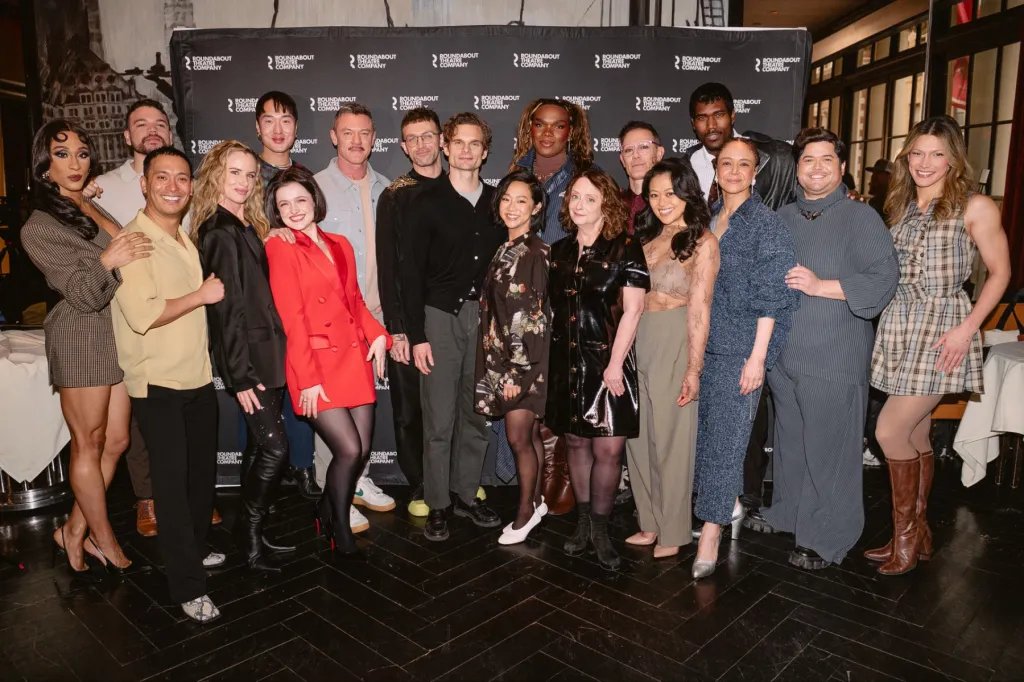
For those familiar with queer counterculture, Pinkleton’s comments may evoke a blend of confusion and intrigue. However, for devoted fans, it’s time to celebrate with a toast. Set to open on March 26 at Manhattan’s Studio 54, this fresh rendition of The Rocky Horror Show will feature iconic characters like Brad, Janet, Dr. Frank-N-Furter, Riff Raff, and a star-studded cast including Rachel Dratch, Andrew Durand, Luke Evans, Amber Gray, Harvey Guillén, Stephanie Hsu, Juliette Lewis, Josh Rivera, and Michaela Jaé Rodriguez.
Originally premiering in London’s West End in 1973, The Rocky Horror Show enjoyed a brief Broadway run in 1975, coinciding with the release of the influential cult film The Rocky Horror Picture Show. After a 16-month revival starting in 2000, the musical returns to Broadway more than five decades later. Pinkleton now faces the challenge of rejuvenating a beloved classic while preserving its original essence.
While still in rehearsal, Pinkleton took time to speak with Billboard about reimagining The Rocky Horror Show and the unique composition of this production’s cast, as well as his ongoing collaboration with the show’s original creator, Richard O’Brien.

Photo by Marc J. Franklin/Courtesy of Polk & Co.
What was your first exposure to Rocky Horror? How deep does it run for you?
“It was always in my consciousness as a weird kid. I was an artistic teenager in a small town, and I knew the imagery before I actually saw it. I didn’t truly watch it until college, and it freaked me out,” Pinkleton recalled.
“It didn’t become truly significant to me until about seven or eight years ago when I discussed it with my friend Pam MacKinnon, who runs the A.C.T. in San Francisco. We pondered what would be the most entertaining thing to do in a 1,200-seat theater, and I concluded it had to be Rocky Horror. I went back to watch the film and realized what I had been missing.”
“This is a tale as old as time: I wish someone had introduced me to this when I was 14, as it might have alleviated a lot of struggles. When I began considering making a show, I spoke with people whose lives were profoundly impacted by Rocky Horror, a significant audience.”
I interviewed Richard Hartley, who composed the score for the original stage production and film, for the movie’s 50th anniversary.
“Such a wonderful interview,” he noted.
Did you first see it on TV or in a theater?
“The first time I saw it was definitely on television at home, but shortly thereafter, I attended a shadow cast performance in New York. It was one of the most moving experiences of my life. I had no idea how much it meant to everyone. They sell out theaters. As a theater maker, one constantly asks, ‘How do we get everyone in one room to care about the same thing?’ The Rocky shadow cast culture has figured that out far better than most theater productions.”
Regarding the cast for the Studio 54 production, which was assembled by Carrie Gardner and Stephen Kopel, tell us about your involvement in the casting process.
“I could not have been more involved. The casting of The Rocky Horror Show has consumed my life for the past year. From the outset, I conveyed to the casting directors my desire to look at the stage and ponder, ‘How did this group come together?’ That essence is central to Rocky Horror.
“There’s a unique opportunity to present it on Broadway, as Rocky Horror is a musical but not a conventional ‘Broadway’ musical. It doesn’t seek to conform to Broadway norms. Working in a 1,000-seat theater guarantees an audience with vastly different experiences of Rocky Horror, from those who consider it their religion to those who may wish for a more conventional play instead. The fun lies in creating diverse access points for various audience experiences.”
Many actors in your cast come from varied performance backgrounds.
“True, while some actors are familiar to the audience, there is a diverse range of appearances and experiences. Rocky Horror is a unique platform that embraces all. A significant aspect of the show is its underlying warmth; it features a cast of tender misfits, and it was essential to me that this production is crafted by kind-hearted individuals.”
Rocky Horror carries an edgy message, yet the mantra ‘don’t dream it, be it’ resonates deeply.
“Anyone devoted to Rocky Horror understands its weight and significance. It’s a declaration of immense ambition. The duality of being both serious and absurd, as well as humorous, adds to its layers. The stakes are high; ‘don’t dream it, be it’ is a bold statement.”
Bringing it to Broadway in 2026 poses challenges, especially with fans prepared to critique the production.
“Absolutely. I find liberation in acknowledging it won’t please everyone. Rocky Horror elicits strong feelings from its fans, and all perspectives are valid. The production thrives on contradictions, which is often overlooked in today’s society. The ability to accept multiple truths is something Rocky Horror embodies.”
With iconic roles deeply ingrained in fans’ memories, including Frank-N-Furter and Magenta, how do you navigate those expectations?
“I’m experiencing it as we go. Broadway revivals often attempt to treat the material as if it has never been interpreted before, but the charm of Rocky Horror is its history. While we can’t recreate the magic of Tim Curry and Patricia Quinn, their singularity is recognized and respected. There’s a spiritual journey embedded in the original conception we must honor, particularly regarding Sue Blaine’s iconic costume design. There must be compelling reasoning if certain traditional elements are altered, as they resonate with audiences on a profound level. As Richard O’Brien noted, ‘Rocky Horror doesn’t belong to me anymore; it belongs to everyone.’”
“While we are indeed making our version, these characters are collectively owned. This collaborative spirit is integral to our creative process. We embrace our predecessors while also determining whom to honor or diverge from. It feels like a forensic examination of the material, building on decades of legacy.”
Many cast members are making their Broadway debuts.
“We have nine Broadway debuts among them, including Juliette Lewis, Michaela Jaé Rodriguez, Josh Rivera, and Luke Evans.”
With your extensive Broadway experience, do you approach direction differently for those from film and television backgrounds?
“What’s special about this company—and I’ve been adamant about this—is my ‘no a–holes’ policy. I may not excel as a director, but I’m adept at sensing the dynamics of the ensemble. Every person was cast with their interactions in mind. This fosters a genuine sharing of experiences.”
“Indeed, Juliette Lewis has never performed in a Broadway musical, although she has experience in West End productions. Amber Gray has extensive Broadway musical credits. While Stephanie Hsu gained notoriety from movies, she originally came from theater. Paul Soileau, recognized as CHRISTEENE, brings a remarkable alternative queer performance background. The diversity fosters a rich cross-pollination of ideas and styles.”
“This creative chaos adds to the fun and aligns perfectly with the spirit of Rocky Horror. Every cast member shares a genuine affection for the material and embraces a sense of adventure, which drives our creative process. While I have extensive Broadway experience, I find the notion of convention—‘this is Broadway’—counterproductive.”
The anarchic and chaotic nature of Rocky Horror can’t be smoothed over; doing so would eliminate its essence.
“Absolutely. Rocky Horror has an enduring relevance that aligns with personal experiences of liberation. Coming from a small town, the exploration of what lies beyond the familiar resonates with me.”
“Indeed, I hail from a town similar to Denton, the fictional setting of the film. The timeless allure of ‘what’s beyond the castle wall’ draws us all to discover and experience a mix of fear and exhilaration. It’s undeniably unique.”
The music, led by Kris Kukul, is another element where fan expectations run high. How are you addressing that?
“I strive to treat Rocky Horror as fundamentally sound. While it may invite scrutiny, its enduring legacy of over 50 years signifies its strength. To me, Rocky Horror is the quintessential ‘cool’ music; it transcends what musicals often present. Influences from Rocky Horror, Hair, and Jesus Christ Superstar are unmistakable.”
Indeed, Rocky Horror possesses a distinctive charm.
“I think its allure lies in its authenticity; it’s not striving for coolness. Collaborating with Kris, our goal is to preserve the essence of the music. Early discussions revolved around the simplicity inherent in these tunes; they belong to a rock foundation. We aim to keep it direct and impactful rather than overly polished or modernized. Richard O’Brien famously said, ‘Always ensure the lyrics can be heard.’”
“The band will play a significant role in performance; we want the audience to feel the music unfolding live rather than simply as background. This production will evoke a nostalgia for the traditional performances of yesteryear. Some might find this disappointing, but we intend to deliver the songs authentically tailored for our distinct vocal talents.”
Have you communicated with Richard O’Brien regarding this production?
“Richard and I are engaged in an extended conversation through Howard Panter, who serves as the worldwide impresario of Rocky Horror. We exchange notes regularly via Howard. The chance to share the same era as Richard O’Brien is humbling; his purity and authenticity continue to inspire me. There’s a profound sense of responsibility and honor in leading this iconic production.”
On a specific musical note, will “Once in a While” be included, a song initially cut from the film?
“Yes, it will be included! We’re excited to hear from Brad.”
In the original version, “Science Fiction/Double Feature” varies between a lively tone on stage and a slower, more grandiose performance in the film. How do you plan to interpret it?
“Our approach will place you in a Broadway setting, suddenly encountering Juliette Lewis center stage singing about science fiction movies. I would describe it as neither version but rather a unique interpretation driven by Juliette’s performance and the lyrical content, emphasizing the obsession with sci-fi.”
The queer community possesses a deep love for Rocky Horror. Throughout this project, you must have faced many specific inquiries and suggestions.
“The beauty of Rocky Horror lies in the wide variety of opinions. However, if I focused solely on synthesizing these views, I wouldn’t have the time to direct the play. The goal is to create a version of Rocky Horror that reflects its spirit and honors the audience who will experience it. While some dissenters express opposition, many others are eager for what’s next, which is heartening. I take the responsibility seriously, ensuring to embrace contributions from the cast, designers, and technicians, cultivating perspectives from diverse sources.”
“The excitement of theater comes from various viewpoints. It’s vital to include those with extensive familiarity alongside those who approach it with caution. This multifaceted approach is critical to shaping our production, and while I’m aware of the dialogues around it, I am determined to put in heartfelt work without becoming consumed by external critiques.”
Your past work, such as Oh, Mary! and Ta-Da!, demonstrates your capacity for fresh perspectives. What draws you to this project?
“I can confidently say there is nothing I would rather be doing right now. I’m thrilled to engage with this material, which resonates with countless people, some of whom will be in the audience while others won’t. I regard this responsibility seriously, and I am also mindful not to take it overly seriously, as that would undermine the joy of it.”