
Regulatory Expert Anticipates Approval for Netflix-WB Deal and Trump’s Involvement
Andrew Lipman, a regulatory policy expert from the Washington D.C.-based law firm Morgan, Lewis & Bockius, believes that Netflix’s acquisition of Warner Bros. will proceed without significant obstacles. “I think the deal gets done,” Lipman stated, dismissing Paramount’s claims that the acquisition is more complex than their own ongoing bid for Warner Bros. Discovery (WBD). He emphasized, “I don’t think it’s that much more complicated or time-consuming than the Paramount deal.”
Speaking at the UBS Global Media and Communications Conference in New York, Lipman’s remarks coincided with an appearance by Netflix Co-CEOs Greg Peters and Ted Sarandos, who advocated for the acquisition earlier in the day.
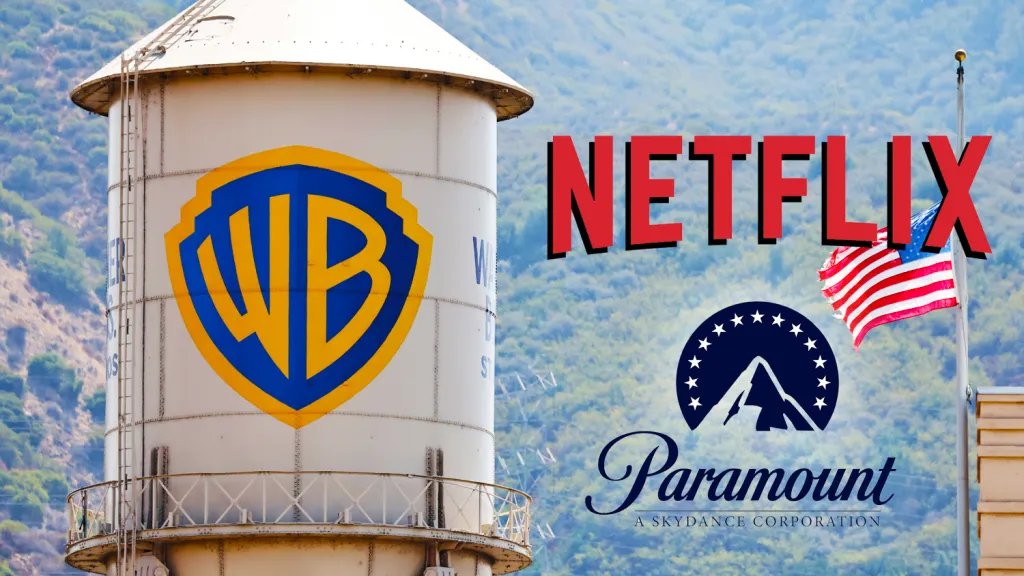
Recent developments have seen a tug of war between Paramount and Netflix over Warner Bros.’ valuable assets. Netflix announced last Friday that its proposal to acquire WBD’s studios-and-streaming division for $82.7 billion—including debt—was accepted by WBD’s board. In response, Paramount launched a hostile takeover bid on Monday, presenting its own offer of $108 billion for the entire company, citing concerns about fairness in the acquisition process.
Regulatory scrutiny has been central to the strategies of both companies. Paramount argues that Netflix’s acquisition would give the dominant streaming service an unfair advantage, consolidating its market power. However, Lipman views this claim with skepticism. “The market is more than just, in my mind, streaming. It’s eyeballs,” he remarked, pointing to competition from platforms like YouTube and TikTok. He noted that the average American subscribes to around four to five streaming services, highlighting the dynamic nature of the market where switching between platforms is easy.
The involvement of President Trump in the regulatory landscape surrounding WBD remains uncertain. Despite his expressed intention to engage in the process, he has acknowledged a lack of particular favoritism towards either Netflix or Paramount. Lipman indicated that Trump might adapt his approach to facilitate deal-making.
Gail Slater, head of the antitrust division in Trump’s Department of Justice, is regarded as a strict enforcer of antitrust laws. Lipman noted the rigorous nature of current reviews, stating, “This is not the Reagan years, you know, where everything goes.” He pointed out that Slater has approved 10 to 12 deals this year after negotiations for settlements, suggesting this might bode well for the Netflix-WBD agreement. “She’s open to settlements,” he explained, alluding to Trump’s history of deal-making.
Lipman does not anticipate that Trump will block the Netflix deal, citing the president’s previous approval of Nippon Steel’s contested acquisition of U.S. Steel despite national security objections from the Biden Administration. That approval followed extensive negotiations, demonstrating the administration’s willingness to find middle ground.
In issuances similar to the steel case, Lipman suggested that Trump may seek a ‘golden share’ arrangement to ensure oversight of U.S. assets in large transactions. While he did not detail what such an arrangement might entail in the context of a significant media deal, he stated that Netflix’s proposed $5.8 billion breakup fee allows for creative structuring of potential agreements.
Despite the uncertainties surrounding the final deal structure, Lipman predicts that “behavioral conditions” will be placed on the acquiring company. He noted that Netflix has already signaled its willingness to make concessions, especially regarding scheduling and licensing agreements with movie theaters. He further emphasized potential considerations surrounding non-American programming as part of cultural commitments.
There remains a possibility that Paramount could secure a deal if WBD shareholders favor its offer or if it is ordered by the courts. Lipman likened this situation to Comcast’s acquisition of NBCUniversal, where focus was placed on the management of networks and fair advertising practices.
Significantly, Lipman highlighted the role of artificial intelligence (AI) in the regulatory considerations for the Netflix-WBD deal, asserting that AI will be critical in future assessments. “If you look at the Google and Meta antitrust cases, AI was huge there,” he remarked, indicating that the impact of AI will be a major factor in determining market dynamics in the coming years.