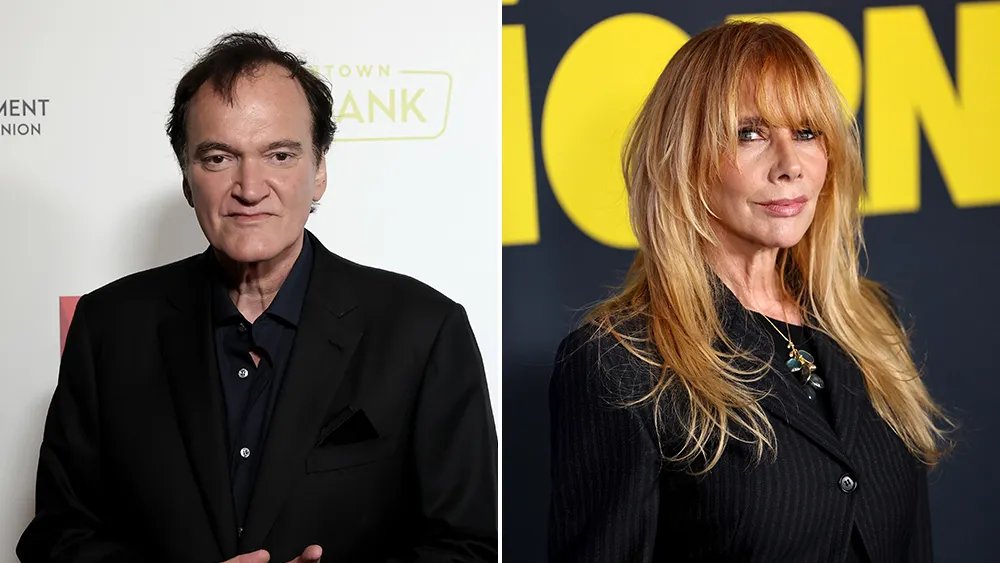
Quentin Tarantino Responds to Rosanna Arquette’s Criticism of ‘Pulp Fiction’ and Her Comments on the N-Word
Quentin Tarantino Responds to Rosanna Arquette’s Criticism of "Pulp Fiction"
Quentin Tarantino has issued a pointed response to actress Rosanna Arquette following her recent critique of his iconic film, Pulp Fiction, particularly addressing his frequent use of the N-word throughout the movie.
In an interview with The Times in the U.K., Arquette, who appeared in the 1994 film, acknowledged its cultural significance, describing it as “iconic, a great film on a lot of levels.” However, she expressed her discomfort, stating, “But personally I am over the use of the N-word. I hate it.” Arquette’s comments escalated as she criticized Tarantino for being “given a hall pass” for his language choices, labeling them as not art, but rather "racist and creepy.”
The N-word is spoken approximately 20 times in Pulp Fiction, according to some counts. Tarantino’s history with the term extends to other films as well, with Jackie Brown (1997) featuring over 30 instances, and Django Unchained (2012) including more than 100 occurrences.
This is not the first time Tarantino’s use of the slur has drawn criticism. In 1997, director Spike Lee condemned the filmmaker’s repeated use of the word, questioning, “What does he want to be made — an honorary Black man?” More recently, filmmaker Lee Daniels addressed Tarantino’s dismissive attitude toward criticism, suggesting that his response to audiences was inappropriate.
In his response to Arquette, Tarantino stated, “I hope the publicity you’re getting from 132 different media outlets writing your name and printing your picture was worth disrespecting me and a film I remember quite clearly you were thrilled to be a part of.” He went on to express disappointment over what he perceived as a lack of respect within their artistic community.
Tarantino concluded his statement with a direct question to Arquette: “Do you feel this way now?” In a tone of reproach, he remarked on the dissonance between their past collaboration and her current stance.
As discussions around racial language in cinema continue, both filmmakers and audiences reflect on the impact of such dialogue on the art form.
Natalie Oganesyan contributed to this report.