
Peaches at 60: How the Bold Performer Continues to Shine on Stage
At a corner table on the expansive patio of a popular restaurant in Frogtown, Peaches attentively listens to the waiter. “The vodka is gonna be rested on oyster shells,” he explains. “It’s kind of inheriting that briny character, like a martini of the sea.”
“Lovely, great. Love it,” Peaches responds enthusiastically.
“Two of those, perfect,” the waiter confirms.
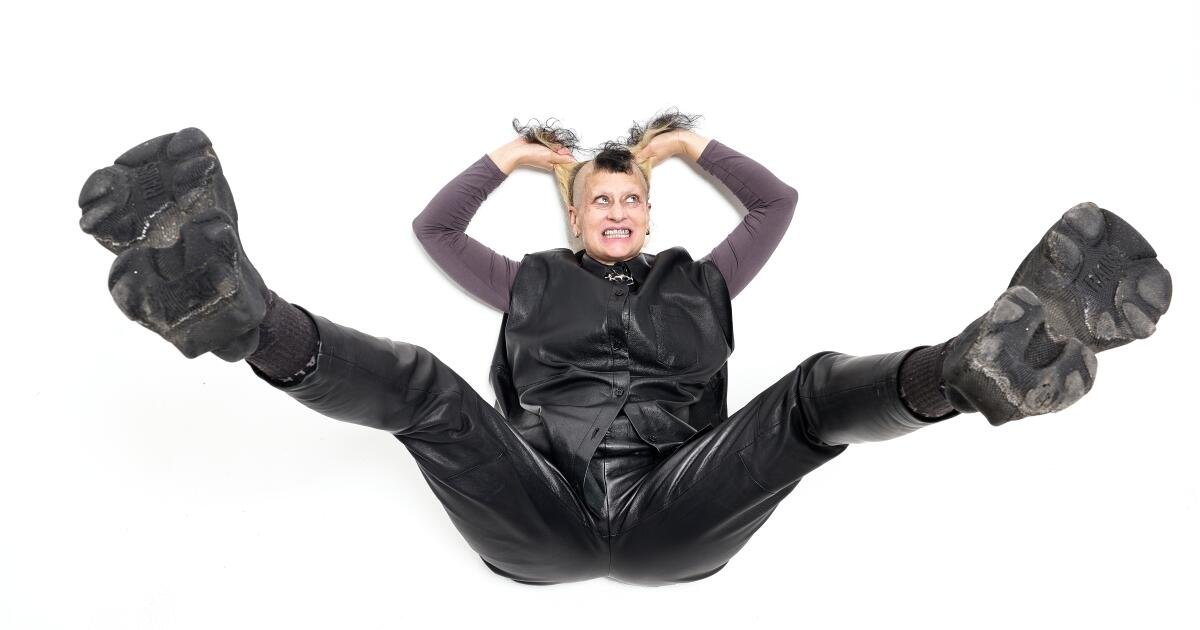
Peaches, who describes herself in her new song “Panna Cotta Delight” as “a woman in control of all her holes,” embodies a creative spirit where limits seem non-existent. With a diverse career that includes collaborations and tours with icons such as Yoko Ono, Marilyn Manson, and Iggy Pop, as well as underground artists like NYC “drag terrorist” Christeene and the enigmatic “entity” The Squirt Deluxe, her influence spans genres and languages. Yet, it is through her own music—characterized by an “ugly-beautiful” DIY aesthetic and pulsating Electroclash sounds—that Peaches unleashes a liberating energy.
On her seventh full-length album, “No Lube So Rude,” Peaches boldly addresses topics often deemed taboo, including explicit sexual themes and incisive political commentary. One lyric refers to SpaceX’s satellites as “Starlink anal beads.”
Set to turn 60 this year, the Canadian-born artist, who has spent years residing in Berlin and Los Angeles, embraces this milestone with confidence. In the track “F— How You Wanna F—,” she directly mentions the abortion pill mifepristone, cleverly rhyming “Roe versus Wade” with “pleather and suede.” The song opens with a strong declaration: “F— Kavanaugh, I’m a cougar,” underscoring her irreverent style.
Peaches’ musical journey began with acoustic folk performances in her hometown of Toronto. Transitioning to the electric guitar, she discovered her ability to single-handedly produce the sound of a full band using electronics. Initially aspiring to be a theater director specializing in innovative musicals at York University, she faced skepticism from classmates influenced by existentialist literature. However, her success seems to have validated her vision.
Her breakthrough came with the 2020 release of “The Teaches of Peaches,” which included the iconic track “F— the Pain Away.” This song gained widespread recognition, appearing in Sofia Coppola’s 2003 film “Lost in Translation,” as well as in various other films and TV shows including “Jackass Number Two” and “The Handmaid’s Tale.”
The explicit language in Peaches’ lyrics is intentional. She aims to balance tough topics with humor and accessibility: “You have a humor to it, but it’s not to get away from [topics], but to bring you in,” she explains.
She adds, “Disarming people is so important.”
Her performances are a testament to this philosophy—dynamic, colorful, and far from conventional. Peaches captivates audiences with her vibrant presence, embodying a blend of fun and provocative energy through elaborate costumes and engaging interactions.
When asked if the vulnerability she portrays on stage comes naturally, Peaches responds candidly, “No.”
“I don’t think either are easy, to be honest,” she elaborates, citing the challenge of navigating genuine emotions beneath performative expressions.
For Peaches, the act of performing does not diminish the emotional weight of her songs. “Usually my songs become what I’m doing. So I wear them like suits, and then I become them,” she explains, revealing how some aspects still require introspection.
In her new track “Not in Your Mouth None of Your Business,” she asserts, “I cannot be squashed or minimized / you will never take away our pride / Orders won’t make us lie down and die / We will stop you f— up our lives.”
Peaches finds humor in societal taboos around language. “Everybody uses this language all day long. That I find very funny; who are we protecting?” she asks.
“It’s very interesting. It’s also very frustrating for me… I keep trying, though,” she adds while reflecting on her use of provocative content amidst social media challenges.
Currently on tour, Peaches performs with Model/Actriz opening on the East Coast and Pixel Grip on the West Coast. Optimistic about connecting with both younger fans and those from her generation, she remarks, “People are not 60 and dying. It’s sort of like another quarter.”
Despite her stage persona, Peaches’ upbringing was fortified by supportive, intellectual Jewish parents. As the youngest of three, she reminisces fondly about her father’s encouragement. She recalls a last performance he attended at Massey Hall in Toronto, where she noted his emotional reaction—an experience she still holds dear, especially after facing the recent losses of her father and sister.
While her songs on “No Lube So Rude” convey themes of rebellion and empowerment, they also reflect a deeper sense of grief. “When I think about a song like ‘Take It,’ it’s more about loss,” she shares, indicating a personal connection beneath the surface.
Though some may categorize her as part of the “shock rock” genre, Peaches firmly asserts her intention: “It’s not about shock. It’s about provoking… I’m very proud of a lot of musicians who are standing up and talking about bodily autonomy, about trans rights, about abortion rights… It’s healthy, and I think it’s part of the whole community.”
While the album title has indeed inspired a personal lubricant, the phrase “No Lube So Rude” reflects broader societal friction. “Let’s find something… some magical way to talk to each other,” she urges, emphasizing intergenerational conversations and collaboration over mere agreement.
Peaches will perform at the Bellwether on March 20 and 21.