
Navigating Challenges: Support for Disney CEO Josh D’Amaro Amid Wall Street Concerns
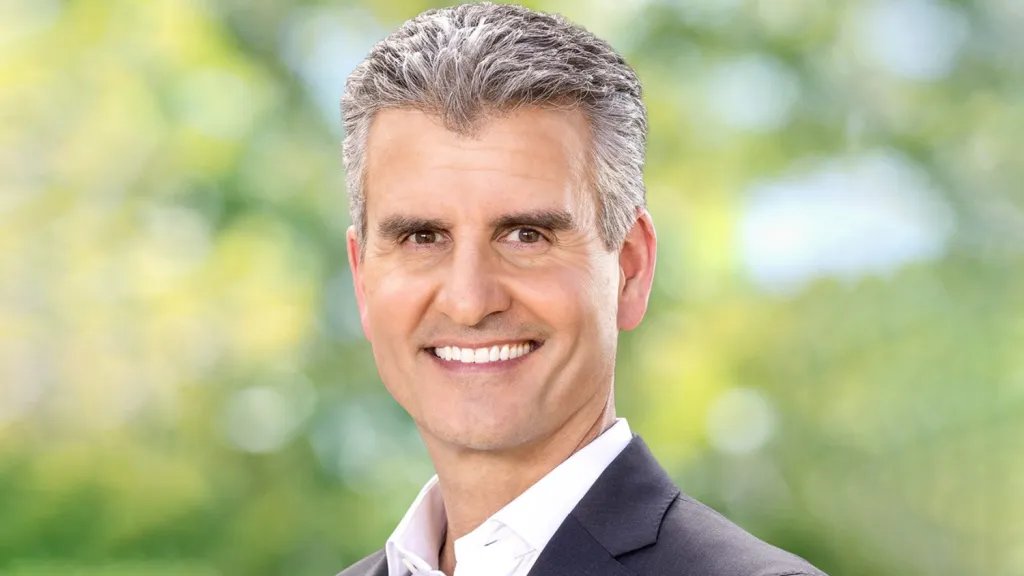
Wall Street analyst Rich Greenfield has laid out a challenging agenda for Disney’s new CEO, Josh D’Amaro. In his recent note, Greenfield urged D’Amaro to pivot away from linear television, embrace more creative risks, and consider a transformative acquisition, particularly in the user-generated content sector.
Michael Morris from Guggenheim stressed that Disney under D’Amaro must focus on delivering a “more regular cadence of excellence” in both branded and new content releases, alongside improved transparency across its various divisions, including streaming, film, television, and experiences. Morris advised against flashy announcements like recent deals with Epic Games and OpenAI, calling for measurable results from new investments instead.
Despite holding one of the world’s most valuable brand portfolios, Disney’s stock has significantly lagged behind the market. “Since Bob Iger returned as CEO in late 2022 and Hugh Johnston took over as CFO in December 2023, Disney shares have underperformed the S&P 500 by 60% and 38%, respectively,” Morris noted, suggesting that such performance presents opportunities to rebuild investor confidence.
On Wednesday, Disney shares fell nearly 1%, closing at $99.42, near the midpoint of their range over the past year. The decline is compounded by a nearly 13% drop year-to-date as broader market concerns grew, especially with rising oil prices stemming from geopolitical tensions involving President Trump and Iran.
Greenfield described his recommendations as “three bold moves that D’Amaro must make to reinvigorate Disney’s lackluster stock price performance over the past decade.”
Morris expressed frustration that Disney’s headline successes obscure some underlying weaknesses. He highlighted a disconnect between management’s optimistic comments on box office performance—projecting $6.5 billion at the 2025 box office, with Disney ranking No. 1 globally for nine of the last ten years—and actual business performance. During an annual shareholder meeting, D’Amaro referenced the box office statistics while announcing upcoming releases like Toy Story 5, Lilo & Stitch 2, and Incredibles 3.
Although Morris holds a “buy” rating on the stock, he pointed out that many metrics are backward-looking, particularly those tied to the expensive franchise Avatar, which has limited overall impact on Disney’s business. The 2026 outlook chiefly relies on sequels and remakes rather than new stories and characters. Morris noted that Hoppers has emerged as Pixar’s best original animated debut since 2017.
Morris also called for more “organic growth engagement” through streaming, arguing that Wall Street requires enhanced transparency regarding direct-to-consumer profit trajectories, the decline rates of linear networks, and studio economics.
Moreover, Morris indicated that understanding the growth profile of Disney’s experiences division has been challenging. He emphasized that the market may overlook the potential of substantial parks investments. Disney is currently engaged in a $60 billion global investment initiative in this area, and more specific details about upcoming openings would be beneficial.
D’Amaro’s extensive knowledge of the Experiences segment positions him well to provide this clarity, which could significantly bolster investor trust in the growth trajectory of Disney’s most capital-intensive business.
Greenfield further suggested that the company consider a split, dividing entertainment and streaming from linear television, akin to Warner Bros. Discovery’s earlier plans. He argued this move could unlock considerable shareholder value and allow each sector to pursue vastly different long-term growth strategies.
In 2023, Bob Iger, D’Amaro’s predecessor, hinted that linear TV “may not be core” to Disney’s operations, sparking considerable M&A speculation. He later described the comment as a trial balloon, and the company’s strategy has since re-embraced linear as part of its framework.
On the topic of creative risks, Greenfield argued that Disney has grown overly comfortable as a “brand manager” of its core franchises, many of which feel stale. He noted that new intellectual property and franchises are crucial for Disney, affecting not just studio profitability but also streaming, theme parks, and consumer products. Greenfield expressed hope that D’Amaro and President and Chief Creative Officer Dana Walden would empower creative teams to significantly expand investments in original content creation globally, particularly in the kids and family categories.
During the annual meeting, D’Amaro emphasized the company’s readiness to enter a new era of innovation and growth, focusing on world-class creativity enhanced by technology. He highlighted key franchises, reiterated the importance of Disney+ for growth, and stated that while the company is open to M&A opportunities, it is satisfied with its current assets.
As D’Amaro embarks on his new role, he has received favorable feedback from Wall Street, with Morris describing him as “dynamic.” However, the stock market remains a key barometer of his leadership impact, as investors closely observe the developments ahead.