

Monrovia Community Comes Together for a Memorial Walk in Honor of Euthanized Bear
Memorial Held for Euthanized Bear After Attacks in Monrovia
MONROVIA, Calif. — A large crowd gathered at Library Park on Saturday to honor a California black bear known as "Blondie," who was euthanized following two separate attacks on people. The decision to end the bear’s life was made by the California Department of Fish and Wildlife (CDFW) after reports of her aggressive behavior.
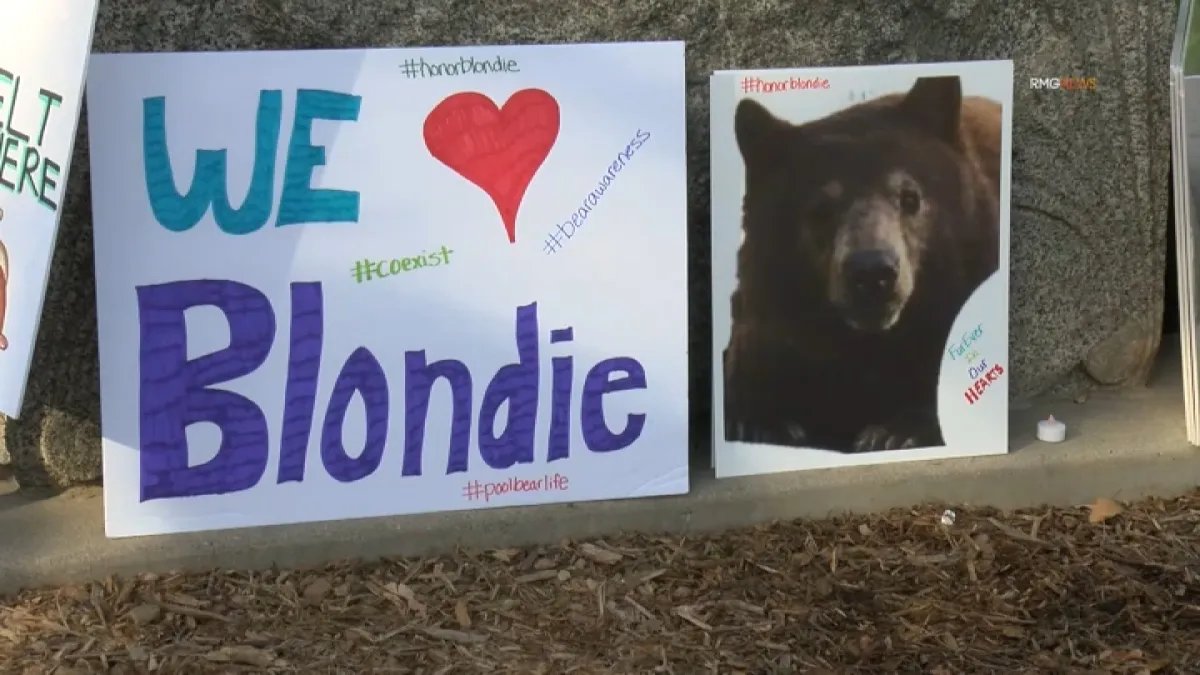
Many attendees held photographs of Blondie and displayed signs in her memory at the park. Residents affectionately referred to her as a beloved figure in the community, noting her role as a mother to two cubs.
The bear was involved in a recent incident where she swiped at a woman walking her dog. After this attack, Blondie was tranquilized for DNA testing, which confirmed that she was also responsible for an incident last summer where she clawed at an elderly man on his porch. Following these events, the CDFW classified her as a public safety threat, leading to the decision to euthanize her.
Local residents expressed their disappointment with the outcome, advocating for alternative solutions. “Something where there’s a program to relocate them further away into natural habitat would be ideal,” said Ashley Howie-Storms, who participated in the memorial. “It breaks my heart that euthanasia was an instant answer for this bear because she was a beloved bear in our neighborhood.”
Emily Truong, another memorial participant, echoed these sentiments, emphasizing the importance of wildlife education and coexistence. “We all need to do our part to understand wildlife and educate ourselves, trying not to harm our wildlife as much as possible,” she stated.
Cort Klopping, a spokesperson for CDFW, addressed the difficult decision, highlighting that public safety was paramount. “It’s not something that we want to do, but public safety is first and foremost important to us,” Klopping explained. He noted that Blondie’s history of interactions with humans raised concerns, suggesting a pattern of behavior rather than isolated incidents.
Experts indicate that the bear’s aggression may have been instinctual, driven by a desire to protect her cubs, who are now being cared for at a wildlife rehabilitation center. The cubs are expected to be released back into their natural habitat once they reach an appropriate age.