

Meet Leon Thomas: A Fresh Look at His Journey and Music
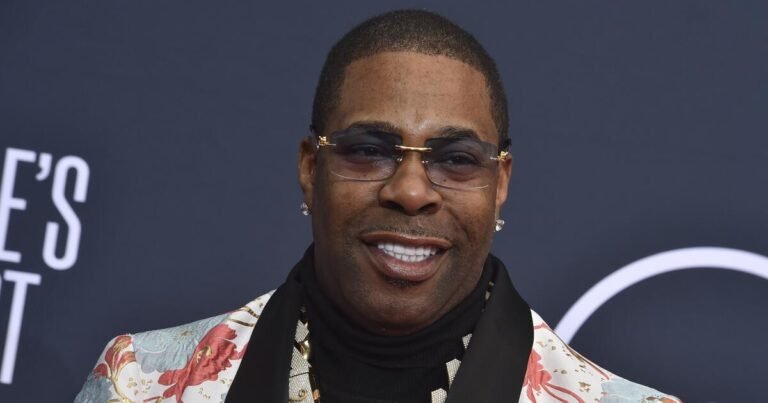
Leon Thomas has transformed his appearance with the recent addition of dark green tips to his signature locs, a striking change from the vibrant red he sported for the past four years. This new look immediately catches the eye as he enters the Los Angeles Times building on an unexpectedly rainy October day.
When inquired about his hair, which peeks from beneath a black beret-style hat, a wide grin brightens his face.
“I had a vision,” the 32-year-old singer shares, leaning in. “In [this] vision, I had more tats, a six pack and I had green dreads. And I was like, ‘You know what, let’s work on it.’” Thomas has committed to a more rigorous workout routine and is exploring tattoo options in both Los Angeles and Europe, but the new hair color marks the starting point of his journey.
“That’s how the rest of my life has worked: I’ve seen something in my head, I’ve seen a version of myself that’s not there yet, and then you work hard to get there,” he explains.
This vision-driven approach has shaped Thomas’s 20-plus-year career in the entertainment industry, paving his way to prominence in contemporary R&B music. After years dedicated to acting, songwriting, and producing hits for artists like Drake, Ariana Grande, and SZA—winning his first Grammy for the latter’s record “Snooze”—Thomas is now nominated for six Grammy awards, including album of the year and best new artist for his personal work.
“I feel like this is a byproduct of me finally having a machine that works,” he states about his team. He signed with EZMNY, a record label co-founded by Grammy-nominated artist Ty Dolla $ign and A&R executive Shawn Barron, in 2021. Taking a moment to breathe, he adds, “Not to sound cocky or anything, but I just always felt in my heart of hearts that once people could finally hear what I had to offer, it would be a different story. I’m glad that God gave me the foresight to see that.”
His current momentum is warranted. “Mutt,” his breakout single of 2024, steadily gained popularity before becoming a household name. The song’s metaphorical lyrics—referencing his own flaws in relationships by comparing himself to a “mutt” or well-meaning dog—coupled with a sultry bassline and driving drums, helped it evolve into a sleeper hit. Notably, the track has garnered attention from artists such as Tems, SZA, Keke Palmer, and Issa Rae, who have praised it in interviews.
By early this year, the title track from his sophomore album made waves on the Hot 100 Billboard charts, recently achieving No. 1 on Billboard’s radio songs chart and earning double platinum certification.
The album’s success, along with its deluxe edition, has thrust Thomas into an intensive promotional schedule, featuring radio and podcast interviews, media appearances, and after-party events. Despite this whirlwind, he continues collaborating with high-profile artists like Wale, Disclosure, Odeal, and Sasha Keable. His “Mutts Don’t Heel” tour commenced in October, and this year alone, he has performed over 70 shows, including notable appearances at the Hollywood Bowl, “Jimmy Kimmel Live,” and the BET Awards, where he won the best new artist award. Earlier this year, Thomas also graced NPR’s Tiny Desk, which now boasts over four million views and has been released as an EP. His performance received a Grammy nomination for best R&B performance.
“It’s been nonstop like something great happening every single week,” remarks barron, co-founder of EZMNY.
Before his recent acclaim, Thomas gained early insights into the music industry through his family. His late grandfather, John Anthony, was an opera singer who starred in the 1976 Broadway production of “Porgy & Bess.” His mother, also a singer, and his stepfather, who played guitar for B.B. King, were active in New York’s Black Rock Coalition. Growing up, he recalls doing homework while his parents performed and occasionally joining them on stage.
At just 10 years old, he landed the role of Young Simba on Broadway after a family friend suggested he audition. This led to other productions, including “Caroline, or Change” and “The Color Purple,” and ultimately his film debut in “August Rush,” alongside the late Robin Williams. The experience inspired him to learn guitar and write original songs, one of which so impressed his parents that they arranged for studio time to record it. “It definitely influenced my perspective on if I could actually make professional music or not,” he remembers. Thomas proficiently plays five instruments, including drums—his first love—guitar, bass, piano, and saxophone.
By age 13, he signed a development deal with Nickelodeon that included a recording contract with Columbia Records. Following appearances in shows like “The Backyardigans” and “iCarly,” he portrayed André Harris, a high school singer and multi-instrumentalist on the tween sitcom “Victorious,” alongside future star Ariana Grande.
After the show concluded in 2013, Thomas began collaborating with the acclaimed producer and songwriter Babyface, who introduced him to the talented Khris Riddick-Tynes. The duo formed the Rascals, producing chart-topping records, including Rick Ross’ “Gold Roses” featuring Drake—nominated for a Grammy—alongside tracks for Toni Braxton and SZA.
Transitioning from a Nickelodeon star to a mature R&B artist was no small feat. “The biggest thing for me was just taking time away from the artistry to really allow people to celebrate the brand I had built while giving me space to build something new,” he reflects. “Space and time can be challenging because you have to reintroduce yourself even after previous efforts, but I think it’s beautiful to build a brand from scratch.”
This philosophy is symbolized in the cover of his reintroduction project, “Genesis,” featuring a distorted forest rather than his face. “I didn’t want them to connect with what I was saying, what I was talking about, the feelings [and] the sounds,” he details. With each new release, Thomas cautiously reveals more about himself.
On stage, he embodies the intensity of musical icons such as James Brown, Prince, Jimi Hendrix, and D’Angelo. While his music is primarily R&B, he adeptly blends genres, particularly rock and funk. Clips from his current tour showcase him passionately playing bass and guitar, executing impressive dance moves, and effortlessly hitting high notes—an enthusiasm his fans have admired and attempted to replicate. “With me, you never have to question if the mic is on,” he assures.
“Sometimes I see R&B artists live and it’s very chill,” he remarks, “but the school I come from is competitive.” He shares anecdotes from his stepfather’s early performances in New York, where musicians would engage in “cutting heads,” challenging each other to surpass their solos. “So, I come from that mentality when I hit the stage, and for this tour, where I get to curate everything, it’s essential to create that high-energy vibe.”
Just days before the launch of his 27-city tour, Thomas released a cinematic trailer featuring Rae, his former co-star from “Insecure,” to promote his latest project, “Pholks.” This seven-track release, created alongside musicians Rob “Freaky Rob” Gueringer and David Phelps—who also contributed to “Mutt”—serves as a tribute to the funk, rock, and soul legends who have influenced him. Led by singles “Just How You Are” and “My Muse,” it evokes nostalgia while remaining anchored in modern production and storytelling.
Earlier this year, Ty Dolla $ign invited Thomas to perform during his headlining set at Coachella, a decision that felt obvious to Ty, who recently labeled Thomas “the new king” of R&B. “I just can’t even believe that I was the one able to do this,” Ty expressed about working with the artist.
Amidst this busy phase, Thomas has prioritized his mental health. “I’m doing a lot of grounding meditations,” he shares, emphasizing the importance of family and close friends as his support network. “I’ve been picking up the Bible a little bit more,” he adds, reflecting on the wisdom of his late grandfather, who passed away last year, and his foundational “why”: to bring a classic, musician-centered energy back to R&B while encouraging young artists to embrace instruments.
“When a little kid sees me playing guitar on the Grammy stage, or if they view a performance on Instagram of me on drums, I want them to ask their mom for guitar or drum lessons,” he asserts. With the growing prominence of AI in music, he expresses concern about the potential decline of live musicianship. “I hope we can inspire a revolution of intelligence, producing music that is rich in history and creativity.”
Thomas plans to conclude his eventful year with two shows at the Wiltern on December 22 and 23, followed by a European tour in March and an Australian leg in June. As he approaches the Grammys in February, he tries to navigate the excitement around his nominations, though the anticipation persists all around him.
Whether or not he takes home a Grammy, Thomas has already established a remarkable body of work that has reinvigorated R&B and music at large. As he envisions his future, he remains determined to push creative boundaries. Having understood his potential from the beginning, it is now up to the world to catch up.