

LAPD Considers Long-Term Changes to Pretext Traffic Stop Policies
Police Commissioners Debate Efficacy of Pretext Traffic Stops
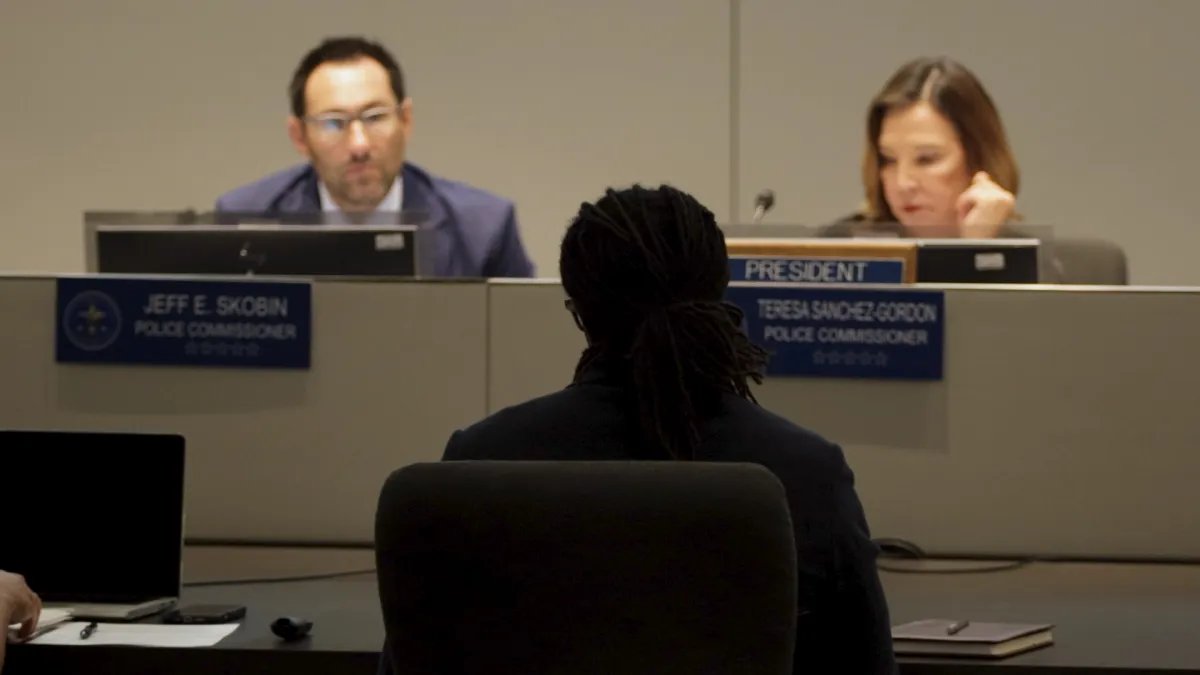
The Los Angeles Police Department’s oversight board convened on Tuesday to discuss the potential permanent restriction of certain pretext traffic stops—situations where officers cite traffic violations as grounds for stopping drivers to investigate more serious offenses.
During the meeting, members of the Push LA coalition advocated for the city to ban most pretextual stops, arguing that such measures contribute to racial disparities in policing. In contrast, LAPD command staff defended the practice, asserting it is constitutional and vital for crime prevention and gun confiscation efforts.
Chauncee Smith, a representative from Catalyst California, part of the Push LA initiative, emphasized, “If the City were to move forward with a stronger approach, it would help reduce racial disparities and disproportionate stops of black and brown folks.” This discussion follows recent City Council initiatives aimed at reassessing police policies to lessen tensions between officers and community members.
The LAPD’s own data reveals that Black and Hispanic drivers are stopped more frequently than their counterparts, with relatively few pretext stops leading to the identification of other crimes. LAPD Captain Shannon White presented evidence during the meeting, stating, “Pretext stops are lawful detentions,” and highlighted that the majority of these stops in 2025 occurred in neighborhoods with high rates of street violence and severe traffic incidents.
White described the ongoing challenges in crime-ridden areas, referring to issues such as murders, assaults, and kidnappings, particularly concentrated in Central and South Bureau regions. The department amended its policy in 2022 to restrict pretext stops to investigations involving more serious crimes and mandated that officers record their reasons for such stops using body-worn cameras.
Data from the LAPD indicated a decline in traffic stops after the policy change in 2022, although the number began to rise again in subsequent years. The most common pretextual violations reported in 2025 included failures to stop at intersections, speeding, and various vehicle equipment violations.
The Push LA coalition suggested that equipment violations could be processed through mailed fines to car owners, advocating for a reallocation of traffic enforcement responsibilities to unarmed City Department of Transportation employees. “On the surface, it can seem that these [traffic violations] are unimportant,” White stated. “But we’re ultimately challenging our officers to be proactive in preventing crime.”
Commissioner Jeff Skobin raised a question regarding whether there is a correlation between pretext stops and crime rates, inquiring if either influenced the other. Smith noted that such an analysis had not been included in their research.
According to LAPD data, the department has reported a 21% increase in gun seizures during January and February of this year, compared to the same period last year, although it did not specify how many of these instances were related to pretext traffic stops or subsequent searches.


