
Judy Greer Shares Insights on Season 2 Finale of ‘The Last Thing He Told Me’ and Her Unique Role as Quinn
SPOILER ALERT: This report includes details from the Season 2 finale of The Last Thing He Told Me.
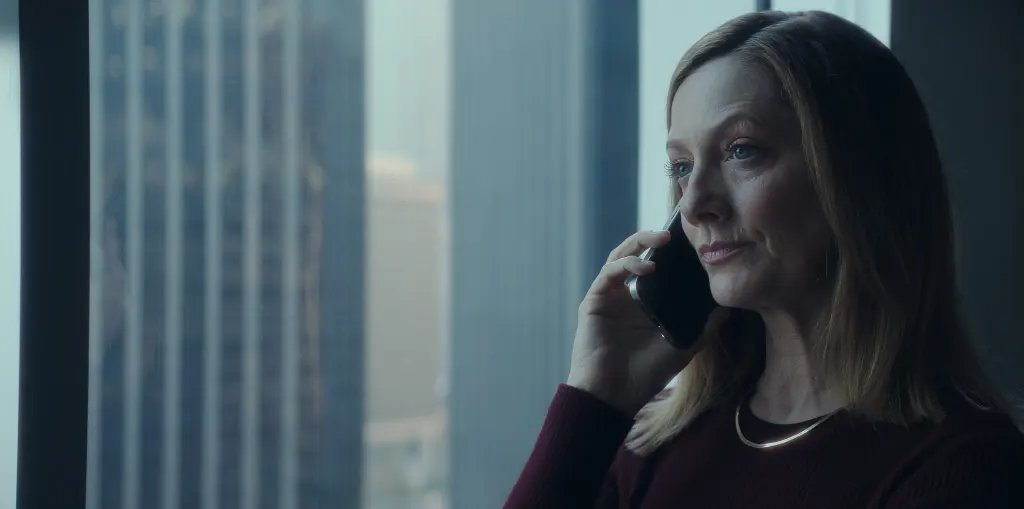
In a surprising twist, Judy Greer’s character, Quinn Favreau, also known as Campano, reveals a deeper involvement in her family’s operations than initially suggested in The Last Thing He Told Me Season 2.
Following the penultimate episode, "Isia Moriendo Renascor," the Campano family finds itself in turmoil. After a hitwoman unexpectedly encounters Quinn during an assassination attempt on Frank Campano, portrayed by John Noble, chaos ensues in the crime syndicate led by Frank. While Quinn’s brother, Teddy Campano (Luke Kirby), attempts to take control, it is evident to Quinn and others that he lacks the necessary authority.
In the wake of these shocking developments, Quinn steps up to assert herself, not only for her brother but also for Nicholas Bell (David Morse), a friend and associate of Frank’s. As she plans a bank acquisition in Paris intended for her father and brother, Quinn realizes this opportunity may aid Teddy and other Campano associates in managing their financial dealings. This not only marks a pivotal moment in Quinn’s character arc but also bridges the gap she had created between herself and her family’s criminal enterprises.
Since the season’s onset, Bailey, the daughter of Quinn’s deceased best friend Kate, has been unraveling the truth behind her mother’s death. Initially, Bailey’s father Owen bore the brunt of blame, but as her memories evolve, she uncovers the painful reality of Quinn’s involvement. It is revealed that Quinn intended only to scare Kate away from meeting with Ivan Escarra, head of the FBI’s Organized Crime Task Force. Tragically, this plan inadvertently led to Kate’s death when a car accident occurred as Bailey, known then as Kristen, rushed into the street.
Quinn later confesses her role to Bailey and Hannah, revealing, “Quinn’s a master compartmentalizer. She allows herself to feel the things that she hasn’t felt in 20 years in that scene, and I think that it feels really good for Quinn,” Greer explains about her character’s transformation in the series.
In an interview, Greer noted her prior knowledge of Quinn’s character arc. “I knew, for the most part, how the story would unfold,” she admitted. This prior insight influenced her performance, adding depth to the complex emotional realities Quinn faces.
As the season progresses, Quinn’s emergence as a leader becomes more pronounced following Frank’s death. Greer describes the moment as dramatic, encapsulating a shift in Quinn’s character, one marked by a recognition that the stakes of her familial ties cannot be ignored. “She sees in that moment, ‘we’re all gone,’ we’re all going to get killed eventually if someone doesn’t take the reins,” Greer reflects.
Greer acknowledges the significance of portraying such a nuanced character, stating, “It’s really cool to embody someone who has the ability to click it in.” Her character’s journey encompasses both ruthlessness and vulnerability, engaging audiences in the struggle for familial loyalty amid chaos.
Looking ahead, Greer expressed enthusiasm about the possibility of a third season, especially in exploring Quinn’s future. “I would love to see what’s next for Quinn,” she stated, underscoring the appeal of continuing this complex narrative.
The series intertwines themes of familial loyalty, personal guilt, and the stark realities of crime, delivering a compelling portrait of a character forced to confront her past in the pursuit of control and redemption.