
Javier Bardem Speaks Out Against Trump and Discusses the Impact of Toxic Masculinity
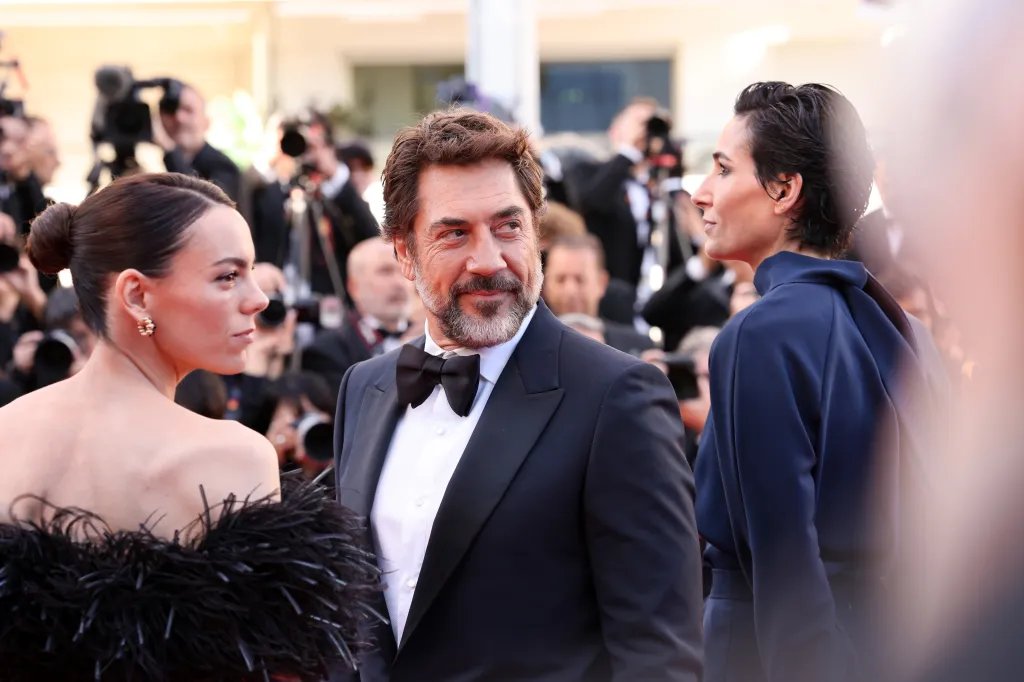
Javier Bardem is making waves at the Cannes Film Festival with the debut of Rodrigo Sorogoyen’s The Beloved, a psychological drama. The film tells the story of Esteban Martinez, an Oscar-winning director who attempts to reconnect with his estranged actress daughter after 13 years. Martinez, portrayed by Bardem, is also a recovering alcoholic struggling with his demons.
During a press conference, Bardem addressed the recurring theme of absent fathers and their consequences, drawing attention to the issues stemming from toxic masculinity and societal miseducation.
“I’m 57 years old, coming from a very machista country called Spain, where there is an average of two women killed monthly by their ex-husbands or ex-boyfriends, which is horrible,” he stated. “Just that amount of women being murdered, it’s unbelievable. And we kind of normalized it. It’s like, ‘Well, yeah, it’s horrible.’ I mean, are we fucking nuts? We are killing women because some men think they own them, they possess them.”
Bardem, known for his Oscar-winning role in No Country For Old Men, expanded the conversation to global issues of power and aggression led by prominent world leaders. “And that problem also goes to Mr. Trump and Mr. Putin and Mr. Netanyahu, the big balls man saying, ‘My big, my c*ck is bigger than yours, and I’m gonna bomb the shit out of you.’ It’s a fucking male toxic behavior that is creating thousands of dead people,” he remarked. He emphasized the importance of discussing such issues, noting a growing awareness compared to 20 years ago. “I think this movie speaks about that… in this movie, there are three people that say ‘No’ to Esteban: three women.”
Bardem also responded to a complex question about democracy and information monopolies. “I’m not sure I fully understood the question,” he replied, “but I believe that there is an increasing monopoly in the world of information, that’s one of the problems, we know. Given Paramount and Warner Brothers in their merger, for example, in terms of information, who’s actually going to control all this? What we’re listening [to], what we’re seeing.”
He expressed concern over the effects of technology and social networks on younger generations, warning that a lack of critical thinking could lead to radicalization. “We’re suffering from this very phenomenon, and the other European countries too, in addition to the United States,” he added.
Earlier, during discussions on genocide, Bardem asserted the importance of acknowledging facts in the face of spin from media. “Genocide is a fact. You can fight against it, you can try to justify it, explain it. That is a fact,” he said. “If you justify it with your silence, or with your support, you are brought genocide. Those are facts for me.”
In a pointed critique of the current state of media, Bardem stated, “At present, there is no democracy in the media. That’s my firm belief. I think this is a very dangerous situation.” He concluded by stressing the need for open dialogue about these critical issues.