

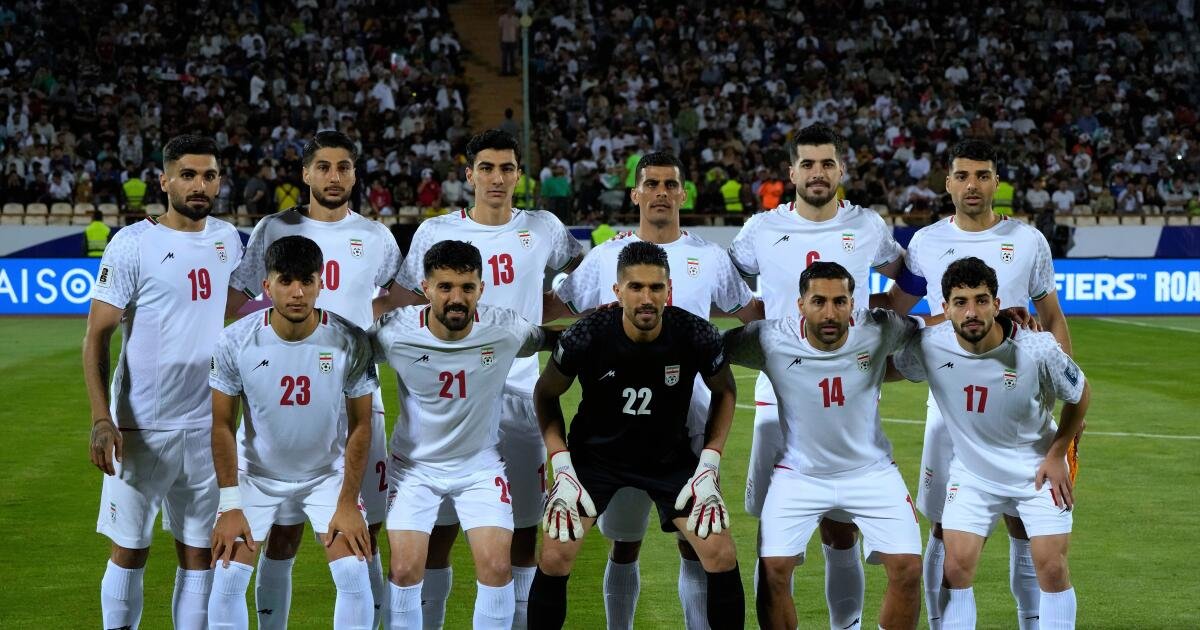
Iran’s Request to Relocate World Cup Matches to Mexico Denied by FIFA
Iranian World Cup Matches May Shift to Mexico Amid Political Tensions
GENEVA — The ongoing tensions involving Iran, FIFA, and U.S. President Donald Trump over the Iranian national soccer team’s participation in the upcoming World Cup have taken a new turn. On Tuesday, Mexican President Claudia Sheinbaum expressed willingness to consider a proposal from Iranian diplomats regarding relocating Iran’s matches to Mexico.
Iran’s ambassador in Mexico City confirmed that discussions are underway with FIFA to transfer Iran’s three group-stage games from the United States, following Trump’s recent remarks discouraging the team from participating due to safety concerns.
FIFA, however, indicated that no significant changes to the match schedule, established three months ago, are currently planned.
During her daily briefing, Sheinbaum addressed the situation, saying, “They are discussing with FIFA whether it’s feasible because they were going to hold the [games] in the United States. They are looking into whether they can hold [them] in Mexico, and we will inform you when the time comes. Mexico has relations with all countries in the world. We’ll see what FIFA decides and then we’ll announce it.”
In a statement, FIFA reiterated its commitment to collaborating with all participating member associations, including Iran, to finalize plans for the 2026 World Cup. The organization expressed its eagerness for a smooth tournament according to the previously announced schedule.
The recent escalation of military action against Iran, including the targeting of high-ranking officials, has raised significant doubts about the Iranian team’s ability to safely compete in the United States. The World Cup, co-hosted by the U.S., Mexico, and Canada, is set to be one of the most-watched global sporting events.
The Iranian soccer federation has not retracted its World Cup participation. However, various official statements have suggested uncertainty regarding the U.S.’s ability or willingness to provide adequate security for the delegation.
Trump has made several contradictory statements regarding the Iranian team’s participation. While he suggested that the team was welcome at the tournament, he also emphasized concerns for their safety.
In a recent posting on the embassy’s website, Iranian Ambassador to Mexico Abolfazl Pasandideh urged FIFA to relocate the matches, citing challenges in securing visas from the U.S. "We love the Mexican people very much, and for us, the best situation is for our games to be held in Mexico," he stated as reported by the Iranian state news agency IRNA.
The Iranian sports minister noted last week that playing in the U.S. may not be an option due to actions taken against Iran. Nonetheless, following Trump’s remarks, the team affirmed its determination to participate in the tournament, reiterating that ensuring player safety is the responsibility of both FIFA and the U.S.
“Iran wants to move its group-stage matches out of the U.S.,” stated a communication from the Iranian soccer federation detailing discussions with FIFA. “When Trump has explicitly stated that he cannot ensure the security of the Iranian national team, we will certainly not travel to America.”
Iran is scheduled to play New Zealand on June 15 and Belgium on June 21 at SoFi Stadium, concluding group play in Seattle against Egypt on June 26. Relocating these matches so close to the tournament could set a concerning precedent in World Cup history.
While the New Zealand soccer federation chief executive expressed skepticism about the feasibility of shifting games, an official from the Belgian soccer federation declined to comment.
As security and political challenges continue to loom over the event, FIFA remains under pressure to ensure a safe and successful World Cup.
Soccer holds significant cultural importance in Iran, a nation of over 90 million with a notable history in the World Cup, having qualified for seven tournaments. Recently, FIFA President Gianni Infantino assured that Iran would be welcomed at the event, despite escalating political tensions.
Contributors to this report include Amir-Hussein Rajdy in Cairo and Fabiola Sanchez in Mexico City.