Insights from the London Book Fair: How Industry Leaders Hope to Bridge the Gap Between TV, Film, and Publishing
Hoards of American and European agents, producers, and executives gathered at the Kensington Olympia today for the highly anticipated London Book Fair (LBF), although uncertainty surrounds their success in identifying promising adaptations for film and television.
This year’s fair is marked by a renewed sense of optimism within the TV and film industry, as the impact of recent U.S. labor strikes and the American co-production crisis fades. Attendees are particularly eager to discover potential hits akin to Normal People, Lessons in Chemistry, or Heartstopper, ahead of the venue’s upcoming move to the ExCel center in 2027.
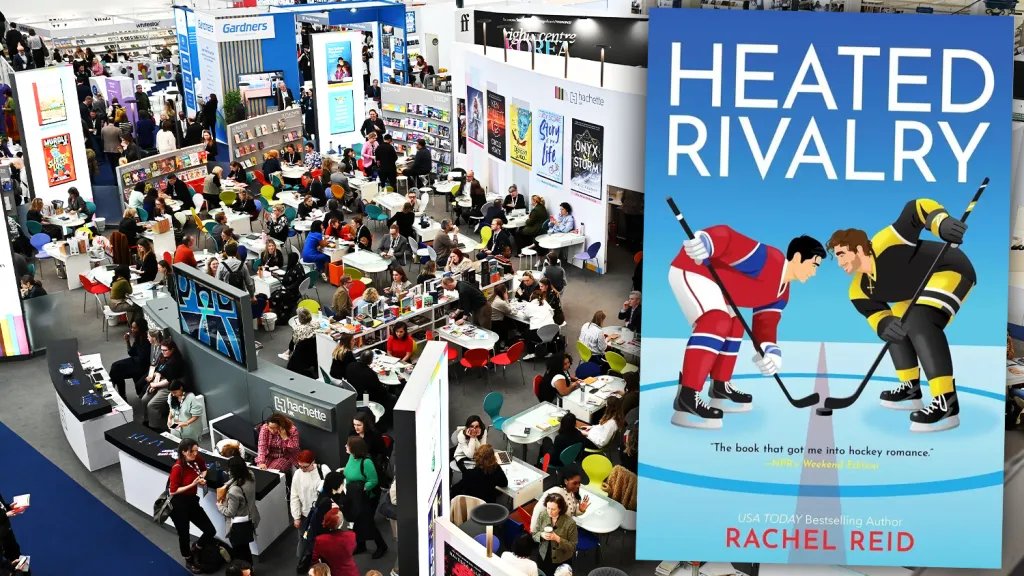
Currently generating significant buzz is the TV show Heated Rivalry, adapted from Rachel Reid’s novel. Alongside this, projects such as Stephanie Bain’s revenge thriller Wits, labeled a potential standout by industry insiders, and gothic retellings like Wuthering Frights are also on showcase, creating a competitive marketplace for adaptations.
However, many participants at the event expressed concern about a disconnect between the current trends in publishing and the desires of screenwriters and producers. BookTok, the popular segment of TikTok that can elevate authors’ careers, is increasingly influencing what audiences seek in adaptations.
“There is a huge divergence between what TV is calling out for right now and what authors are writing,” said Hannah Griffiths of Banijay, who oversees literary adaptations for SAS Rogue Heroes and Wallander. “BookTok values romance, yearning, and romantasy, and that’s not what TV wants.”
Griffiths noted that the industry is currently favoring domestic thrillers and procedurals, such as The Housemaid, The Girlfriend, and All Her Fault, while these themes appear to be less popular in the publishing world.
Sanjana Seelam, an agent at WME specializing in adaptations, echoed these sentiments, stating that publishing and the TV and film industry are “not totally aligned.” She highlighted that networks are seeking robust conspiracy thrillers like The Day of the Jackal, yet these titles are predominantly found on publishers’ backlists.
Seelam further noted the dominance of romantasy, which remains popular among buyers but presents challenges for adaptation. “If something gets made and is popular, then who knows,” she commented.
Despite the preeminence of romantasy, no adaptations of these tales have yet made it to the screen, illustrating a saturated market rife with complexities. While Hulu has scrapped its adaptation of Sarah J. Maas’s A Court of Thorns and Roses, Netflix is proceeding with Callie Hart’s Quicksilver. There are also long-anticipated projects from Prime Video, adapting Rebecca Yarros’ Fourth Wing, and Legendary Entertainment’s Alchemised, which began as Harry Potter fan fiction.
Jason Richman, a partner at UTA, remarked on the industry’s ongoing interest in romantasy, acknowledging that it remains a challenging sell for media rights. “If something gets made and is popular, then it could trigger an avalanche of interest,” he said.
Emily Hayward-Whitlock, head of literary at The Artists Partnership, pointed out that the market for romantasy adaptation seems limited until Fourth Wing reaches production, suggesting that buyers are more inclined towards procedurals that often seem derivative.
One successful procedural, We Are the Dead, secured a competitive bid at the Frankfurt Book Fair, where A24 emerged as the top contender.
Despite current disconnection, Seelam expressed optimism while exploring backlist opportunities, asserting that “the pendulum will swing again,” ultimately bridging the gap between TV, film, and publishing.
The impact of Heated Rivalry, a breakout success based on a queer hockey romance, may signify a shift. The series, initially launched on Canada’s Crave, is now streaming globally, including on HBO in the U.S., and has become a pivotal point of conversation within the industry.
Griffiths pointed out, “It’s hard to make romance on TV work but then Heated Rivalry comes along and everyone says, ‘You can do it.’”
Yasmin McDonald from CAA noted that there’s a widespread appetite for love stories across various mediums—whether sentimental, sexy, or romantic—a rare area where publishing and screen align.
Jazz Adamson, a media rights agent at Curtis Brown, confirmed a noticeable uptick in requests for romance narratives enriched with unique twists, alongside established genres like thriller and crime.
Efforts to realign publishing and screen adaptations are underway, with one major publisher creating an IP department to generate ideas inspired by television for authors to develop. An emerging collaboration between an American studio and a distinctive author is also indicative of the evolving landscape.
The trend of adapting short stories into intellectual property is gaining traction, exemplified by High Side, based on an unpublished work by Jaime Oliveira, marking a significant collaboration between noted talent.
Richman noted that the trend for short stories as sources for adaptations is indicative of the industry’s changing demands, with UTA set to pitch an adaptation of The Price of Honey by the author of Nine Perfect Strangers.
Moreover, interest is growing in The Decorator, a 28-page short story about an ambitious designer embroiled in high-stakes dynamics at a luxury design firm.
As the publishing landscape shifts, the adaptations seem to follow suit. One anonymous agent observed that while romantasy and female-driven suspense remain popular in publishing, they do not lend themselves to returning series, highlighting a disconnect with the industry’s demands for more dynamic storytelling.
While American co-production financing is gradually returning, the market remains cautious, with fewer substantial deals in the offing. "Books really are a sprat to catch a mackerel,” Griffiths remarked, emphasizing the need for major works to catch the attention of producers.
Emerging international partnerships may provide respite in the face of a dipping American dollar, as European producers express interest in diverse stories, even those not set within their own borders.
Helen Manders, a translation rights agent, noted a rising demand for international voices. The festival’s focus has expanded beyond Anglo-American narratives, now embracing a broader array of authors from various backgrounds.
Despite challenges in the adaptation market, Seelam remains hopeful about the potential for connection between British, American, and European creatives through such fairs. “These fairs are amazing for relationship building and identifying voices,” she stated.
Industry insiders feel the pressure of adapting to market conditions, with a wealth of material available and competitive bidding increasingly prevalent. Kroes acknowledged a growing interest in speculative fiction, exploring themes of alternate history and magical realism, which resonates broadly with audiences seeking emotional depth.
Curtis Brown’s Adamson indicated that even books contrary to prevailing trends can gain traction if marketed effectively, as seen in the recent auction for Wits, which intertwines themes of rivalry amidst familiar tropes.
This year’s London Book Fair has thus become a nexus for creativity and potential collaboration, even as industry challenges persist. The overall mood reflects cautious optimism, paving the way for new opportunities in an ever-evolving market landscape.