

Honoring the Legacy of Red Hot Chili Peppers’ Late Guitarist in a New Documentary
Los Angeles Punk Scene Remembered as "Our Brother Hillel" Premieres at South By Southwest
The early 1980s marked a transformative era for the Los Angeles punk scene, with bands like X, The Germs, and Fear leading the charge. Their groundbreaking music not only shaped West Coast youth culture but also laid the groundwork for future generations. However, the latter part of the decade proved equally significant in shaping punk-funk and rock, with bands such as the Red Hot Chili Peppers, Fishbone, and Jane’s Addiction emerging as key players. These groups shared close ties, often collaborating on albums and performing together.
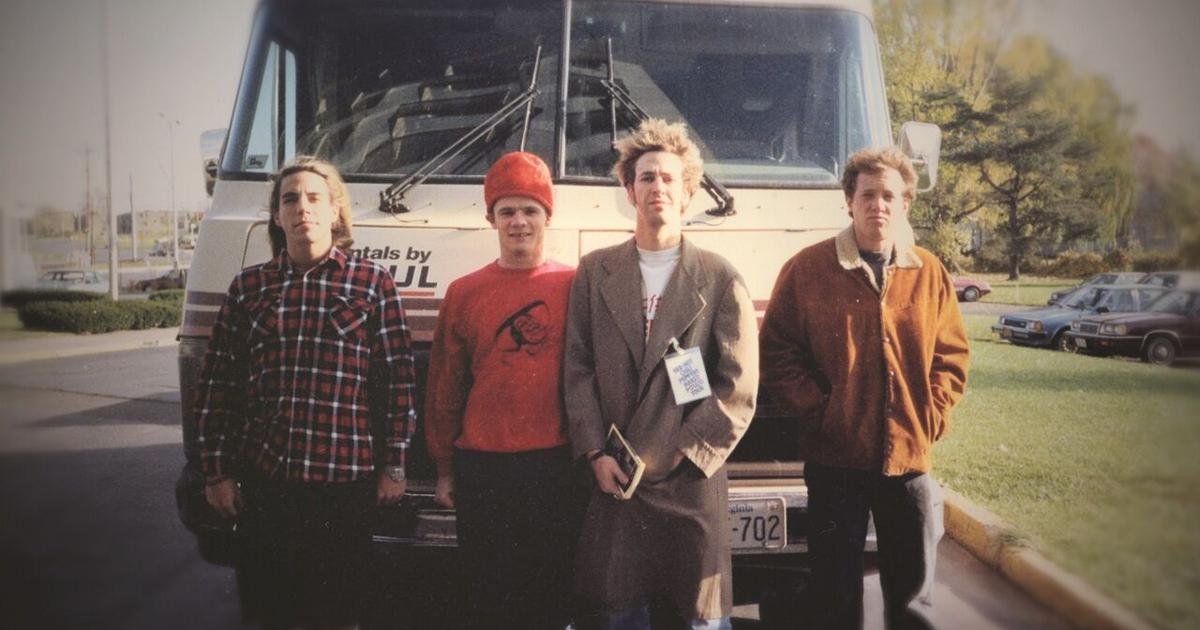
A poignant moment from this era was captured in April 1988, when the Red Hot Chili Peppers performed at Temple University. At that time, frontman Anthony Kiedis, struggling with heroin addiction, was unable to perform, and Fishbone’s Angelo Moore filled in, impressing the audience. Tragically, two months later, the Chili Peppers’ guitarist Hillel Slovak succumbed to heroin, passing away at just 26 years old. His untimely death sent shockwaves through the music community and remains a focal point of the new rock documentary, "The Rise of the Red Hot Chili Peppers: Our Brother Hillel," which premiered last week at South By Southwest.
Director Ben Feldman highlights the stories of surviving band members Kiedis, bassist Flea, and drummer Jack Irons, the latter of whom initially struggled with the idea of continuing the band after Slovak’s death. Ultimately, the Chili Peppers moved forward with guitarist John Frusciante and drummer Chad Smith, both of whom are still active members today.
Feldman chose not to include insights from other bands like Fishbone or Jane’s Addiction in order to maintain an intimate focus on the Chili Peppers. "We wanted to make this as a film from the inside," he stated following the film’s premiere. The results are compelling, particularly in interviews with Kiedis and Flea, who openly reflect on how Slovak’s loss has influenced them nearly four decades later.
Flea, visibly emotional, recounts how he and Kiedis were high school misfits, finding inspiration in Slovak’s work with his band, What Is This. The film also features interviews with Slovak’s younger brother, James, and former bandmate Alain Johannes, offering further layers to the narrative. As the film progresses, Frusciante, who idolized Slovak, shares how he was fortunate to inherit his hero’s role at just 18 years old.
Kiedis remains thoughtful yet reserved as he navigates memories of Slovak, while both he and Flea delve into their formative years alongside their late bandmate. Feldman recognized the significance of their stories, noting, "They were incredibly gracious. It’s their story and they know it well."
To fill in the gaps left by Slovak’s absence, Feldman incorporated a digitally reconstructed voiceover, allowing Slovak to ‘speak’ through entries from his journal—a choice that some may find problematic, yet it underscores the lasting impact of a figure at risk of being forgotten.
The documentary provides fans with a deeper understanding of the Chili Peppers’ journey, prompting reflections on the broader music landscape. Notably, Fishbone bassist Norwood Fisher expressed a sentiment about the disparity in recognition between the bands, illustrating the industry’s complexities. A decade later, Fisher remarked, "Hats off to the Red Hot Chili Peppers for becoming Led Zeppelin," indicating a shift in perspective.
The narrative of the Chili Peppers—who overcame numerous challenges to sell over 120 million albums and consistently fill stadiums—begins with Slovak. In remembering him, the film captures the essence of a band that emerged from humble beginnings to become rock icons. As the industry reflects on this legacy, Hillel Slovak’s influence remains indelible.