
Flea Pursues His Dream of Being a Jazz Musician at 63
Michael Peter Balzary, known to fans as Flea, reflects on his childhood with a deep passion for the trumpet that shaped his musical journey. As a young boy, he would place the gleaming instrument on his bed, reveling in its potential for creativity and expression. “I was very undisciplined as a kid,” he acknowledges, recalling the tumultuous path that ultimately led to his first solo album, “Honora,” set to release this Friday. This collection places the trumpet front and center, showcasing his evolution with jazz music.
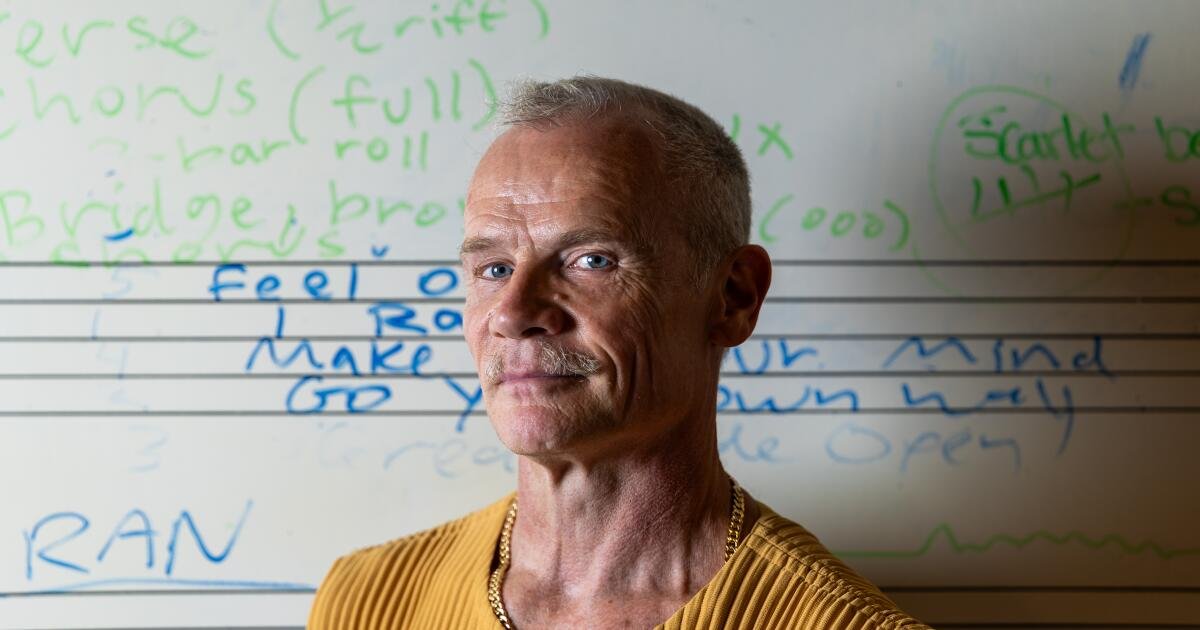
At the Silverlake Conservatory of Music, a school he co-founded in 2001, Flea finds himself in an environment designed for aspiring musicians, reminiscent of his own formative years. On a warm spring morning, the sounds of toddlers laughing and parents chatting fill the air as we settle in a teaching room adorned with guitars, drums, and music notes. Before our interview begins, Flea takes a moment to meditate, emphasizing the importance of preparation and focus. “I didn’t put in the study or the work to be as good as I could have been back then,” he reflects, adding that playing the trumpet has always been a core part of his identity.
As the bassist for the Red Hot Chili Peppers, a band formed with high school friends in the ’80s, Flea has become one of the most influential instrumentalists globally. However, the demands of a successful music career often overshadowed his childhood love for the trumpet. Despite his busy schedule, Flea would occasionally revisit the instrument, using it as a source of solace during hotel stays or personal struggles.
He confesses feelings of inadequacy while playing the trumpet, with its demanding nature starkly contrasting his experiences with the bass. “The trumpet is such a demanding instrument. With the bass, you can not play it for a while, and it’s OK,” he states. “With the trumpet, it takes weeks just to get a nice sound.” This challenge has fueled his drive to improve and master the trumpet.
Inspired by contemporary jazz figures like Kamasi Washington and Thundercat, Flea returned to the trumpet three years ago, just before turning 60. “I resolved at that moment to pick up the trumpet and practice it every single day for two years,” he shares. The result of this commitment is “Honora,” a daring mix of original compositions and covers that feature a variety of collaborators, including Thom Yorke from Radiohead and Nick Cave.
The first single from the album, “A Plea,” released in December, captures the uplifting spirit of his new musical venture, blending avant-garde rhythms with a hopeful message. “I care about civil rights, I care about the environment. I care about people that are oppressed,” he explains, highlighting the song’s themes and a video directed by his daughter, Clara Balzary. “If this country can come to a place of peace and harmony… there has to be love. It’s the only answer.”
Flea’s album “Honora” pays tribute to various music styles, from a stirring rendition of George Clinton’s “Maggot Brain” to a heartfelt cover of Jimmy Webb’s “Wichita Lineman,” sung by Cave. Although the album is being categorized as a jazz record, Flea’s eclectic approach lends a personal touch, making it accessible to a diverse audience.
Initially intending to keep the project solitary, Flea found himself inspired to collaborate with other musicians, including Yorke, who he believed would resonate with his music. “Oh, I want to play this for Thom… and then sitting there with Josh, we were like, maybe he’d want to sing on it,” he recalls, expressing admiration for Yorke’s artistry.
These days, Flea balances promoting his solo project with ongoing work with the Chili Peppers. Though the band members have discussed the idea of creating their own documentary, Flea emphasizes their focus remains on current projects rather than retrospectives. “I feel like we’ve always been so in the moment of creating and evolving,” he explains.
As he engages with students at the conservatory and reflects on his family life, Flea mentions the stability provided by his wife, Melody Ehsani, and their young son, Darius. This newfound personal grounding has fueled his commitment to practicing and composing daily. While “Honora” represents a significant achievement, Flea hints at unrecorded material that may lead to a future project.
Concluding our conversation, Flea underscores the importance of trusting one’s instincts in artistry. “At this point, I trust my instincts and I want to be myself. I don’t want anything to stop me from being myself,” he asserts, encapsulating his growth as an artist and individual.