Challenging Fashion Norms: What Can Men Wear at Paris Men’s Fashion Week?
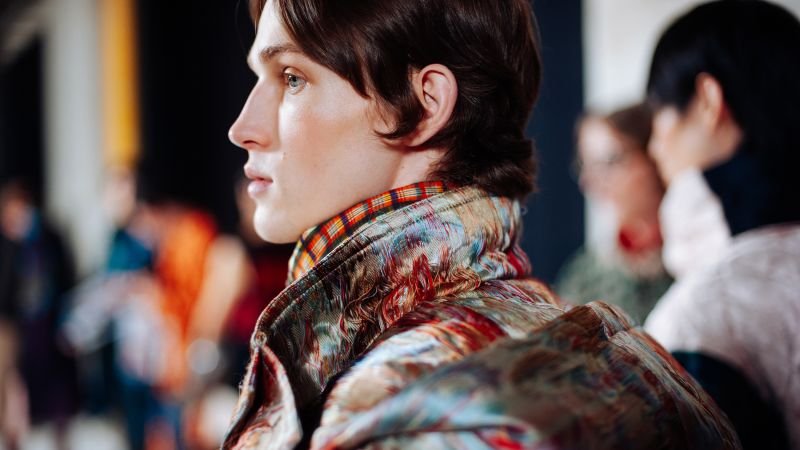
Paris, France — The ongoing evolution of menswear was on vivid display at the recent Fall-Winter 2026 shows in Paris, where striking designs challenged conventional notions of masculinity. This year’s collections featured vibrant colors and bold silhouettes that marked a significant shift from the neutral tones typically favored in men’s fashion.
The discussion around masculinity has been fraught, as evidenced by the backlash against a pink sweater from J.Crew that went viral last year. Conservative commentator Juanita Broaddrick sparked a debate on social media, questioning whether “real men” could wear such a color. Commenters responded with a resounding no, linking the garment’s hue to perceived demasculinization.
In contrast, this season’s runway embraced a broader palette. Designs ranged from midi skirts to colorful separates in shades such as burnt orange, dusty pink, and magenta. Designers like Ryota Iwai’s Auralee, Amiri, and Pharrell Williams for Louis Vuitton led this radical departure into a world where colors like red can still be considered classic.
The bold statements on the catwalk resonate in a cultural climate that is increasingly polarized. While many influencers promote traditional gender norms, others advocate for a more fluid approach to fashion. This tension raises questions about whether designers should prioritize practicality or push creative boundaries to provoke thought about personal style.
Historically, the fashion industry has leaned toward heteronormative standards, but the latest collections reflect a growing acceptance of diverse gender expressions. Celebrities like Harry Styles have garnered attention for their androgynous styles, yet the recent reactions to more avant-garde offerings suggest that mainstream acceptance remains a work in progress.
For brands such as Dior, led by Jonathan Anderson, the collection’s theme of "coming of age" offered a fresh perspective, balancing traditional tailoring with daring elements like anime-inspired imagery and glittery fabrics. Likewise, Sacai and Amiri showcased ideas that challenge the status quo through unexpected combinations.
The implications of this shift extend beyond mere aesthetics; they indicate a deeper cultural transformation where personal expression in fashion is increasingly prioritized. As designers like Willy Chavarria and Mike Amiri highlight, menswear can blend influences from workwear and casual styles into something that feels both personal and approachable.
With the curtains drawn on the Fall-Winter 2026 shows, a new chapter in menswear begins, one that celebrates individuality and the many forms masculinity can take.