

Can a Cult Fashion Brand Connect with Everyone?
When Glenn Martens took the helm as creative director for the Paris-based fashion house Maison Margiela in January 2025, he anticipated stepping away from the public eye.
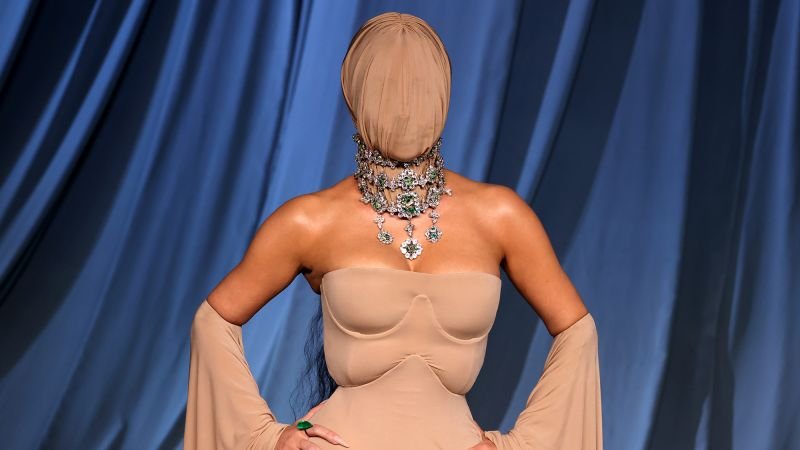
The brand’s founder, Martin Margiela, has famously maintained a low profile, rarely showing himself in public. Anonymity has been central to Margiela’s vision of fashion, which he envisioned as artisanal and elusive rather than corporate and mainstream. He often concealed models’ faces with masks and dressed his employees in white lab coats. A notable 2001 portrait by Annie Leibowitz for Vogue illustrates this ethos, featuring the entire staff in lab coats, with an empty chair reserved for the elusive designer.
Successors to Margiela, since his retirement in 2009, have largely upheld this tradition. Matthieu Blazy, currently at the forefront of fashion powerhouse Chanel, was not recognized as Margiela’s creative lead until journalist Suzy Menkes revealed his identity in 2014. More recently, John Galliano leveraged the brand’s discreet nature to rehabilitate his image following his 2011 dismissal from Dior due to a series of antisemitic remarks.
However, on a sunny afternoon in March, Martens found himself in front of the camera, without a mask, yet dressed in a white coat within his pristine all-white office. This appearance was a nod to the brand’s principle of Bianchetto, which involves draping clothing and accessories in white to transform the wear and tear of life into a beauty mark rather than a flaw.
Martens spoke about the challenge of making a brand known for catering to a niche audience of clothing aficionados resonate on a global scale. As part of this initiative, he is shifting the focus away from the traditional fashion capital of Paris to China, where a major show is planned for April 1. This event will be complemented by several weeks of programming, designed to democratize the Margiela ethos and engage a wider audience.