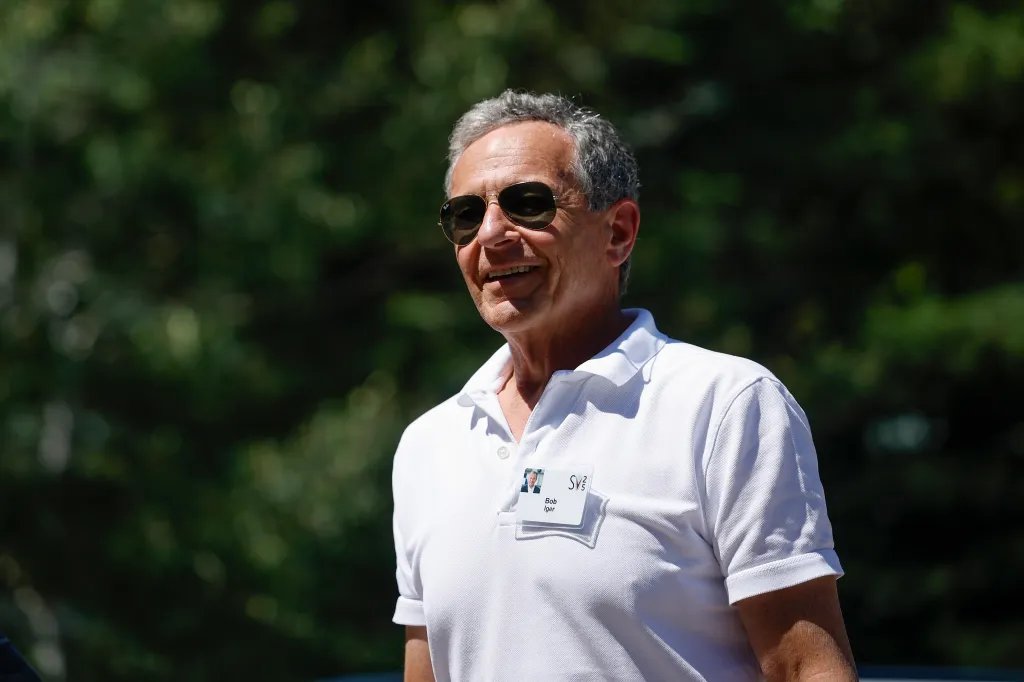
Bob Iger Hands Over CEO Role at Disney: What’s Next for Him?
As Paramount’s anticipated acquisition of Warner Bros. Discovery captures the industry’s attention, another significant shift is unfolding in the media landscape: the transition of leadership at Disney.
Bob Iger, who returned as CEO in 2022, will officially hand over control to Josh D’Amaro on Wednesday, marking the end of a distinguished tenure. As attention shifts to D’Amaro’s leadership, it is also important to consider the path Iger will carve after his long association with the company.
Iger’s 17-plus years as CEO are marked by numerous achievements. During his most recent term, which began in November 2022, Iger tackled complex challenges including advancements in AI, labor disputes, and the necessity of significant layoffs amid industry consolidation. Despite acknowledging the hurdles were more daunting than anticipated, Iger successfully navigated key initiatives. These included steering Disney+ towards profitability, reviving the film division, planning a theme park expansion in Abu Dhabi, and fostering partnerships with OpenAI and Epic Games.
During his earlier tenure, Iger rose to prominence through strategic acquisitions, including Marvel, Pixar, and Lucasfilm, coupled with a charismatic leadership style that endeared him to both Disneyland visitors and Wall Street investors. A former executive from the strategic planning group commented, “Bob was straight out of central casting as a modern chief executive, and had such an aura that he could generally bend people to his will, without making them feel like they had been bent.”
Nevertheless, Iger’s tenure was not without setbacks. His choices included controversial acquisitions, such as Maker Studios and Club Penguin, and a series of difficult succession decisions, notably the selection of Bob Chapek in 2020 with limited evaluation. His $71.3 billion acquisition of 21st Century Fox remains a contentious topic; while it brought valuable intellectual properties, the financial implications and the integration process were cumbersome.
Iger’s future plans post-Disney remain uncertain. At 74, he is viewed as an industry patriarch and will likely be sought after for roles as a mediator, consultant, and speaker. Following Wednesday’s Disney shareholder meeting, he will continue as a special adviser and board member until the end of 2026. Reports suggest that he may focus on sailing his newly acquired superyacht, Aquarius, and managing the substantial stake he and his wife, Willow Bay, purchased in women’s soccer team Angel City FC, valued at $250 million in 2024.
In an interview with ABC World News Tonight anchor David Muir in February, Iger remarked that he would be “available on call” for advice should anyone at Disney seek his counsel. Reflecting on the completion of the succession process, he noted, “It is, it is. Yeah, you know, you can’t just turn the switch off one day with something that you’ve been so involved with and is such an important part of your life. But I’m just looking forward to quieter moments and quieter days and a little bit more, I don’t know, room in my life.”
Bay Window
One former executive who maintains regular communication with Iger suggests that the future of Willow Bay as dean of USC’s Annenberg School for Communication and Journalism will influence Iger’s retirement trajectory.
“Just track Willow,” the individual stated. “If she retires from USC, Bob will stay retired. If not, well, if your wife is working full-time and you’re not, it can get a little lonely. I believe him when he says he doesn’t want the daily hassles of running a giant company. And while I don’t think he’ll get restless, sometimes people surprise you. He’s 74 in an industry where you have people in their 80s and 90s still making big moves.”
Bay was reappointed as dean for a five-year term in March 2022, meaning another renewal decision will soon be required.
The former executive viewed Bay’s decision to renew her contract shortly after Iger’s departure from Disney as pivotal. “That was the moment for him when he rethought what he was doing,” the executive remarked. “A venture capitalist or a private equity guy – that’s not him.”
Corporate governance experts have scrutinized the events of 2020 and 2021. Iger stepped down as CEO in February 2020 but transitioned to executive chairman and creative adviser, which allowed him to influence decisions made by Chapek, especially when issues emerged.
In dealing with the contentious “Don’t Say Gay” legislation in Florida, Iger took an atypical step by publicly supporting President Biden, establishing himself in the conversation when Chapek initially refrained from doing so. “I’m with the president on this!” he tweeted.
Iger’s engagement in politics has been longstanding, particularly as a supporter of Democratic causes. A consideration of a presidential run in the last decade was ultimately dismissed during a conversation with Bay, a story he recounted in his 2019 autobiography, The Ride of a Lifetime. Despite his declaration, his name resurfaced during discussions about a possible ambassador position when President Biden was seeking candidates for China.
Past Prologue?
During the two-and-a-half-year interval between his CEO tenures, Iger actively positioned himself as a forward-thinking investor and corporate strategist. He cultivated a relationship with Apple’s Steve Jobs and served on the tech giant’s board from 2011 to 2019.
In this hiatus, Iger became a venture partner at Josh Kushner’s investment firm Thrive Capital, investing in companies such as the delivery service Gopuff and the collectibles firm Funko, where he also served as a board advisor. He joined the board of avatar technology company Genies and made personal investments in the emerging metaverse sector. Additionally, he took a position on the board of directors for animal-free dairy company Perfect Day.
The controversies surrounding Chapek’s leadership, as well as previous succession missteps, left marks on Iger’s otherwise commendable record. Ultimately, the assessment of Iger’s legacy will hinge on how the company navigates the upcoming years under D’Amaro’s leadership. Will D’Amaro build on Iger’s technological initiatives at the intersection of entertainment and tech? Given the unprecedented growth of AI since Iger’s last departure, he may find opportunities to influence its development within the creative industries.
Iger’s exit strategy has been aided by Disney chairman James Gorman’s adept management of his own transition from Morgan Stanley CEO, a move that has positioned Iger favorably compared to his earlier exit attempts. As TC Cowen analyst Doug Creutz noted, “A full stepping back from Disney by Iger – unlike in 2020 where he remained chairman of the board – probably decreases the likelihood of internal politics becoming an obstacle to a successful CEO transition.”