

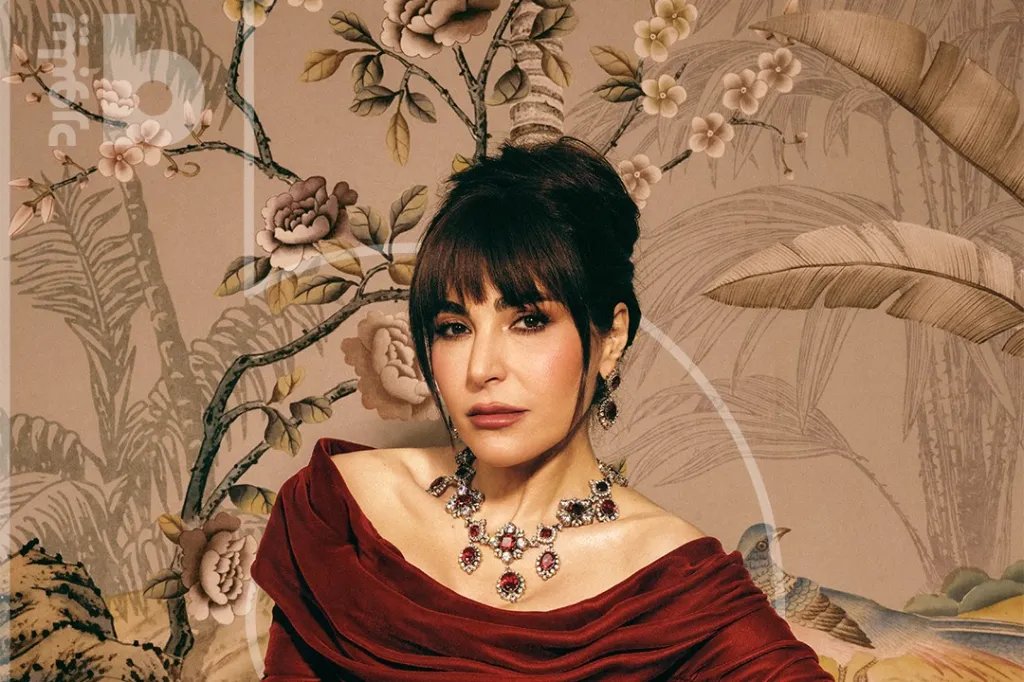
Abeer Nehme Graces Billboard Arabia’s Cover: A Heartfelt Journey Through Music
Trending on Billboard
Abeer Nehme, a celebrated artist in the Arab music scene, has remained an influential presence for nearly 20 years. Meeting her just a day before the cover interview for Billboard Arabia, it became clear that her music is deeply intertwined with her identity and way of life.
Explore
Billboard
See latest videos, charts and news
Before the interview, I had eagerly anticipated the opportunity to discuss her live album recorded at the Cairo Opera House. I envisioned asking about her song choices and her collaboration with musicians on various tracks, particularly curious about the operatic segment of “Ghani Qalilan Ya Asafir.” However, upon her arrival, I opted to let her narrate her story instead of sharing my personal insights and admiration.
Abeer chose a recommended café for our meeting, arriving punctually while expressing her apologies. She engaged with everyone in the room, listening attentively and making sure her words resonated with her audience. Over the course of the hour, I found that I had revealed more about myself than she had.
Before achieving mainstream success, Abeer Nehme was already an admired vocalist across the Arab world, known among musicians and listeners for her depth and craftsmanship. Her public debut came through a talent show, but she had already delved into formal music studies at that time. Collaborating with notable figures like Charbel Rouhana and Marcel Khalife, Abeer dedicated years to classical Arabic performances and tarab reinterpretations.
Over time, Abeer transitioned into the spotlight as a pop star, witnessing her most significant breakthrough in her forties. “I don’t believe in instant fame,” she told Billboard Arabia. “I was working on myself as an artist and as a human being… all of it was building, stone by stone, toward this moment.”
Previously seen as an “elite artist,” a term reflecting her technical skill and extensive performance background, Abeer reshaped this perception after crossing into commercial success. “Sometimes people said it lovingly… what does ‘elite’ even mean? I sing for everyone. Music is a message that reaches every human being,” she expressed. With a smile, she added, “But deep down, I always smiled and thought: just wait.”
Abeer’s rise over the last six years has led to tens of millions of streams and a steady place on the Billboard Arabia Artist 100 chart, with tracks like “Wainak,” “Bisara7a,” and “Bala Ma N7es” becoming emotional touchstones for her audience.
Growing up during the Lebanese Civil War, Abeer became familiar with hardship, yet learned that music could not be silenced. This lesson was instilled by her father, a war veteran who nurtured his passion for singing despite facing personal loss. His influence shaped Abeer’s vocal style and introduced her to legendary Arab singers, enabling her to traverse various musical styles while maintaining her unique voice.
By the time her father could no longer sing, Abeer had become a sought-after artist, offering a voice that connected audiences to their roots and provided a transcendent experience.
Just weeks prior to our interview, Abeer performed at Royal Albert Hall amid turmoil in Lebanon, delivering an emotional rendition of “Li Beirut,” a song significant since the Lebanese Civil War. Following her performance, she returned to Lebanon, reflecting on the complexities of her homeland. When asked about creating music in difficult times, she quoted Friedrich Nietzsche: “Without music, life would be a mistake,” adding, “In times of violence, we need to create music with even greater depth.”
Abeer’s presence exudes a calming strength as she articulates her thoughts, each response emanating a sense of resilience and expertise. Her journey, characterized by discipline and a refusal to conform, has led her to this pivotal moment.
As our discussion neared its end, I posed a final question regarding her journey. The answer was clear to me long before she spoke.
This is an English translation of Billboard Arabia’s April cover story, originally published here.