
Joseph Gordon-Levitt’s Role in Advocating for AI Responsibility in Hollywood
Joseph Gordon-Levitt, known for his roles in films like Inception and Looper, has shifted his focus from acting to advocating for the ethical use of artificial intelligence in Hollywood. With a consistent presence on social media, he emphasizes the importance of fair practices in the AI industry, prioritizing the protection of creators’ rights over unchecked corporate profit.
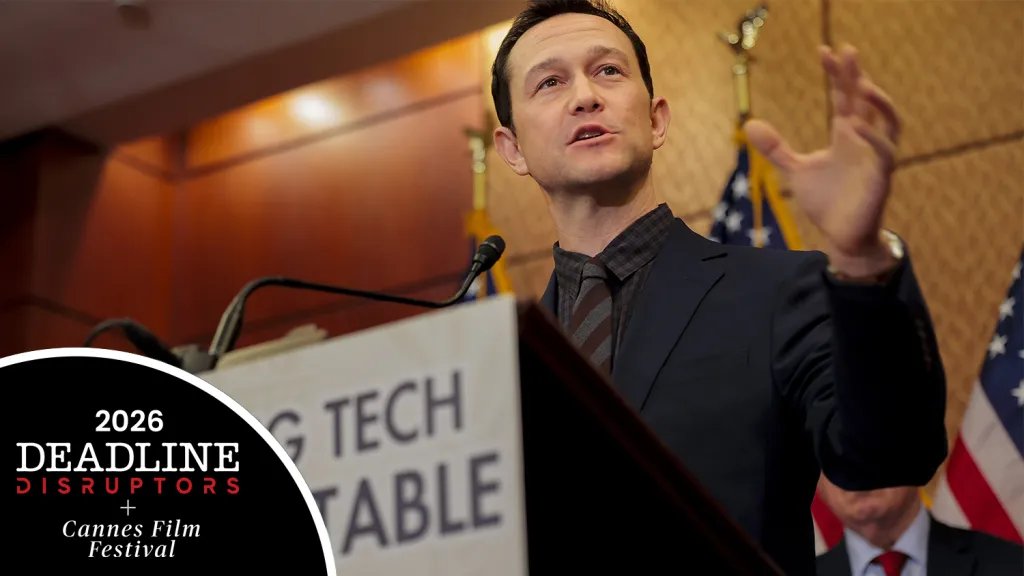
Gordon-Levitt has taken his message to a variety of platforms, speaking at UN-convened conferences, writing op-eds for the New York Times, and providing testimony to lawmakers in Utah. His core argument remains steadfast: technology should not allow big companies to exploit a wealth of human creativity without proper compensation.
Reflecting on his early experiences, Gordon-Levitt recalls how his father, a software engineer, introduced a personal computer into their home, sparking his lifelong interest in technology. This passion evolved with the creation of HitRecord, an online community he founded with his late brother, which has successfully raised $6.4 million. He became increasingly aware of the potential ramifications of AI during the 2010s when experts began voicing significant concerns about its implications.
“I’m not concerned about the technology itself,” Gordon-Levitt stated. “It’s the business practices that I think could lead us down some dark paths. If anybody can have a good idea or work stolen and monetized without compensation, what kind of world are we going to live in? We’re going to live in a world where all of the capital and power concentrates into the hands of five or six companies. That’s not a free society. That’s totalitarianism.”
Although he articulates concerns regarding AI as a broader societal issue, Gordon-Levitt views the entertainment industry as particularly vulnerable, describing it as a “canary in the coal mine.” In response, he co-founded the Creators Coalition on AI, which advocates for fair compensation, job protections, and regulation on deepfake technology. This coalition includes notable Hollywood figures like Natalie Portman, Kristen Stewart, Ben Affleck, and Octavia Spencer.
Gordon-Levitt believes the challenge lies not just in engaging tech companies, but in effecting legislative changes. “Chasing around business leaders who have fiduciary duties to their shareholders is a futile endeavor,” he remarked. “The principles of intellectual property law still apply, but they need to be updated for this new technology.”
He has shown his support for the stalled AI Accountability and Personal Data Protection Act, acknowledging the difficulties in changing laws. Despite these challenges, he finds hope in the bipartisan agreement among the American public regarding the need for regulation of big tech: “The American people very broadly agree that we don’t trust these tech companies. We don’t like the influence that they’re having on our lives, and we think it would be good for them to follow more laws. It’s the fight of our generation.”
In the interim, Gordon-Levitt advocates for partnerships between studios and AI companies that prioritize the protection of intellectual property and creators. While he did not comment on Disney’s now-defunct $1 billion deal with OpenAI or its cease-and-desist letter to Google, he mentioned that such actions indicate the company’s commitment to ethical AI practices.
“I would love to see more cooperative, solutions-oriented conversations,” he added. “Those are much harder to have than conversations that point out problems.”
In line with his advocacy, Gordon-Levitt is also set to direct a Netflix feature centered on AI, featuring Rachel McAdams, with filming expected to begin later this year. This project, which also stars Jeff Daniels, Joel Edgerton, Caleb McLaughlin, and Nnamdi Asomugha, has been in development for nearly a decade, as he sought to wait until AI became a significant concern in public discourse.
While he remains tight-lipped about the plot, describing it as a “thriller,” it is likely that it will not serve as an endorsement of the current tech landscape. For Gordon-Levitt, this film represents yet another opportunity to amplify the call for accountability in the rapidly evolving world of artificial intelligence.