

Secrets of the Red Carpet: Stars You Might Have Missed in the Spotlight
The Met Gala’s red carpet has always showcased extreme visibility among its celebrity guests, but this year, some attendees opted to conceal their most recognizable feature: their faces.
The trend commenced with eye masks. Actress Rachel Zegler, donning a Prabal Gurung gown, paid homage to Paul Delaroche’s 19th-century painting of Lady Jane Grey by wearing a sheer representation of the young queen’s execution blindfold.
Sarah Paulson made a striking statement in a frayed tulle ball gown, arriving “blinded by money” with a leather eye mask designed by the avant-garde Parisian brand Matières Fécales. This choice seemed to reflect the recent controversies surrounding the event, as her outfit was part of a collection titled “The One Percent,” which addresses themes of greed, corruption, and power.
Big Style: Where culture meets clothing
- CNN senior style reporter and advanced outfit anthropologist Rachel Tashjian excavates stylish amusements and contextualizes the world of fashion – all in your inbox.
Sarah Paulson’s leather eye mask was printed with a dollar bill note, designed by Parisian label Matières Fécales.
As if channeling an 18th-century masquerade, more celebrities arrived in a variety of disguises. Gwendoline Christie ascended the steps with a handheld mask resembling her own face, crafted by Gillian Wearing, a notable member of the original Young British Artists (YBAs). Meanwhile, singer Yseult showcased a custom face shield by Harris Reed adorned with prominent black feather plumes.
In a more unexpected reveal, a space-age fencing mask concealed the identity of Katy Perry until she cautiously opened the mirrored facade, exposing her face. Perry, who recently traveled to space on Blue Origin’s NS-31 mission, quickly shut the mask again, making a memorable impression.
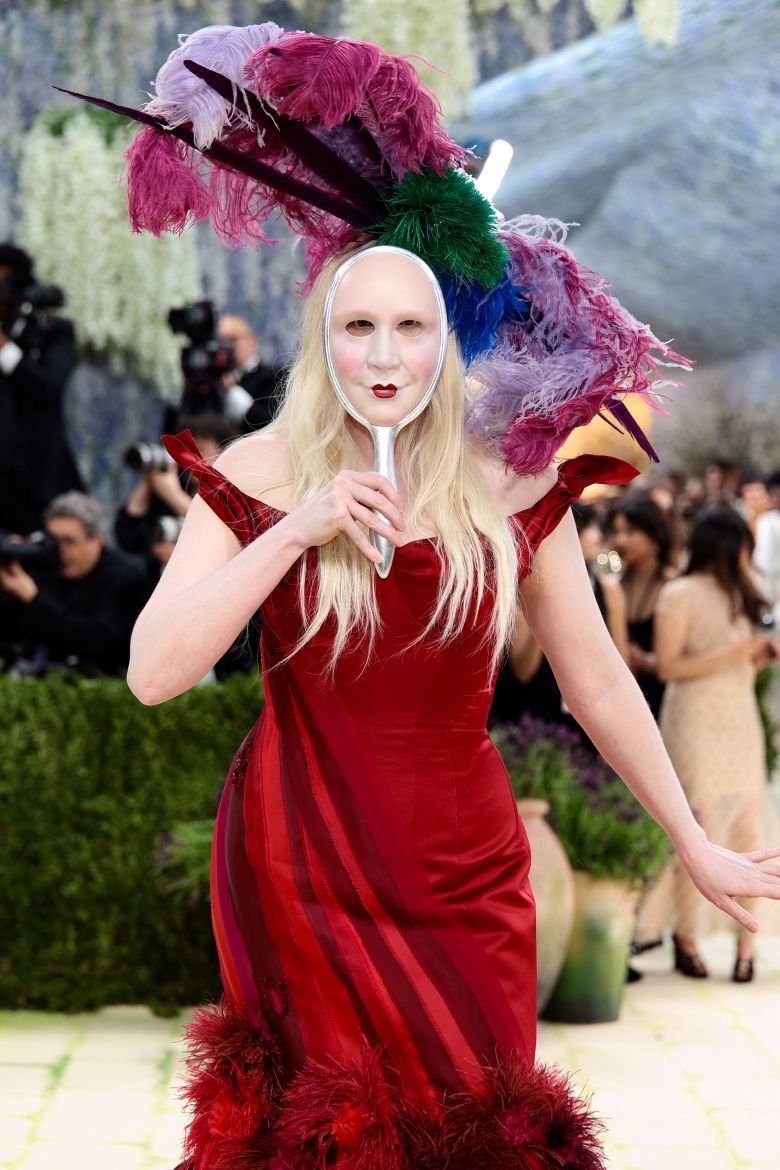
Gwendoline Christie’s meta-mask was created by YBA member Gillian Wearing.

Katy Perry, dressed in Stella McCartney, revealed her face on the steps before snapping the mask shut again.
Historically, masks have been integral to European celebrations, such as the Venetian Carnival and May Day festivals. These elaborate face coverings were designed not only to enhance the spectacle but also to liberate individuals from societal constraints, often encouraging a more uninhibited atmosphere.
At the Met Gala, where much of the guest list remains undisclosed until the red carpet concludes, masks adopt a different significance. They keep the audience in suspense, momentarily prolonging the reveal and capturing attention amidst a sea of extravagant outfits.

First time Met Gala attendee Ananya Birla harnessed the equalizing power of the mask, making a splashy debut in a facade designed by Indian sculptor Subodh Gupta.

Yseult wore a Harris Reed face shield.
The mask can also symbolize a deeper subversion. Belgian designer Martin Margiela has long recognized the mask’s democratic potential, integrating them into his collections since 1989 to redirect attention toward garments rather than celebrity. Ananya Birla, a first-time Met Gala attendee and daughter of billionaire Kumar Mangalam Birla, made a notable entry wearing a skull-shaped facade made from traditional Indian silverware, designed by sculptor Subodh Gupta.
Heidi Klum, known as the “Queen of Halloween,” took the concept of disguise to new heights, appearing entirely enveloped in a marble statue guise. Her striking look transformed the red carpet dynamic into an inquiry of identity, capturing significant attention.