

Three Alabama Grandmothers Challenge the Most Powerful Company in Their State in Oscar Contender ‘Sallie’s Ashes’
Sarah “Sallie” Smith, facing a grave illness, took on Alabama Power, the dominant electric utility in her home state, to address a pressing environmental threat. Her final mission focused on coal ash contamination from the unlined pit at the Plant Barry facility near the Gulf Coast. A documentary highlights that a breach could release “21 million tons of toxic ash into the Mobile River and Bay.”
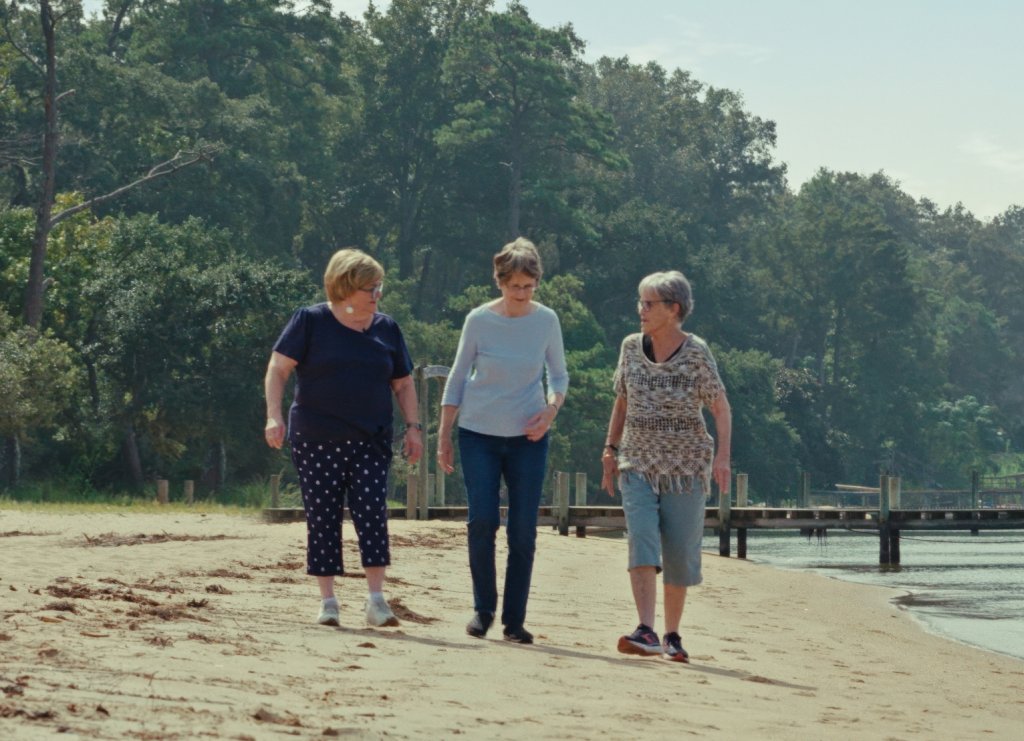
The Oscar-contending film, Sallie’s Ashes, directed by Brennan Robideaux and produced by Daniel Junge, chronicles Smith’s efforts alongside her close friends, Diane Thomas and Savan Wilson, to compel both Alabama Power and the EPA to relocate the hazardous coal ash.
Watch on Deadline
L-R Diane Thomas, Sarah “Sallie” Smith, and Savan Wilson in ‘Sallie’s Ashes’
While Alabama Power wielded significant financial and political influence, Smith and her fellow senior citizens relied on determination and community support to take on a formidable challenge. Robideaux expressed the allure of the story in his director’s statement, noting, “A small group of grandmothers in Alabama have banded together to fight for the future of their beloved Mobile Bay.”
He further elaborated, “The target was a toxic coal ash pit perched on the banks of the Mobile-Tensaw Delta, threatening to poison one of the most biodiverse regions in the country. My immediate excitement was about capturing the journey of a few determined grannies as they learned to build a website, create social media accounts, and speak out at public events.”

Director Brennan Robideaux
Robideaux, a Louisiana resident with previous filmmaking experience, has previously directed documentaries such as Born to Fly (2022) and A Riehl Blacksmith (2013). When he and Junge approached Smith regarding her story, she candidly warned them about her declining health, explaining she had just received a second cancer diagnosis that was far more severe than the first.
Robideaux wrote, “I called the only person I knew would be willing to drop everything and join me on a crazy idea, my creative collaborator Allison Bohl DeHart, and together we journeyed to Mobile, Alabama the next day.” He noted the women captivated them with their charisma and intelligence, while Smith’s illness underscored the urgent nature of their mission. “This wasn’t just a story about coal ash and activism; it became a film about purpose, dignity, and joy at the end of life, even when the odds are stacked against you.”
Sallie’s Ashes premiered at the Telluride Film Festival and subsequently screened at several notable events, including DOC NYC and the Hot Springs Documentary Film Festival. The film received a nomination for Best Short Documentary at the Critics’ Choice Documentary Awards, as well as a Special Mention at HSDFF.
The HSDFF jury commented, “In a time when activism is urgent, the film shows the power of people standing up for their communities and what they believe in.” They praised the film’s approach to portraying Smith and her friends as they organized against the coal ash threat.
Ultimately, Robideaux reflects, “At its core, Sallie’s Ashes is not just about coal ash. It’s a reminder that the most unlikely voices can carry the greatest weight; and that sometimes, the fight for the future rests in the hands of those who know they won’t live to see it.”


