

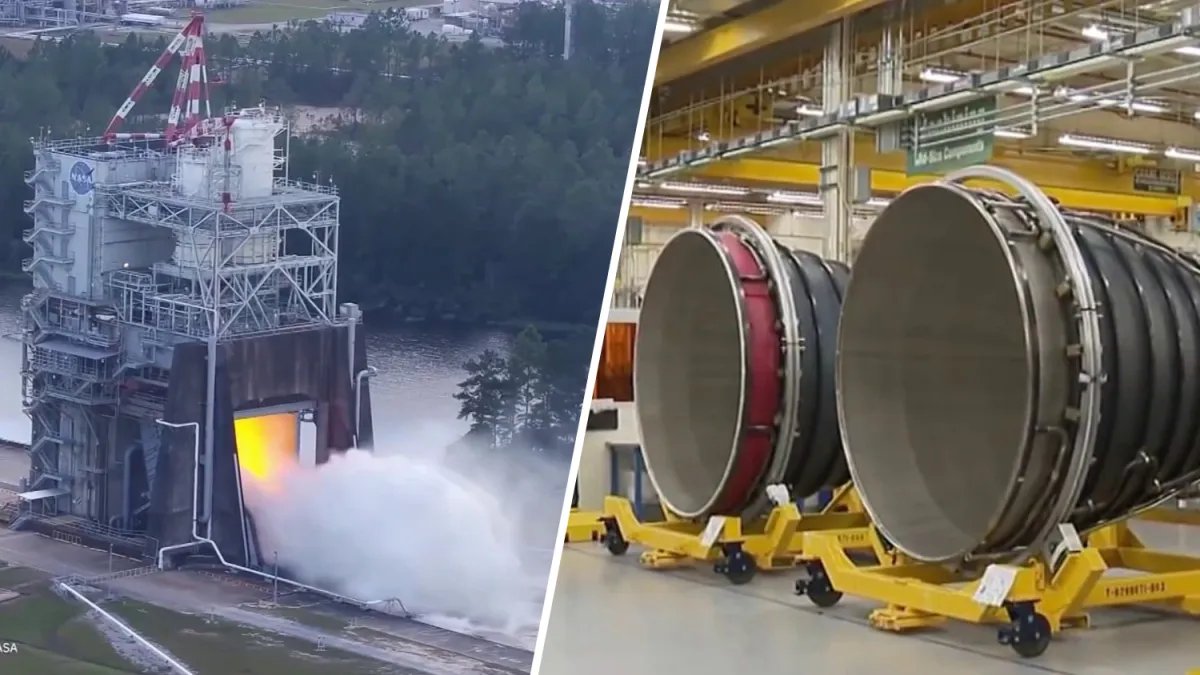
Canoga Park Company Supplies Engines for Artemis II Rocket’s Key Operations
L3Harris Technologies Powers Artemis II Mission Launch
In a significant milestone for space exploration, the rocket engines manufactured by L3Harris Technologies in Canoga Park are set to ignite during the countdown for NASA’s Artemis II mission. Scheduled for launch from Kennedy Space Center in Florida, this mission aims to take astronauts deeper into space than any crew since the Apollo missions.
On Wednesday, the engines will roar to life, propelling the Orion spacecraft on a ten-day journey that will cover over 200,000 miles, including a figure-eight trajectory around the moon. Mark Aldaba, an engineer at L3Harris, emphasized the critical role of the engines, stating, “It’s the business end, where all the power comes on… and light the engines to launch the rocket to the moon.”
The RS-25 core stage engines, which will activate at T-6.36 seconds in the countdown, are a re-engineered version of the Space Shuttle main engines. Although the shuttle program concluded in 2011, these redesigned engines are now integral to a program focused on returning humans to the moon and ultimately exploring Mars.
Aldaba described the intricate processes involved in creating the engines, noting, “We start building the engines from the raw material, bring it over, machine it, weld it… We go through all different processes to get to what you see behind me.” The RS-25 engines provide over 2 million pounds of thrust, enabling the rocket’s ascent to space over an 8-minute climb.
The Artemis II crew includes astronaut Victor Glover from Pomona. This mission marks the first crewed launch toward the moon since Apollo 17 in 1972. Aldaba expressed pride in the Artemis program, inviting local community members to consider careers in aerospace. “These opportunities aren’t just for rocket scientists. We’re looking for mechanics and tradespeople in the community to come and apply for jobs here,” he said.
Looking ahead, the Artemis III mission is planned to have Orion dock with a landing craft that will ferry astronauts to the lunar surface, with a target launch date set for 2028. NASA previously prepared for these missions with Artemis I, an uncrewed test flight around the moon conducted in 2022.