
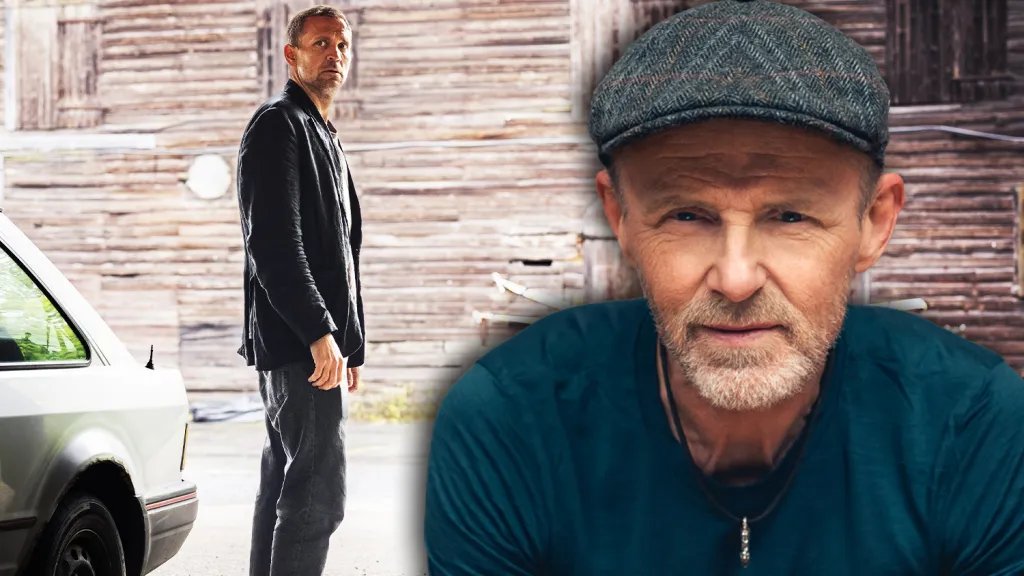
Jo Nesbø Talks About His Journey with Netflix’s ‘Detective Hole’: A Heartfelt Experience
Jo Nesbø Launches Netflix Series Based on Harry Hole Novels
Renowned crime writer Jo Nesbø has transitioned into the role of showrunner with the premiere of Jo Nesbø’s Detective Hole, which debuted globally on Netflix this week. The nine-episode series is a visual adaptation of his popular Harry Hole novels, centering on the life of the troubled detective who has become a hallmark of the Norwegian author’s career.
“It’s been an emotional rollercoaster,” Nesbø remarked about the three years dedicated to this project. "I really didn’t know what I was getting into as there’s no real tradition of having showrunners in Norwegian TV series. So, it was a first for me, but also for the directors, and it took some getting used to.”
While Nesbø has previously seen his works adapted for film—beginning with Morten Tyldum’s 2011 adaptation of his novel Headhunters—the stakes for Detective Hole are higher. Not only does he serve as the showrunner, but he has also personally adapted all nine episodes.
“When you write a novel, you control all aspects. When you’re writing a script, you leave so much up to interpretation,” he explained. “It’s hard to let go of that control. I’m fine with the different variations of my work getting adapted, though. Sometimes you have to leave it to a director that you believe in. That’s what I did for Headhunters and The Snowman – I just let the director take over.”
The challenges of showrunning reflect Nesbø’s diverse background, which includes a stint as a professional soccer player, work as a financial analyst, and current roles as the frontman of the rock band Di Derre and an accomplished rock climber. His foray into television signifies yet another successful venture.
Crafting Harry Hole for TV
In this Netflix series, Nesbø revisits his roots. The show features Tobais Santelmann in the lead role of Harry Hole, who confronts his nemesis, corrupt detective Tom Waaler, portrayed by Joel Kinnaman. Together, they unravel a series of murders while trying to seek justice against Waaler.
“I really don’t know what it is that people like about Harry Hole,” Nesbø admitted. “He’s a well-established character in the detective genre: a hard-thinking, romantic cynic and brilliant detective. I probably use those clichés and embrace them more than shying away from them because I love the hard-boiled detective.”
Harry Hole is undeniably flawed. Grappling with alcoholism and complicated relationships, he remains motivated by a fierce sense of justice.
After his involvement with the film adaptation of The Snowman in 2017, Nesbø collaborated with producers for a TV series centered on Hole, initially set to be in English but pivoting to Norwegian production based in Oslo. This change reignited Nesbø’s interest due to the city’s vital role in the narrative. “Oslo is integral to the story,” he remarked, likening it to a Gotham City version of the real place.
While the series draws heavily from The Devil’s Star, the fifth book in the Harry Hole series, Nesbø noted it does not strictly adhere to the original novels. “There’s no need to be faithful – it’s another story. My storytelling will create the same sense of familiarity,” he stated.
Nesbø humorously affirmed the unique freedom of adapting his work, quipping, “The only advantage is that I have no respect for the author’s material, so I feel I can do anything I like, which I have.”
The show features new storylines and characters, with some scenes extending beyond the original narratives. The casting process for Harry proved complex, especially when casting Santelmann. Initially perceived as too friendly and appealing, Santelmann later redefined his approach during a second audition, confirming to the team that he was ready to meet Harry Hole’s complex character.
First Steps
Nesbø’s journey into writing began in childhood, influenced by family storytelling at Christmas. "It was like a storytelling competition, and we all knew the punchline,” he reflected. He honed his writing skills during his teenage years, crafting song lyrics for friends’ bands.
Shifting focus to screen adaptations has been a significant transition for Nesbø, who acknowledged that “writing for movies or TV is about letting pictures tell the story,” contrasting it with his novel-writing experiences. “Even if you try to cut down on dialogue, novelists are simply too wordy.”
Despite having penned every episode for Detective Hole, Nesbø’s experience in scriptwriting is not entirely new. He previously contributed to two episodes of So Long, Marianne and is currently drafting a script for Cary Joji Fukunaga’s adaptation of his novel Blood on Snow, which will star Benedict Cumberbatch.
Amid discussions on the rising trend of book adaptations, Nesbø noted that he focuses on storytelling rather than industry metrics. “I don’t analyze why people like my work. I write for two friends of mine – they don’t know who they are, but I’ve been writing for them from the beginning.”
His observations suggest that the appeal of book adaptations may stem from their unrestricted narrative structures compared to films, making them more adaptable for diverse storytelling styles. Nesbø’s latest standalone novel, Wolf Hour, has been released, and he is also working on a new standalone project alongside a 14th addition to the Harry Hole series, expected later this year.
Reflecting on his writing process, he has noticed that crafting novels now requires significantly more time and research than it did at the beginning of his career. “I wrote the first Harry Hole novel in five weeks,” he recalled. “Now it takes longer, but it gives me that feeling that I’m back at those Christmas parties, ready to tell a beautiful story.”