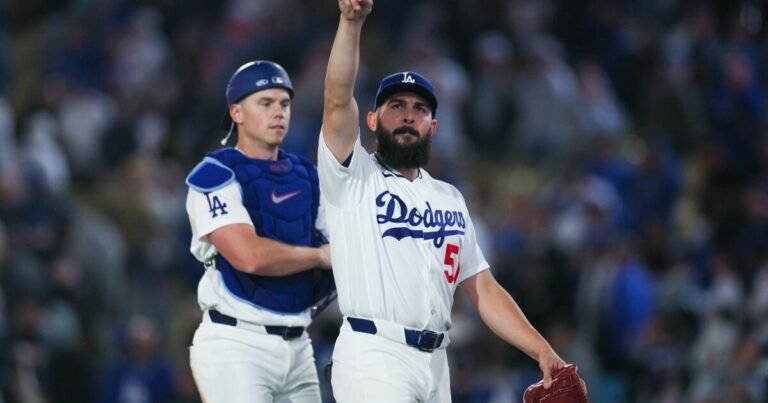


Why the Dodgers’ World Series Win is Special to Us All
MLB in Los Angeles: Memories of a Game That Unites
As the baseball season concludes, memories of Game 7 of the World Series linger vividly for fans of the Dodgers and Blue Jays, yet with starkly different sentiments. For Blue Jays supporters, the words of former MLB Commissioner Bart Giamatti resonate: “It breaks your heart. It is designed to break your heart.” In contrast, Dodger fans may recall a more uplifting perspective from writer Daniel Okrent: "The fun of recalling something that you saw five days ago or five years ago or a lifetime ago – knowing that it’s there to be plucked back into your life in an instant – oh, God, that’s rare."
For many, including myself, the experience of watching Game 7 alongside my brother, Richard, while texting my son Vincent, now a college freshman in New York, created an unforgettable moment of pure stress and joy. The thrill of November 1 will always be a cherished memory.
Baseball’s profound impact extends beyond mere entertainment. Despite changes within MLB, the essence of the game remains intact. It is more significant than a pastime; it forms a vital part of the identity for many, especially in Southern California. As I stood among the massive crowd at the recent Dodgers victory parade, it became clear that the team symbolizes much more than sport.
In Ken Burns’s documentary Baseball, writer George Plimpton articulated the loss felt by Brooklyn when the Dodgers left: “A deep, deep sadness… a community is better off losing its opera house, or its museum, or its church… than its ball team.” Observing the jubilant celebrations in Los Angeles, one can hardly dispute this sentiment.
Last year, I shared the victory parade experience with Vincent, but this time, he was unable to join me. Despite my fiancé Yamani’s prior commitments, I was determined to attend. Although FaceTime proved challenging due to the overwhelming crowd, the atmosphere was electric. Positioned across from Disney Hall, I interacted with fellow Dodgers fans, recalling Game 7’s highs and expressing hopeful thoughts about future championships.
The parade, filled with fans from all walks of life, felt more like a family reunion than a sporting event. In prior speeches, I’ve emphasized the importance of community, which I view as an extension of family. Baseball embodies this sense of coming home.
Reflecting on the Dodgers’ significant place in Los Angeles, it’s evident that their history weighs heavily on fans, especially those who remember the team’s roots in Brooklyn. A friend recalled exactly where he was when the news of the Dodgers’ departure broke, underscoring the lasting impact of such a loss.
When the Dodgers finally passed by in their buses, joy emanated from fans lining the route. The atmosphere celebrated not just the team’s athletic success but also their role within a vast, connected community. Although I missed Vincent, I captured videos and collected confetti as a reminder for his return from college.
The Dodger World Series victory and the subsequent parade highlight a timeless truth: as Walt Whitman once said, “the game of (base)ball is glorious.” In today’s increasingly divisive environment, baseball acts as a unifier, with the Dodgers serving as a focal point for collective joy in Los Angeles.
As shared memories spark conversations, they pave the way for deeper discussions about what divides us. A shared love of baseball could indeed bridge gaps, fostering understanding and connection in our diverse community.
As The Sporting News stated in 1931: “Great is baseball. The national tonic. The reviver of hope. The restorer of confidence.” In an era when hope is vital, society needs baseball more than ever, and Los Angeles cherishes the Dodgers more profoundly than at any other time.