
Hagai Levi Discusses His Modern Holocaust Series ‘Etty’ and the Need for a Thoughtful Approach to the International Boycott of Israeli Industry
The era of Holocaust-themed productions may be shifting, according to director Hagai Levi, known for his work on Scenes From a Marriage and The Affair.
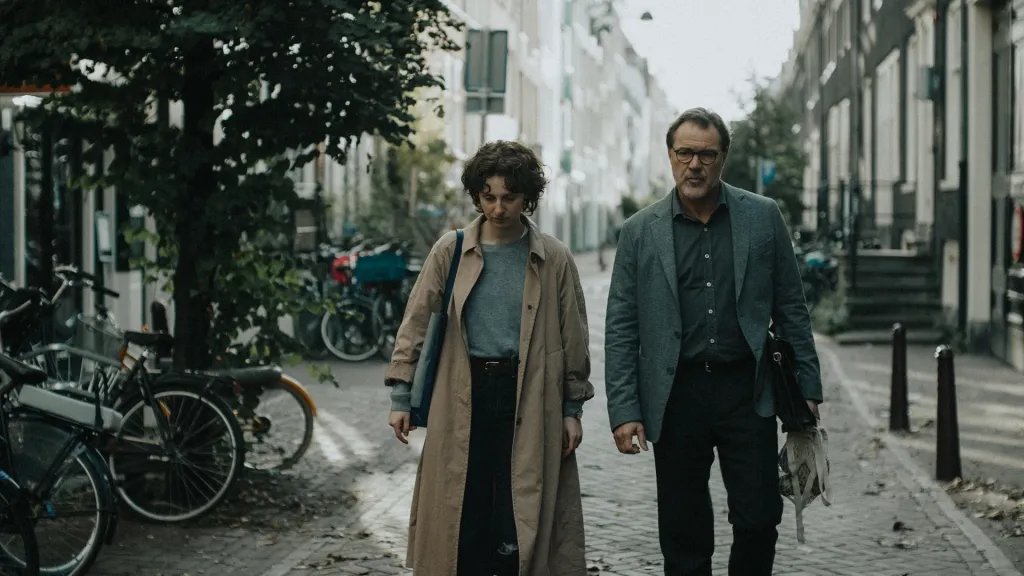
Levi’s latest series, Etty, is based on the diaries of Etty Hillesum. It uniquely approaches Holocaust narratives by situating the story in a “contemporary” Amsterdam, lacking a specific time period.
Viewers will immediately notice an anachronistic atmosphere, with characters dressed in modern clothing and surrounded by contemporary technology, enhancing the narrative Levi aims to present.
Watch on Deadline
Passion project
‘Etty’
For Levi, Etty represents a passion project, which prompted him to momentarily halt his overall deal with HBO to bring it to fruition. Hillesum’s diaries have been a significant part of Levi’s life; he described them as “the book that is near my bed all the time.” The diaries chronicle the life of a politically aware Dutch Jewish student who begins writing in 1941, encouraged by her analyst, Julius Spier, portrayed by Sebastian Koch in the series.
Hillesum’s writings explore her evolving relationship with Spier amidst the escalating horrors of the Holocaust. She was ultimately deported to Auschwitz, where she met her tragic fate.
Levi’s ambition to adapt Hillesum’s diaries has persisted for 15 years, initially recommended by his therapist. “It’s hard to say in a few words why it changed my life but it did,” Levi remarked. “It gave me a way to live my life, how to raise myself above circumstances and how I can find this kind of autonomy in myself when going through difficult times either personally or politically.”
Over the years, Levi garnered acclaim from his work on series like The Affair, Scenes From a Marriage and Our Boys. Although originally envisioned as a film, it evolved into a six-episode series, gaining newfound urgency following the events of October 7. Filming took place in the Netherlands several months after that pivotal day.
“The images of the Holocaust were reignited due to our experience on October 7,” Levi said, recounting how scenes from history resonated with then-current events. “The Holocaust is not something that happened in the past; there are aspects of it that are still here.”
Without specifically naming projects, Levi expressed concern that some recent Holocaust narratives focus too much on historical detail while neglecting their contemporary relevance.
He cited Jonathan Glazer’s Oscar-winning film, The Zone of Interest, as an example of a project that successfully tackled these themes in a fresh manner.
While the events of October 7 heightened Levi’s awareness of Holocaust imagery, he supported Glazer’s Oscar speech, which addressed the complexities surrounding Jewish identity and the Holocaust.
Levi’s commitment to modernizing Etty brought about significant preparations for its visual and linguistic elements. He was particularly selective about costumes and opted for contemporary dialogue to reflect Hillesum’s writing style.
Writing in German and Dutch posed a challenge, as Levi does not speak either language. He crafted the script in simple English and enlisted the assistance of translators, including a team from The Zone of Interest.
“I believe you can sense what’s right and wrong while directing,” Levi noted. “It’s not about the language but about the energy.”
The lead role of Etty was portrayed by Julia Windischbauer, who dedicated four months to learning Dutch. Levi recognized her “inner light and wisdom” during her audition, stating, “You cannot just play Etty; it’s something very deep that you either have or you don’t.”
Etty airs on the French network Arte and is being distributed by Studio TF1. Levi views the project as cinematic, with distributors presenting it as a theatrical experience. The series has already screened in cinemas in Tel Aviv, with planned showings in Paris, Berlin, and Amsterdam. Levi expressed satisfaction with the audience reception.
“I consider this more of a film than a TV show,” he asserted. “People feel it resonates with their time, reflecting signs of fascism in [places like] Israel and how individuals navigate those challenges.”
“The industry in Israel is in deep s**t”

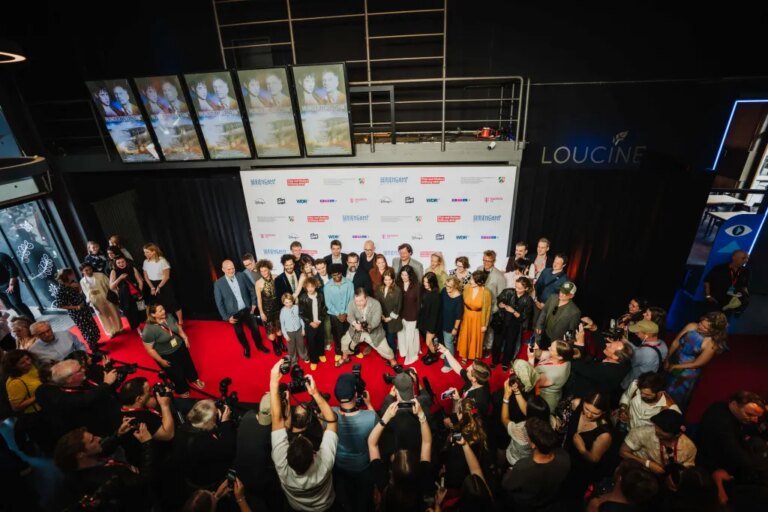
L to R: Hagai Levi, Julia Windischbauer and Sebastian Koch. Image: Stefanie Rex/picture alliance via Getty
Having worked primarily in Europe and the U.S. for the past decade, Levi has distanced himself from the Israeli industry, though he was briefly arrested during a protest against Israeli Prime Minister Benjamin Netanyahu’s judicial reforms prior to the events of October 7.
He expressed concern for the future of the Israeli film industry, fearing it is being stifled by a government seeking to “control and eliminate art.”
“The industry in Israel is in deep s**t,” he stated. “The regime is attempting to fund only those films or TV shows that align with their right-wing ideologies. I’m doing what I can to help, but the outlook is grim and may worsen.”
Levi also voiced concerns regarding a boycott impacting “festivals, cinemas, broadcasters and production companies” linked to perceived injustices against the Palestinian people, arguing such actions unfairly affect Israeli artists who support the Palestinian cause.
“People need to know that 90% of these creators, directors, and writers are fighting against this regime,” he emphasized. “They are in the streets all day, fighting like hell. They are the last people who deserve to be boycotted; the boycott should be much more selective.”