
A Look at the Documentary Sparking Oscar Buzz: Mammoth’s ‘My Undesirable Friends: Part I – Last Air In Moscow’
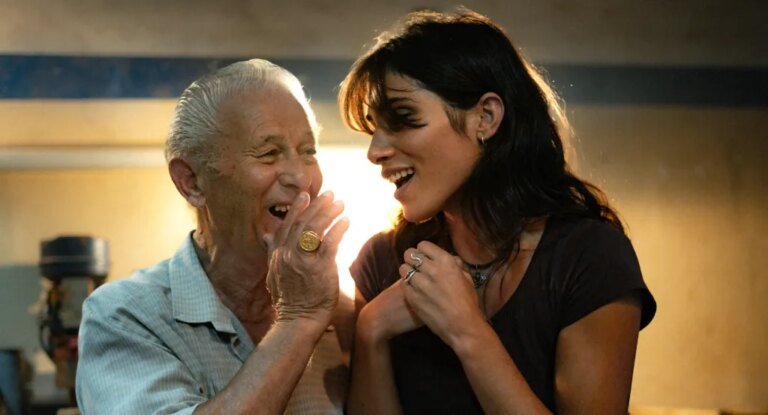
Julia Loktev’s documentary My Undesirable Friends: Part I – Last Air in Moscow has gained significant traction as it approaches Oscar shortlist voting. On Sunday, the film was honored as the Best Documentary/Nonfiction film by the Los Angeles Film Critics Association. This recognition follows earlier accolades, including Best Documentary Film at the Gotham Awards and Best Non-Fiction Film at the New York Film Critics Circle Awards, as well as a nomination for the Film Independent Spirit Awards.
Loktev, who immigrated to the United States from the former Soviet Union at the age of nine, embarked on her film project in Moscow in 2021. Spanning 5 hours and 24 minutes and narrated in chapters, the documentary captures the experiences of journalists committed to independent reporting in Russia under President Vladimir Putin. Shortly after Loktev’s arrival, the geopolitical landscape shifted dramatically with the outbreak of war in Ukraine, putting independent voices under severe threat.
The documentary’s title reflects the precarious status of those who resist state propaganda, often labeled as “undesirable.”
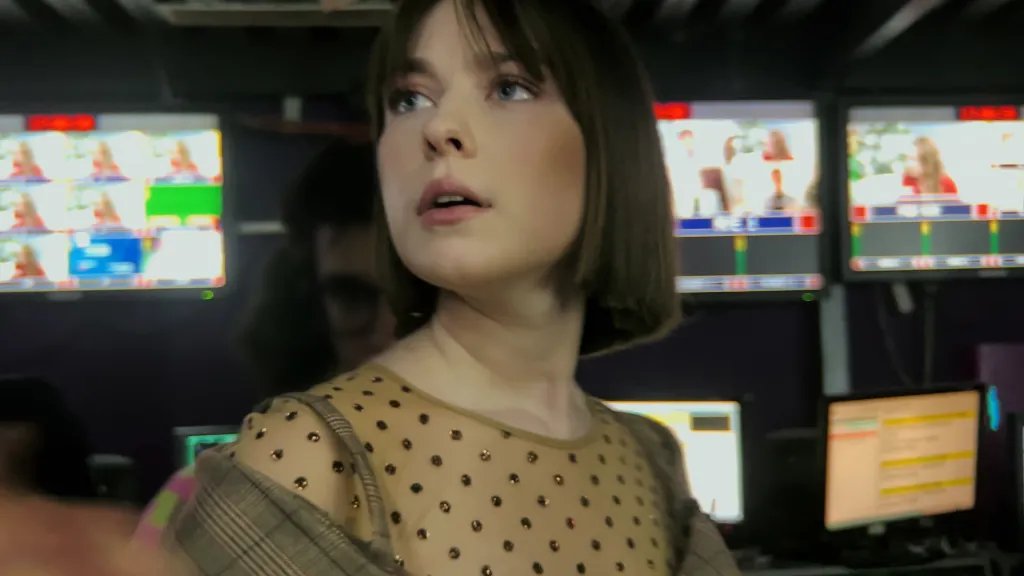
The film showcases a group of young, mostly female journalists, including Anna Nemzer, a talk show host at Russia’s last independent news channel, TV Rain; Ksenia Mironova, a reporter at the same channel; and Elena Kostyuchenko of Novaya Gazeta, who has drawn comparisons to Joan Didion. Loktev remarks, “The important thing for me about this film is it’s about people…I was incredibly lucky that I got to capture history unfolding live.”
Characterized as a pure vérité film, it observationally follows the subjects as censorship increasingly constricts their environment. The early moments of levity, marked by gallows humor, become scarce as the Kremlin escalates its crackdown on independent media and anti-war demonstrations.
Loktev describes the film’s dynamic, stating, “Sometimes it feels like a workplace comedy and sometimes it feels like a thriller.” Her editing approach mirrors that of a fictional narrative, presenting scenes consecutively rather than relying heavily on archival footage, which is used sparingly to complement the journalists’ work.
In the film, Loktev aims to illuminate the experiences of journalists who have become state adversaries, leading to severe repercussions. “Some of them have been declared terrorists and extremists in Russia,” she states. “None of them can work openly in Russia now… they had to flee the country with a suitcase, like a carry-on suitcase, within a few hours.”
Despite the challenges facing the film, there is a precedent for lengthy documentaries achieving Oscar recognition. Ezra Edelman’s O.J.: Made in America, running 7 hours and 47 minutes, won an Oscar before the Academy revised its rules to limit eligibility for films deemed episodic.
Loktev shares insights into the eligibility process, noting, “There’s a simple rule that says [to qualify] a film has to play in a theater for one week, three times a day… They had to look at it and say, ‘Yes, we consider it [eligible].’”
With its subtitle indicating that it is “Part I,” Loktev confirms there will indeed be a continuation of My Undesirable Friends, stating she is currently at work on the second part. “I’m endlessly surprised by how people keep working, how people even now in exile, all of them work as independent journalists,” she reflects. “How they find the strength to keep going… when the fight seems lost.”