
A Conversation with Ira Parker on Dunk’s Journey in ‘A Knight of the Seven Kingdoms’
SPOILER ALERT: This article contains key plot points from tonight’s premiere episode of HBO‘s A Knight of the Seven Kingdoms.
The debut of A Knight of the Seven Kingdoms offers viewers a glimpse into a version of Westeros unlike any previously seen, according to showrunner Ira Parker.
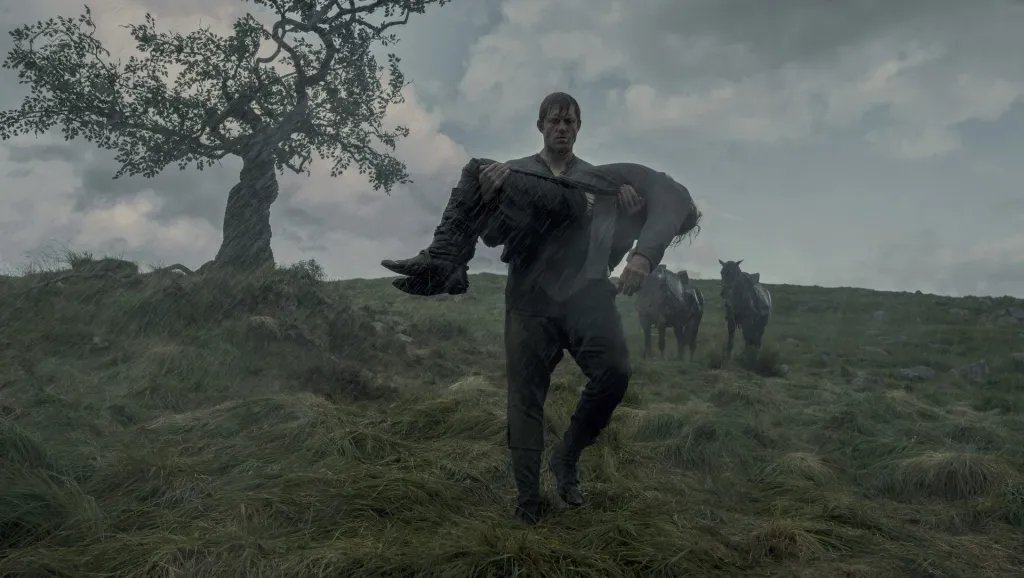
The opening scene features Dunk digging a grave for his deceased master, hedge knight Ser Arlan of Pennytree, under the rain. In a poignant moment, he awkwardly expresses his sorrow, saying, “I wish you didn’t die, Ser,” while cutaway shots humorously reveal their father-son-like dynamic.
The next day brings a change in weather as Dunk, now alone, converses with his three horses about his future, ultimately deciding to attend a tournament at Ashford Meadow. The familiar Game of Thrones theme music plays, leading to a sharp cut where Dunk is seen in a less dignified moment by a tree.
Parker emphasized that this scene distinctly separates the series from both Game of Thrones and House of the Dragon. “We don’t open with a camp full of mutilated people and we don’t end with a kid getting thrown out of a window. We open with Dunk by a really nice tree,” he noted.
The series is told entirely from Dunk’s perspective as he takes on a young boy named Egg (played by Dexter Sol Ansell) as his squire following a humorous first encounter at an inn. Their adventures lead them to the tournament, where they encounter various nobles and commoners. While the series carries comedic elements, viewers can expect darker, more violent moments ahead.
“Hopefully we get to what Game of Thrones fans love so much about Westeros, which is a lot of comedy and great characters butting right up against tragedy, and those really brutal, honest, terrible fight sequences that will hopefully impress some people,” Parker stated.
Parker, who co-created and serves as executive producer for A Knight of the Seven Kingdoms, expressed admiration for George R.R. Martin and the Tales of Dunk and Egg novellas that inspired the series. However, he acknowledged that their format posed tonal challenges. “We were following the novella. That was our guiding light,” he remarked.
He elaborated, “The novella is quite different from the main series of books and the histories of Fire & Blood. The tone is a little different, and it can be challenging when you’re swinging between various tones and moments, as it doesn’t always come out looking pretty in the end.”
“For me, at least, this is a very grounded, gritty look at what this experience would have been like for a hedge knight and an up-jump squire riding into a new town where he doesn’t know anybody. He’s walking into Madison Square Garden to play for the Knicks tonight and he’s never played before,” he added.
Upon arriving at Ashford Meadow, Dunk faces the harsh realities of his dream as he witnesses the skills of the best knights and jousters in Westeros. He is mocked with labels like “farmer” and “like a knight… but sadder,” and often resorts to talking to his horses as a means of coping with his outsider status.
“It’s incredibly daunting, and when he sees up close how good these people are, the fear it strikes in his heart is so overwhelming that any reasonable person might say, ‘I’m gonna go back to King’s Landing and join the City Guard.’ But there is just something special that we love about Dunk that forces him to go forward and into all of these weird and wonderful places,” Parker explained.
Describing Dunk’s interactions with a cast of eccentric nobles, Parker noted, “One of my favorite things that Dunk – and Peter does – is when he is meeting these weird and eccentric nobles, lords, and ladies who have their own peculiarities, he almost plays it like he doesn’t know if he’s the butt of the joke or not.”
While not aiming for comedic overtones, Parker acknowledged that Dunk’s awkwardness and his unusual friendship with Egg contribute to the humor present in the show. “Hopefully we’re not actually telling jokes, but setting people up very naturally – two people who don’t understand each other’s world,” Parker said. “In George’s best work, tragedy butts right up against the hopeful moments: just when you think things are going right, they take a turn. That was our only goal here: to represent that experience naturally.”