
Building Fire-Resistant Homes: How a Gardena Company Supports Fire Victims
Gardena Company Builds Fire-Resistant Homes for Displaced Residents
An 82-year-old woman set to move into her new, fire-resistant home, is a symbol of resilience in the wake of last winter’s devastating Palisades Fire. Sue LaBella, who lost her house during the blaze, is excited to begin anew in the same location.
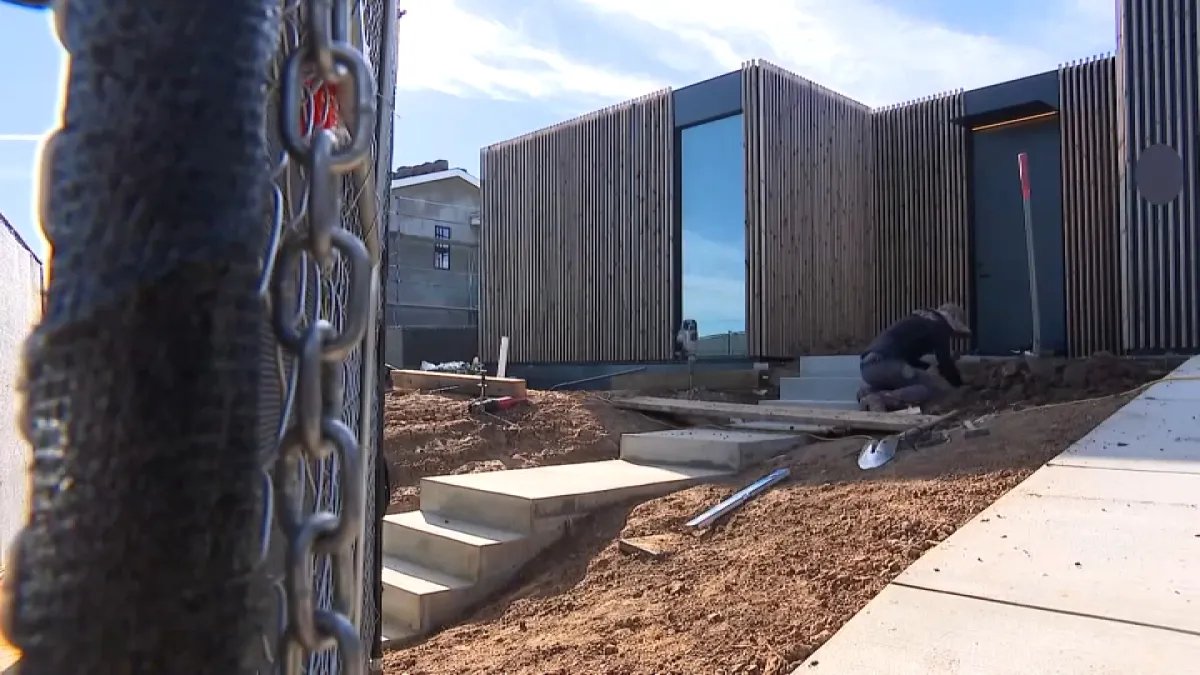
LaBella expressed her amazement at the features of her new residence, which is crafted from materials designed to withstand both fire and earthquakes. This innovative construction is the work of Cover, a Gardena-based company employing steel, tempered glass, and ignition-resistant wood to fortify homes against natural disasters.
“It’s about as close as you can get to having something that’s really California-proof,” said Buddy Squire, LaBella’s son-in-law.
Cover utilizes a unique construction method, manufacturing its materials in-house at its Gardena warehouse before transporting them to various sites for assembly. Co-founder Alexis Rivas noted that this streamlined process modernizes home construction, likening it to the production of automobiles.
“What we saw was an opportunity to make homes on a production line more like how cars are made and build better homes faster at a higher quality,” Rivas stated.
To illustrate the efficiency of their construction approach, Rivas compared it to building with LEGO blocks. “Our production line makes the same LEGO blocks, and then we use those parts to create homes of various layouts,” he explained. “Sue’s home features a courtyard, while others may be an L-shape.”
While each home is customizable, they share a set of foundational components that facilitate mass production. Rivas emphasized the advantages of this method: “We move as much of the complexity that would normally occur on the construction site to the factory, allowing for more efficient and ergonomic assembly. This enables us to build more homes for the same workforce.”
Cover’s innovative strategy not only supports individuals like LaBella but also addresses the broader need for safer housing in disaster-prone areas.