

LA Metro Considers New Subway Route Linking Westwood and Van Nuys via Sepulveda Pass
LA Metro Committee Approves Subway Proposal Linking Westside and San Fernando Valley
In a significant step towards enhancing public transit in Los Angeles, a proposal to connect the Westside with the San Fernando Valley was approved by a Los Angeles County Metropolitan Transportation Authority (LA Metro) committee on Wednesday. The plan, which aims to build a transit rail along the 405 Freeway, will be presented to the full Metro Board for final approval.
The proposed subway line targets the Sepulveda Pass, an area renowned for its heavy traffic congestion, with nearly 289,000 vehicles traversing the corridor each day. The initiative seeks to provide a faster, more efficient means of transportation for commuters in this bustling region.
Under the current proposal, the subway would be constructed through the Santa Monica Mountains, utilizing either underground or aerial options to cover a distance of nine miles. This route would facilitate seamless travel between the Orange G Line in the San Fernando Valley and the Purple D Line, which is set to be extended from downtown Los Angeles to Westwood by 2027.
LA Metro officials confirmed that the proposal is scheduled to be discussed by the Metro Board next week.
Joe Linton from StreetblogLA.com praised the project, stating, “It does everything transit advocates had been lobbying for. Fast, high ridership, serves UCLA with a station right on campus.”
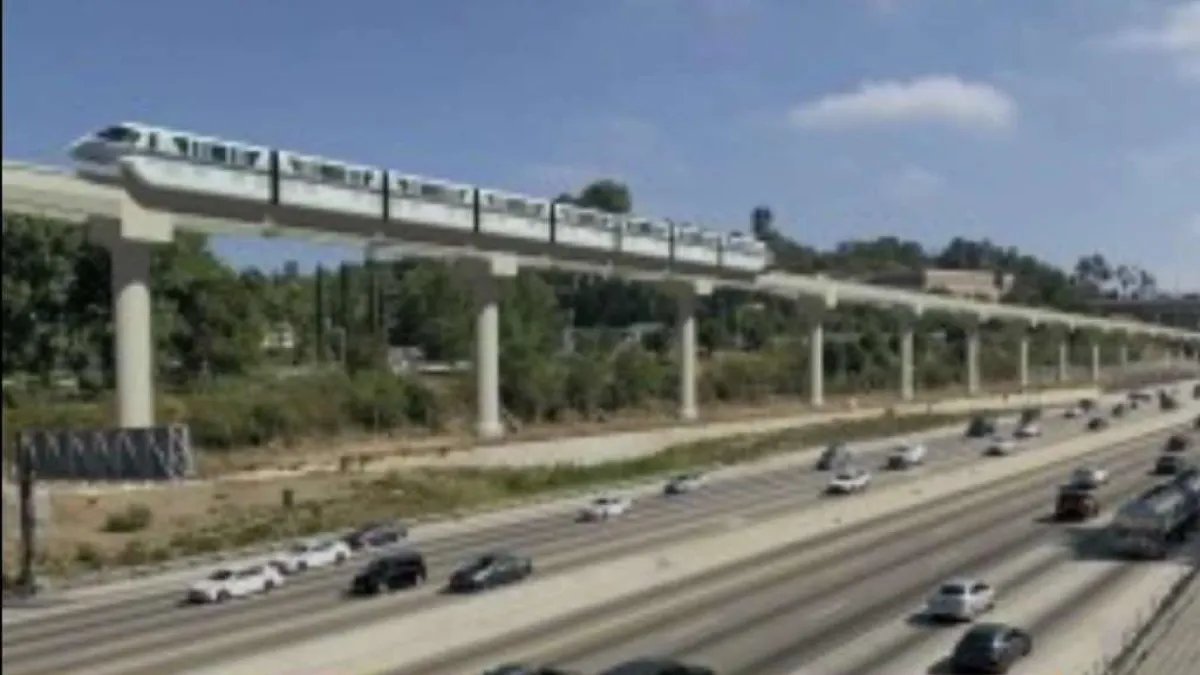
In terms of construction, LA Metro is considering alternative options, including a monorail positioned above the 405 Freeway, capable of carrying approximately 90 passengers at speeds of up to 56 miles per hour. Alternatively, an underground subway would necessitate building stations 80 to 110 feet below ground level along the Sepulveda Pass.
The plan includes a station at UCLA, responding to concerns raised by advocacy groups to ensure the campus is effectively serviced. Michael Russell, executive director of the Westwood Village Improvement Association, emphasized the necessity of this station: “An on-campus station isn’t just important. It is essential for our future. It’s the third largest employer in the county. 40,000 students each day, thousands of employees at the (UCLA) Medical Center. It’s just important to get there as quickly as possible.”
Cost estimates for the proposal range from $15 billion to $20 billion, with officials committed to seeking federal and state funding to support the project.


