
James Cameron Says AI Can’t Replace Actors and Emphasizes the Importance of Human Creativity
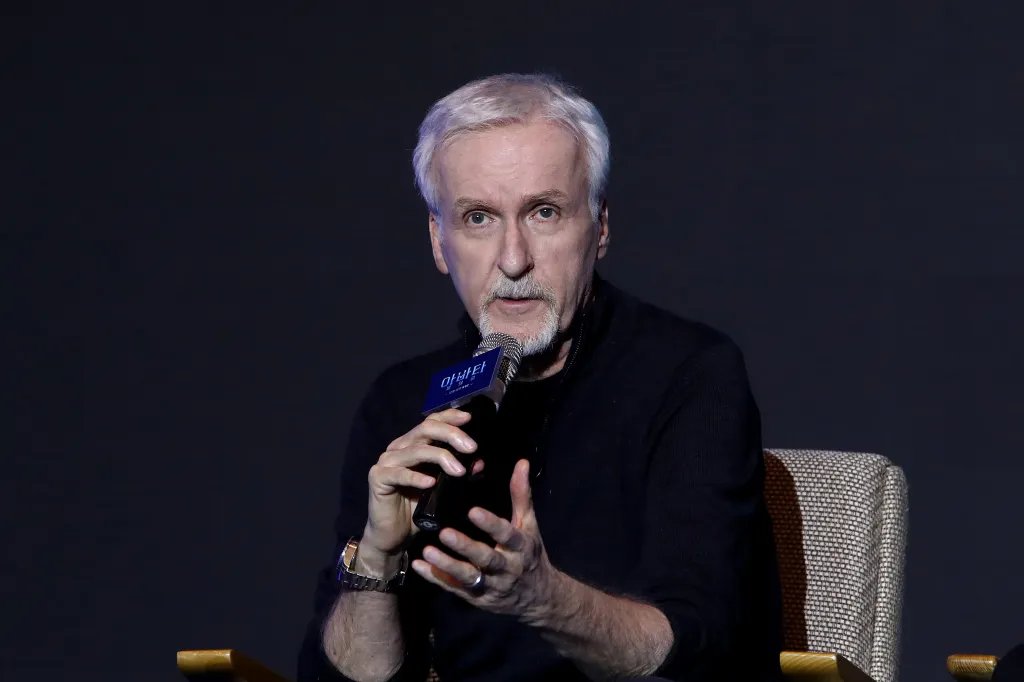
James Cameron, a prominent filmmaker and board member of Stability AI, has expressed a complex view on artificial intelligence in the film industry. While he acknowledges the benefits of AI in filmmaking, he finds the possibility of the technology replacing human actors to be “horrifying.” Cameron believes that AI’s evolution will challenge existing standards for human artistic expression.
In a recent interview with CBS Sunday Morning, which coincided with the promotion of his upcoming project Avatar: Fire and Ash, Cameron discussed his affinity for motion capture technology. He referred to this technique as the “purest form” of performance.
Reflecting on the initial release of Avatar in 2009, Cameron admitted he hesitated to reveal the intricacies of motion capture, wanting to preserve the film’s enchanting allure for viewers. He now considers this choice a “mistake,” leading to misconceptions surrounding the role of CGI in the filmmaking process.
Watch on Deadline
Cameron stated, “For years, there was this sense that, ‘Oh, they’re doing something strange with computers and they’re replacing actors,’ when in fact, once you really drill down and you see what we’re doing, it’s a celebration of the actor-director moment, and the actor-to-actor moment. It’s a celebration of, I call it, the sanctity of the actor’s performance moment.”
Shifting his focus to generative AI, he expressed strong reservations, saying, “Now, go to the other end of the spectrum, and you’ve got generative AI, where they can make up a character, they can make up an actor. They can make up a performance from scratch with a text prompt. It’s like, no. That’s horrifying to me. That’s the opposite. That’s exactly what we’re not doing.”
When asked about his opposition to AI-generated actors, Cameron stated, “I don’t want a computer doing what I pride myself on being able to do with actors. I don’t want to replace actors, I love working with actors.”
Nonetheless, he acknowledged that emerging technology could offer cost advantages in visual effects, a point he has made before.
Cameron expressed concern for the future of imaginative filmmaking, noting, “Right now, imaginative films, fantastic films, science-fiction films — they’re starting to die off as a breed because they’re expensive and the theatrical marketplace has contracted. Now studios are only comfortable spending those kinds of dollar amounts with blue-chip IP, that which we’ve seen, that which we know. I mean, a movie like Avatar would never get made in that environment.”
Addressing the potential impact of AI on his craft, he commented, “It might, but it also causes us to have to set our bar to a very disciplined level, and to continue to be out-of-the-box imaginative. What generative AI can’t do is create something new that’s never been seen. The models are trained on everything that’s ever been done before; it can’t be trained on that which has never been done. So you will innately see, essentially, all of human art and human experience put into a blender, and you’ll get something that is kind of an average of that.”
Cameron likened the potential shift in the industry to becoming more “acoustic,” emphasizing that the authenticity of live performance is becoming increasingly precious. “The act of performance, the act of actually seeing an artist creating in real time will become sacred, more so,” he concluded.
As discussions around AI’s role in filmmaking intensify, other industry heavyweights like Guillermo del Toro, Celine Song, and Denis Villeneuve have criticized the technology, asserting it has no place in the film production process.
Avatar 3 is scheduled for release in theaters on December 19.