

A Casual Look at Witches in Modern Fashion
In the realm of popular culture, the classic portrayal of a witch often features a woman in a black dress or cloak, complete with a pointed hat and broomstick. This iconic image was notably cemented by the 1939 film “The Wizard of Oz,” which introduced audiences to the Wicked Witch of the West. However, beliefs in witches and witchcraft have long held a significant place in various cultures around the world.
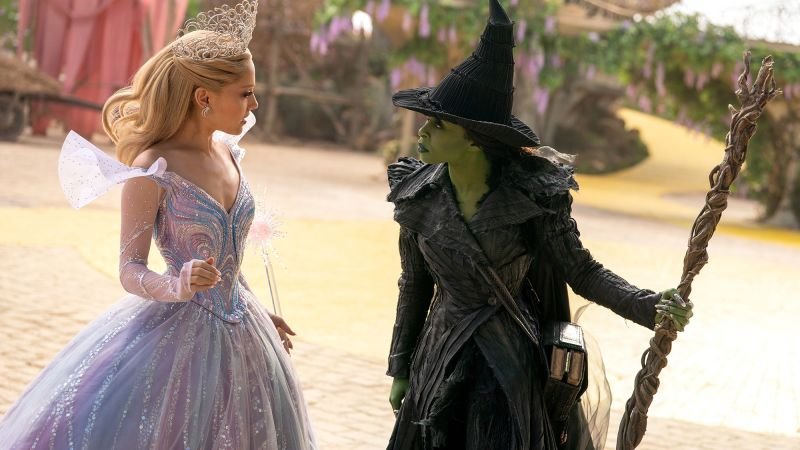
With the release of “Wicked: For Good,” the sequel directed by Jon M. Chu, viewers will observe a notable shift in the character of Elphaba, portrayed by Cynthia Erivo. While she retains her green skin and traditional black attire, this iteration marks the first time the character dons trousers. Seen in the opening scene as she descends from the sky to rescue animals, Elphaba’s slim, subtle pants serve practical and thematic purposes as she escapes an angry mob of townsfolk.
Paul Tazewell, the costume designer for both “Wicked” and its sequel, explained that this choice reflects a style and thematic shift for the character. “It was a style choice, a thematic one,” he stated.
Tazewell, speaking from his home in Brooklyn, has worked on the costumes for the films simultaneously. He recounted Elphaba’s journey through her wardrobe, starting with the black pinafore she wears as a girl mourning her mother’s death, to the tailored coatdress she arrives in at Shiz University. “She’s othered because of the color of her skin,” Tazewell remarked. “That kind of prejudice is enough to make any introvert become more reticent.” Yet, Elphaba defies expectations, using her clothing as a form of defense.
As the original film closes, Elphaba parts ways with Glinda, the good witch played by Ariana Grande. Tazewell noted that the trousers were essential for portraying Elphaba’s new reality, which required greater mobility. “She’s in exile in the forest… Her dress is in tatters at this point,” he explained. “We moved away from a dress silhouette to one where she can be active and also give more presence.”
The introduction of trousers also signifies Elphaba’s pursuit of liberation. “It really is about self-expression,” Tazewell added. “It’s where her power lies.”
Modern portrayals of witches vary widely—from Roald Dahl’s depiction of witches as grotesque creatures to the glamorous or gothic interpretations seen with characters like Maleficent in “Sleeping Beauty.” Other representations, such as “Sabrina the Teenage Witch” or Hermione Granger in “Harry Potter,” depict witches as seemingly ordinary women with magical abilities.
Elphaba, however, stands apart. She is neither frightening nor overly glamorous but symbolizes empowerment through her strong moral beliefs and her challenge to societal norms. Some experts draw parallels between Elphaba’s liberation and women entering the workforce in the mid-19th century, when they began to wear trousers in public.
The first trousers, known as “bloomers,” were popularized by suffragist Amelia Bloomer. Worn as undergarments, they allowed women greater freedom of movement. Despite facing ridicule, bloomers eventually entered mainstream fashion, seen on modern catwalks and worn by figures such as Dua Lipa.
The widespread acceptance of trousers for women gained momentum in the 20th century, primarily thanks to designer Coco Chanel, who embraced pants in her collections. Iconic female stars like Katherine Hepburn and Greta Garbo contributed to a cultural shift, demonstrating that trousers signified a “modern, independent and spirited” woman. “In trousers, women can not only ride a bicycle but also play sports and walk more quickly,” said Rhonda Garelick, highlighting the historical barriers women faced in comfort and mobility.
For Tazewell, designing for “Wicked” and “Wicked: For Good” involved ensuring a visual balance between Elphaba and Glinda, with Elphaba’s dark outfits emphasizing her powerful presence. “When something is light and pretty, it is easier to make that look elevated; with black, elements can get lost,” he explained. He focused on texture and richness, creating depth through micro-pleating and layering.
In “Wicked: For Good,” Elphaba’s trousers and knee-high boots project a bold identity that challenges societal expectations. Tazewell noted that these choices reflect not just the character’s physical needs but also her emotional journey. “It’s fueled by the fact that we have a Black woman playing a role about a woman who is vilified for the color of her skin,” he said.
The narrative, which has evolved from a book to a Broadway sensation, resonates deeply with audiences. As Tazewell concluded, “‘Wicked’ operates as an allegory for modern systems around power, self-evolution, and advocacy for animals and the environment.”


